
A landmark study has unveiled a sophisticated deep learning framework designed to significantly enhance the diagnostic accuracy of gallbladder diseases from ultrasound scans, heralding a potential paradigm shift in medical imaging analysis. This research stands at the confluence of artificial intelligence and clinical medicine, introducing a novel AI model that not only automates the interpretation of complex medical imagery but also outperforms traditional human evaluation in critical clinical metrics. The work signals a move away from often subjective diagnostic methods toward a future defined by data-driven, precision healthcare, aiming to provide clinicians with a powerful tool to improve patient outcomes through faster and more objective assessments. This development is not merely an incremental improvement but a foundational step towards integrating intelligent systems into routine clinical practice, promising to redefine standards of care for common and complex gallbladder conditions.
Addressing the Challenges of Conventional Diagnostics
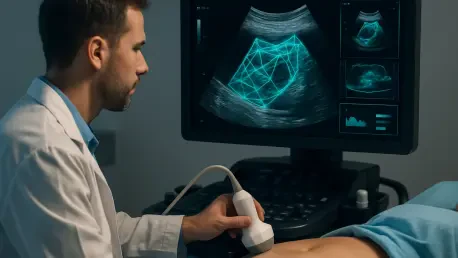
The primary impetus for this technological advancement stems from the inherent limitations of current diagnostic protocols for conditions affecting the gallbladder. Traditional methods heavily rely on the manual evaluation of ultrasound images by radiologists, a process that is not only time-consuming but also susceptible to operator-dependent variability and subjective interpretation. This element of subjectivity can occasionally lead to diagnostic delays or, in some cases, misdiagnoses, impacting the course of treatment and patient well-being. Furthermore, some conventional diagnostic procedures can be invasive for the patient, adding another layer of complexity and risk. In response to these significant challenges, researchers have engineered a non-invasive, AI-driven solution. The overarching goal was to develop a deep learning model capable of accurately and automatically identifying various gallbladder pathologies, such as gallstones and cholecystitis, directly from ultrasound scans, thereby providing clinicians with a reliable tool to minimize diagnostic ambiguity.
The methodological foundation of this groundbreaking study is built upon a robust and meticulously curated dataset, described as unprecedented in both its scope and diversity. The researchers compiled an extensive collection of gallbladder ultrasound images that encompassed a wide spectrum of pathological conditions, from common ailments to rarer presentations. The deliberate inclusion of such varied cases was a critical strategic decision, as the performance and, more importantly, the generalizability of any machine learning model are fundamentally dependent on the quality and breadth of its training data. By training their sophisticated model on such a comprehensive dataset, the authors aimed to ensure that the resulting algorithm would be resilient and highly effective in real-world clinical environments. This meticulous preparation allows the model to capably recognize and differentiate between subtle variations in disease presentation across a diverse and heterogeneous patient population, making it a truly powerful and adaptable diagnostic aid for medical professionals.
The Innovative AI Architecture
The core innovation of this research lies in its unique and synergistic architectural design, which masterfully combines two advanced deep learning concepts: a squeeze-and-excitation (SE) capsule network and a convolutional bidirectional long short-term memory (CBLSTM) component. The squeeze-and-excitation network serves as a highly sophisticated attention mechanism, a crucial feature that elevates the model’s analytical capabilities. Its primary function is to enhance the model’s ability to focus on the most diagnostically significant features contained within a complex ultrasound image. It achieves this by dynamically recalibrating channel-wise feature responses, effectively learning to amplify informative features while simultaneously suppressing irrelevant background noise or imaging artifacts. This represents a significant advancement over standard convolutional networks, as it permits the model to learn what to look for in a more qualitative, context-aware manner, thereby closely mimicking the focused and discerning attention of a highly experienced human expert reviewing the same scan.
Complementing the powerful spatial feature-enhancing capabilities of the squeeze-and-excitation network is the CBLSTM component, which introduces a crucial temporal dimension to the analytical process. The accurate diagnosis of gallbladder disease often requires the careful examination of a sequence of ultrasound frames, known as a cine loop, rather than a single static image, because motion and dynamic changes over time provide vital diagnostic clues that might otherwise be missed. The CBLSTM architecture is specifically designed to process such sequential data, allowing it to learn from the intricate temporal relationships between consecutive frames. By analyzing the data bidirectionally, meaning both forwards and backward in the sequence, the model gains a more profound and complete contextual understanding of the pathology’s visualization over time. This remarkable ability to integrate and interpret spatio-temporal information is a key differentiator of the proposed model, enabling a more holistic and accurate assessment that closely mirrors the complex diagnostic process employed by a skilled radiologist.
Clinical Validation and Future Horizons
The culmination of this intensive research effort was the thorough validation of the model through extensive and rigorous clinical trials, which yielded exceptionally promising results. The AI-powered system consistently demonstrated a superior diagnostic performance when directly compared to traditional interpretation methods employed by medical professionals. The findings from these trials highlighted a remarkable reduction in misdiagnosis rates, a critical outcome that directly impacts patient safety, treatment efficacy, and overall healthcare quality. Furthermore, the study reported a significant and measurable increase in diagnostic confidence among the medical practitioners who utilized the AI tool as part of their workflow. These tangible clinical benefits serve to underscore the immense practical value of integrating such advanced AI systems into routine diagnostic pipelines, effectively transforming them from purely academic concepts into powerful clinical assets that can enhance care delivery.
Beyond its immediate and impactful application in the field of gallbladder diagnostics, this study serves as a powerful and compelling testament to the transformative potential of artificial intelligence across the broader landscape of modern medicine. The sophisticated principles and advanced technologies employed in this research are not confined to a single specialty; they strongly suggest a future where AI-augmented systems could enhance diagnostic accuracy and operational efficiency in numerous diverse fields, from oncology and pathology to cardiology and neurology. This work contributes to a growing and solidifying consensus that AI will play an increasingly integral role in augmenting human capabilities, particularly in handling the analysis of complex, large-scale data. This will allow highly trained clinicians to focus more of their valuable time and expertise on direct patient care, intricate clinical decision-making, and the compassionate delivery of healthcare services.
A Responsible Path Forward
The success of this endeavor was also a story of effective interdisciplinary collaboration. The study highlighted how integrating deep expertise from computer science, medical imaging, radiology, and clinical practice was essential to creating a solution that was not only technologically advanced but also clinically relevant and practical. This collaborative model provided a clear blueprint for future research and development, demonstrating that the most complex and persistent challenges in healthcare are best addressed when technological innovation is closely and thoughtfully aligned with deep clinical insight. As the healthcare sector continued its technological evolution, this research offered a vital foundation, encouraging further investment in studies that bridge the gap between artificial intelligence and medical science. The ultimate vision was a future characterized by precision medicine, where diagnostics and treatments were highly personalized and optimized for each individual patient, powered by the analytical prowess of intelligent systems. This cultural shift, where technology complemented and enhanced human expertise, promised to revolutionize healthcare delivery and dramatically improve health outcomes for all.