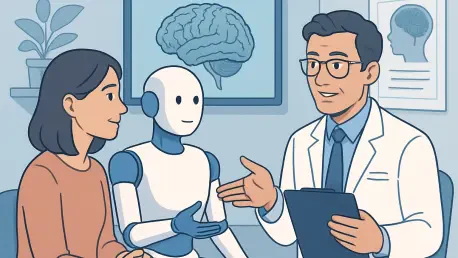

A quiet but profound revolution is unfolding within the field of neurology, shifting the focus of technological intervention from purely physical rehabilitation to the complex realm of psychosocial and cognitive support. While robotic exoskeletons have become instrumental in helping patients regain motor function, a new class of embodied artificial intelligence is emerging to address one of the most pervasive and damaging aspects of neurologic disease: the profound sense of isolation. These AI companions, taking forms from interactive tabletop devices to soft, conversational teddy bears, are not designed to help patients walk again, but to help them engage, connect, and combat the devastating cognitive and emotional consequences of chronic loneliness. This marks a critical evolution in care, acknowledging that a patient’s mental and social well-being is not just a secondary concern but a central pillar of their overall brain health.
A New Understanding of Neurological Risks
The medical community now recognizes loneliness not as a mere unfortunate consequence of illness but as a potent biological threat that actively accelerates neurocognitive decline. Citing a warning from the U.S. Surgeon General’s office, chronic social isolation is now understood to elevate dementia risk by a staggering 50%, placing it on par with well-established vascular risk factors. This paradigm shift recasts loneliness as a direct clinical target, transforming it from a background social issue into an urgent medical priority. The data is clear: a Class I study confirmed that individuals experiencing loneliness have a significantly increased 10-year risk of developing dementia. For neurology, this evidence establishes an undeniable imperative to integrate strategies that combat social isolation directly into standard treatment protocols, viewing it as just as critical as managing blood pressure or cholesterol for preserving long-term brain health and function.
This evolving perspective demands a new set of tools capable of providing consistent, accessible social engagement where human resources are often limited. The challenge for patients with neurologic conditions is that their need for connection is constant, while the availability of caregivers and family may be intermittent. The physiological stress induced by chronic loneliness can exacerbate inflammation and other harmful biological processes, creating a vicious cycle that worsens the underlying neurologic condition. Therefore, addressing this “biologic insult” is not simply about improving a patient’s mood; it is about mitigating a powerful risk multiplier for disease progression and cognitive deterioration. This clinical reality is the driving force behind the development of AI-driven social robotics, which are being designed to fill this critical gap by offering a persistent, non-judgmental presence that can help buffer patients against the harmful effects of isolation.
The Shift from Physical to Social Support
Neurology’s initial adoption of robotics centered on the “motor-side” of care, with devices like robot-assisted gait trainers and exoskeletons proving invaluable for delivering high-intensity, repetitive exercises that aid in post-stroke rehabilitation. This established a foundation for technology in the clinic, but the next wave of innovation is focused squarely on the “social-side.” This movement is defined by embodied AI systems engineered to talk, listen, and respond with the explicit goal of enhancing emotional and cognitive health. The fundamental distinction lies in their purpose: they are not built to mend the body but to support the mind and spirit, tackling issues like apathy, depression, and social withdrawal that are common among patients with dementia, Parkinson’s disease, and other chronic neurologic disorders. This transition reflects a more holistic approach to patient care, where emotional connection is treated as a vital therapeutic input.
The unique power of these new companions lies in their physical embodiment, a feature that distinguishes them from disembodied AI like smartphone assistants. For neurologic populations, a tangible presence can engage a different and often more resilient set of neural pathways, including those related to affective touch, multisensory integration, and procedural memory. A patient living with advanced Alzheimer’s disease, for instance, may struggle to recall a name or follow a complex conversation from a speaker, yet they may instinctively know how to hold, stroke, or hug a soft, weighted object. This physical interaction can be profoundly comforting and grounding, activating emotional and behavioral responses in a way that purely auditory or visual stimuli cannot. This principle of embodiment is central to the design philosophy of social robotics, creating a bridge for connection that transcends the cognitive barriers often imposed by neurologic disease.
Emerging Evidence in Clinical Settings
The concept of using robots for companionship is no longer speculative but is now supported by a growing body of rigorous clinical evidence. Randomized controlled trials have demonstrated the effectiveness of PARO, a robotic baby seal, in significantly reducing agitation and depression among individuals living with dementia. In these studies, PARO proved superior to both standard care and interactions with non-interactive plush toys, highlighting the importance of the robot’s responsive capabilities. Beyond single-device studies, broader meta-analyses and systematic reviews examining the use of social robots with older adults have consistently confirmed their positive impact. These large-scale analyses have shown significant effects in alleviating depression and loneliness, with some patient subgroups experiencing particularly large and clinically meaningful benefits, solidifying the therapeutic legitimacy of these technologies.
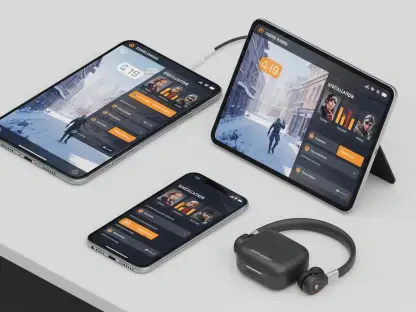
This foundation of evidence is paving the way for a new generation of more sophisticated and accessible AI companions. One such system, ElliQ, combines a proactive tabletop robot with voice coaching and wellness check-ins, and its success in early trials at reducing loneliness and encouraging healthy behaviors has led several state aging agencies to subsidize its distribution to isolated older adults. In a similar vein, the Yaya Bear was developed with a focus on simplicity and accessibility for users with cognitive impairments. This conversational teddy bear requires no screens, apps, or complex setup. Instead, it engages in gentle dialogue, learns the user’s life story to prompt reminiscence, and can generate structured insights on mood and cognitive changes for families and clinicians, all with user consent. Early pilot studies have reported promising outcomes, including a reduction in “sundowning” agitation and an increase in moments of joy and connection for users.
Practical Applications in Modern Neurology
For clinicians on the front lines, these embodied AI companions are emerging as a valuable adjunctive tool to address persistent gaps in care. In the context of dementia management, a social robot can provide the kind of structured, continuous daytime engagement that is crucial for mitigating behavioral and psychological symptoms. By offering a constant source of gentle interaction, these companions can help reduce common issues like agitation, apathy, and restlessness, particularly during challenging times of the day like late afternoon. This not only improves the quality of life for the individual with dementia but also provides a tangible form of support for families. For caregivers, knowing their loved one has a source of comfort and engagement can alleviate stress and offer a way to feel connected and “extend” their presence, even when they cannot be physically there.
Beyond dementia care, these AI systems offer significant potential for managing the prevalent and often undertreated mood disorders associated with conditions like Parkinson’s disease and post-stroke recovery. Apathy, depression, and social withdrawal can severely impede rehabilitation and diminish a patient’s overall well-being. An always-available, non-judgmental AI companion can serve as a consistent source of positive reinforcement. It can gently nudge patients to engage in conversation, provide reminders for physical exercises, and encourage adherence to medication schedules, helping to break the cycle of inactivity and isolation. Furthermore, with strict privacy protocols and explicit user consent, the conversational data generated by these systems can function as a powerful remote monitoring tool. AI algorithms can analyze subtle shifts in speech fluency, emotional affect, or conversational content, flagging potential issues like delirium or worsening depression for early clinical intervention.
Integrating Innovation with Integrity
The successful integration of AI companions into mainstream neurology necessitated a framework built on strong ethical guardrails. It was made explicitly clear by the clinical community that these systems were designed to augment, not replace, human connection and professional care. Neurologists championed principles of transparency and informed consent, ensuring patients and families understood both the capabilities and limitations of the technology. Emphasis was placed on avoiding deceptive anthropomorphism and preventing commercial incentives from driving the inappropriate deployment of these devices in situations where human care was paramount. This focus on ethical oversight ensured that innovation served the genuine needs of patients. The path forward was paved not by glossy demonstrations but by a commitment to scientific rigor, leading to pragmatic, multi-site clinical trials that embedded these technologies directly into memory clinics and stroke programs. The success of this integration was ultimately measured by the outcomes that mattered most: tangible improvements in patient mood and function, measurable reductions in caregiver burden, and a clear demonstration of cost-effectiveness within the healthcare system.