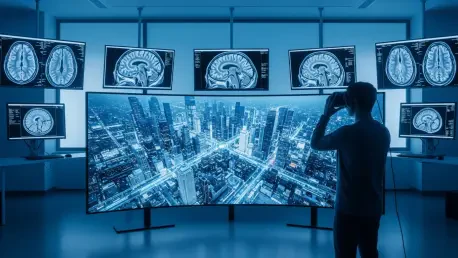

The long-standing belief that the physical architecture of the human brain serves as a direct blueprint for specific cognitive talents has been a cornerstone of modern neuroscience for decades. However, a comprehensive study conducted by researchers at the University of Texas at Arlington and the University of Florida has recently fundamentally challenged the validity of this “real estate” hypothesis by examining the relationship between brain shape and spatial navigation. By focusing on the hippocampus, which is often described as the brain’s internal GPS, the research team utilized sophisticated artificial intelligence to see if the size or curvature of this region could predict a person’s ability to find their way. Despite the high resolution of modern imaging and the power of deep learning, the results demonstrated a striking lack of correlation between the macroscopic structure of the hippocampus and actual navigational performance. This finding suggests that our ability to map the world around us is far more complex than the mere physical volume of our neural tissue might imply.
Challenging the London Taxi Driver Narrative
For many years, the scientific community relied heavily on the famous “London Taxi Driver” studies as definitive proof that spatial mastery leads to a larger hippocampus. These landmark investigations observed that professional drivers who spent years memorizing the intricate, labyrinthine streets of London developed significantly more gray matter in the posterior regions of their hippocampi. This observation fostered a widespread consensus that a larger brain region was synonymous with superior functional output, suggesting that the brain’s macroscopic volume was a reliable indicator of cognitive expertise. It led many to believe that by simply measuring the size of a specific neural structure, one could accurately gauge an individual’s aptitude for complex tasks. This structural-centric view has dominated the field, influencing everything from educational theories to clinical diagnostic approaches, but the latest data suggests that this relationship is not as straightforward as once believed.
The recent research led by Dr. Steven Weisberg and Ashish Sahoo highlights a critical distinction between the effects of elite, long-term training and the natural variation found among the general population. While the extreme cognitive demands of navigating a major metropolis for a living might eventually manifest as physical changes in the brain, these rules do not appear to apply to the average healthy young adult. In this study, ninety participants with an average age of twenty-three were tracked as they learned to navigate highly realistic virtual environments, revealing a wide spectrum of abilities that bore no relation to their hippocampal volume. For the vast majority of people, being a “good” or “bad” navigator is not a trait that can be measured by looking at the brain’s physical hardware. This indicates that while the brain is certainly plastic and capable of growth under extreme conditions, the inherent differences in everyday navigation skill are governed by factors other than visible anatomical size.
Leveraging AI to Detect Hidden Patterns
To ensure that no subtle structural nuances were missed by traditional measurement techniques, the research team employed advanced machine learning tools, including Graph Convolutional Neural Networks and 3D Convolutional Neural Networks. Unlike standard volumetric analysis, which merely calculates the total space a region occupies, these sophisticated AI models are designed to identify high-dimensional patterns in the shape, curvature, and internal configuration of brain structures. The objective was to determine if an “AI eye” could detect a specific “navigation signal” within the hippocampal anatomy that human researchers might have overlooked. By processing high-resolution T1-weighted MRI scans, the machines looked for any morphological signature that might correlate with the mental maps participants created during their virtual reality tasks. This approach represented the cutting edge of neuroimaging analysis, pushing the boundaries of what modern technology can reveal about the mind.
Despite the impressive processing power of these deep learning models, the artificial intelligence failed to find any structural pattern that could reliably predict a person’s navigational proficiency. While the algorithms were highly successful at identifying the hippocampus itself and distinguishing it from other structures like the thalamus, they were unable to tell the difference between the brain of a top-tier navigator and that of someone who frequently becomes lost. Furthermore, while the models showed some predictive promise during the initial training phases, they demonstrated almost no value when applied to “held-out” test data, suggesting that any early patterns identified were merely statistical noise rather than genuine biological signals. This result suggests that the biological code for navigation is not written in the macroscopic shape of the brain, effectively proving that even the most advanced AI cannot find a link that simply does not exist at the level of gross anatomy.
The Disconnect Between Form and Function
The absence of a structural signal points toward a fundamental separation between form and function in the healthy human brain. Researchers now suggest that the scientific community may have been looking at the wrong “language” when trying to decode human behavior through standard MRI scans. Just because a brain region is larger or shaped in a particular way does not mean it is more efficient or better at processing information. In fact, a smaller hippocampus could potentially be more effective than a larger one if its internal communication pathways are more streamlined and its neural firing is better synchronized. This “null signal” found by the AI indicates that the physical size of a region is a poor proxy for the complex cognitive processes it supports. It shifts the narrative away from the idea of the brain as a collection of static tools and toward a view of it as a dynamic, interconnected system where performance is determined by activity rather than appearance.
Experts now believe that the true roots of navigation skill likely exist at the microscopic level, residing in the strength of synaptic connections and the efficiency of chemical signaling between neurons. These are elements that current macroscopic imaging technology, which captures the brain at a millimeter-scale resolution, simply cannot visualize. The study highlights that how different brain regions communicate in real-time—often referred to as functional connectivity—is likely a much more potent predictor of behavior than static physical dimensions. This realization encourages a shift in focus from the “hardware” of the brain to its “software.” Understanding how electrical impulses move across networks and how neurons are wired at the cellular level will be essential for future breakthroughs. This perspective suggests that our talents are not carved into the shape of our brains but are instead woven into the invisible, high-speed interactions of our neural circuitry.
Implications for Alzheimer’s and Dementia Research
These findings carry significant weight for the medical field, particularly regarding the early detection and treatment of neurodegenerative diseases. Because the loss of spatial navigation skills is frequently one of the very first indicators of Alzheimer’s disease, clinicians have traditionally monitored the physical shrinkage of the hippocampus as a primary biomarker for cognitive decline. However, if healthy brains show no inherent structural link to navigation performance, waiting for visible atrophy to appear on an MRI might mean that medical intervention is happening far too late. If a person can be a poor navigator even with a perfectly healthy-looking hippocampus, then the initial stages of disease likely involve functional disruptions that occur long before any physical wasting becomes apparent. This creates an urgent need for diagnostic protocols that do not rely solely on structural imaging to identify those at risk for dementia.
The research strongly advocates for a transition toward behavioral and functional assessments as the primary tools for early diagnosis. By focusing on how a person’s navigational performance changes over time or how their functional neural networks interact during spatial tasks, doctors may be able to identify cognitive decline in its infancy. This approach prioritizes the assessment of “how the brain works” over “how the brain looks,” potentially opening the door for earlier therapeutic interventions. In the current medical landscape of 2026, where preventative care is becoming increasingly data-driven, these insights encourage the development of digital biomarkers—such as performance metrics from virtual reality navigation tests—to complement traditional imaging. Moving toward a more holistic view of brain health will be crucial for improving patient outcomes and refining our understanding of how the mind breaks down during the aging process.
Redefining the Future of Brain Mapping
This study serves as a necessary reality check for the field of neuroimaging, reminding scientists that the human brain’s complexity remains largely beyond the reach of simple structural analysis. It confirms that “more real estate” does not necessarily translate to superior performance in healthy populations, which helps streamline future research by narrowing the search for reliable cognitive biomarkers. By debunking the myth that macroscopic shape dictates skill, the scientific community can now pivot resources toward more promising avenues of inquiry. This research has successfully cleared the path for a new generation of studies that will likely ignore gross anatomy in favor of exploring the brain’s intricate microscopic “wiring” and real-time functional dynamics. This refined focus is essential for building more accurate models of human cognition and for developing technologies that can truly interface with the nuances of our mental processes.
Future investigations will likely expand to include larger, more diverse sample sizes and older populations to see if a structural-behavioral link emerges as the brain ages or as cognitive decline begins. For now, the mystery of why some people possess an innate sense of direction while others struggle to find their way remains unsolved, hidden within the intricate and invisible networks of the mind. The UT Arlington study concluded that for the average person, spatial intelligence is a product of neural activity rather than physical size. By demonstrating that even the most advanced AI could not bridge the gap between brain shape and behavior, the researchers have pushed the field to look deeper. Actionable next steps for the industry involve the integration of high-resolution functional MRI with behavioral data, ensuring that future brain mapping projects prioritize the dynamic connectivity that defines the human experience rather than the static structures that house it.