
The rapid proliferation of generative artificial intelligence is not merely introducing novel tools for content creation; it is fundamentally reconfiguring the global landscape of narrative power, demanding a robust ethical framework to ensure that technology serves to restore human dignity rather than inflict further harm through distorted representation. This technological revolution is less about the machines themselves and more about the structural redistribution of storytelling authority, challenging who gets to shape the narratives that define our world. As these new capabilities become more accessible, an urgent need arises for a guiding principle—a concept of “narrative justice”—to navigate this terrain. This framework insists that the ultimate measure of a story’s value is not its technical sophistication or persuasive power, but its capacity to honor the complex, multifaceted truth of human experience. The stakes are immense, as the stories we tell and how we tell them possess the dual capacity to either be an act of profound restoration or a subtle form of violence.
The Weight of a Story
The profound ethical responsibility inherent in storytelling is vividly illustrated by a formative experience from the Kosovo crisis in the late 1990s. Displaced Kosovar women, living in refugee camps, voiced a deep frustration with the international journalists covering their plight. They felt their rich, multidimensional lives—as mothers, professionals, artists, and community leaders—were being flattened into a single, monolithic narrative of sexual violence. While the stories being told were not factually untrue, their incompleteness functioned as a violation, stripping the women of their agency and trapping them within a narrative they did not recognize as their own. This moment crystallized a core truth that has become an ethical compass for responsible creation: storytelling can either restore dignity or quietly take it away. This understanding gives rise to the maxim, “Stories without struggle are persuasion, but stories without dignity are violence,” a powerful distinction that separates effective messaging from authentic narratives that honor the full spectrum of human experience.
This principle forces a critical examination of intent versus impact. A narrative, regardless of its noble purpose, becomes a form of violation if it fails to uphold the dignity of its subjects. With the advent of creative AI, which can generate narratives at an unprecedented scale and speed, this ethical consideration becomes more crucial than ever. The ease of production could lead to a proliferation of incomplete or stereotypical stories, amplifying harm on a global scale. Therefore, the central challenge is not simply to master new tools but to embed a deep commitment to dignity within the creative process itself. This requires a shift away from viewing people as subjects of a story and toward recognizing them as authors of their own, ensuring that technology amplifies their voice rather than speaking for them. The goal must be to foster an ecosystem where AI serves as a conduit for more profound, nuanced, and respectful storytelling, rather than a machine for efficient but soulless persuasion.
Democratizing the Global Imagination
The advent of creative AI marks a pivotal moment in the history of storytelling, primarily because it democratizes the tools of creation and dismantles long-standing barriers to entry. This impact is not merely technological but structural, fundamentally altering who possesses the authority and the means to craft and disseminate narratives on a global stage. This transformation is already visible across the world, exemplified by a young creator in Nairobi producing a professional-quality animated short on a mobile device, a climate advocate in the Amazon illustrating a potential future for her community without needing a film crew, and a poet in Beirut translating her work across multiple languages while preserving essential cultural nuance. For generations, the power to shape the global imagination was concentrated in the hands of a few with access to expensive equipment, distribution networks, and institutional backing. AI is now placing these capabilities into the hands of millions, unleashing a wave of new voices and perspectives that have long been marginalized or silenced.
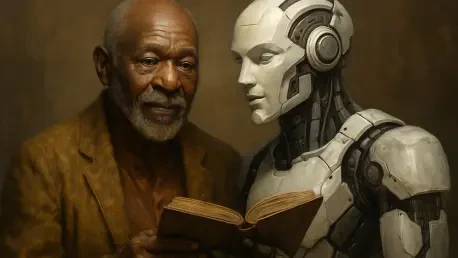
This shift is particularly evident among a new generation of young African creators who are seizing these tools to challenge and subvert outdated, externally imposed “development tropes” of poverty and conflict. Through their work, they are rejecting narratives that frame their continent as a place of lack and instead are drawing from rich internal sources like Afrofuturism, cultural memory, and profound pride. They skillfully blend ancestral wisdom with contemporary technology to create works that explore complex themes of tradition, grief, renewal, and resistance. This movement embodies the spirit of the enduring proverb, “Until the lion learns to write, every story will glorify the hunter.” For these creators, AI is the powerful new pen that finally enables the lion to tell its own story. This marks a crucial step towards a more equitable and representative global consciousness, where narratives are no longer imposed from the outside but emerge authentically from the communities they represent.
A New Language for Global Dialogue
This democratizing force finds a compelling parallel in the long-standing role of independent artists within the formal halls of global governance. For decades, poets, dancers, musicians, and filmmakers have been curated for high-level United Nations gatherings, often invited under the seemingly peripheral guise of “entertainment.” However, their function has always been far more essential. In spaces dominated by formal speeches and institutional messaging, these artists act as powerful interpreters and amplifiers. They possess the unique ability to translate complex global issues from the abstract language of policy into the emotional and relational spaces where human beings truly listen and connect. A palpable shift occurs in these formal rooms when an artist takes the stage: delegates lean in, young people feel their experiences are being recognized, and communities feel genuinely seen. These moments affirm that independent artists are not mere accessories to the machinery of global governance; they are its vital “pulse,” carrying policy from inert paper to the lived reality of people.
Creative AI is now poised to significantly expand and enhance this crucial role. By providing new tools for visualization and emotional expression, AI enables storytellers to tackle vast and abstract challenges like the climate crisis in ways that inspire engagement and action. The technology was used to craft Moving On, the first African AI-generated climate music video, and You Decide, a short film that opened a UN dialogue on AI governance by merging memory and ethical considerations into a potent visual vocabulary. A significant benefit of this approach is its contribution to sustainable creative practices. AI allows for the creation of emotionally resonant visual narratives without the need for long-haul flights, expensive equipment, or environmentally costly production processes. This is especially relevant for climate storytelling, which has often struggled to bridge the gap between scientific data and the emotional urgency required to inspire meaningful change. AI offers a new lexicon to personify the planet, imagine post-climate futures, and construct visual metaphors that make the crisis more tangible and emotionally legible.
Forging an Ethical Future
The path forward ultimately required a clear distinction between authentic storytelling and institutional communications. It was established that these two forms of expression serve different, though equally essential, mandates. Institutional communications must prioritize clarity, neutrality, and diplomacy, aiming for coherence rather than catharsis. In contrast, storytelling, particularly “artivism”—artistic practice rooted in social analysis and community truth-telling—is inherently emotional, textured, and often uncomfortable. It serves as a vessel for memory, a tool for interpreting power, and a means of introducing humanity into spaces that policy alone cannot fully penetrate. When institutions used the phrase “the power of storytelling,” they often meant persuasive messaging, a dangerous conflation that risks sacrificing dignity for diplomatic expediency. To navigate this new terrain responsibly, “narrative justice” was proposed as an essential grounding ethic. This framework recognized that storytelling is an exercise of power, profoundly shaped by decisions about inclusion, framing, and authorship, and it insisted on protecting the cultural specificity and lived experience that give narratives their integrity.
This understanding culminated in a clear call to action for the United Nations and other global institutions. The role of these bodies was not to become the storyteller but to support and empower storytellers from the ground up. This shift necessitated concrete steps, such as strengthening multistakeholder coalitions to bring cultural workers into policy discussions, promoting equitable access to creative AI tools to prevent a new digital divide, and developing dignity-centered guidelines for AI-generated media that protect human rights and narrative sovereignty. In a progression similar to how youth participation evolved at the UN from being a token gesture to an essential contribution, the global artist community was positioned to be recognized as a vital partner in shaping a more just world. The urgent question was no longer whether AI would reshape storytelling, for it already had. The critical question was whether this evolution would be guided by the principles of dignity, inclusivity, and justice, finally creating a future where the lion, not the hunter, got to tell its own story.