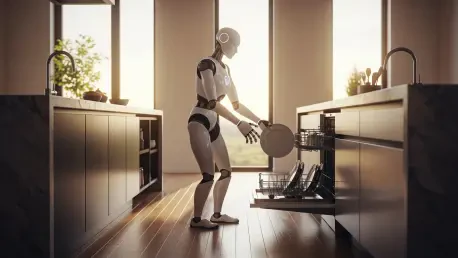

A bipedal machine standing in a kitchen, mimicking the precise grip of a human hand while sorting laundry, is no longer a fever dream of mid-century novelists or a cinematic special effect designed for the silver screen. The dream of sharing living spaces with artificial beings has shifted from the pages of science fiction to the assembly lines of modern tech firms. While folklore and film have long toyed with the idea of mechanical servants, the “Neo” bot by 1X has officially moved the conversation into the consumer marketplace. This 168-centimeter humanoid is more than just a laboratory prototype; it serves as a signal that the boundary between human sanctuary and high-tech laboratory is beginning to dissolve.
As these machines prepare to cross physical thresholds, a fundamental question emerges regarding the readiness of society for the physical and ethical presence of robots in private corridors. The introduction of such technology necessitates a reevaluation of how people interact with machines that occupy the same space as children and pets. This transition represents a significant leap in domestic history, marking the first time that general-purpose intelligence has taken a mobile, human-like form within the residence. The implications of this shift extend beyond simple convenience, touching upon the very nature of the domestic environment.
Beyond Science Fiction: The Arrival of the Mechanical Roommate
The transition of humanoid robots from conceptual drawings to household appliances is accelerating at a rate that catches many observers by surprise. Unlike the stationary robotic arms found in automotive plants, the modern humanoid is designed for the fluidity of the home. Companies are no longer focusing solely on industrial utility; instead, they are prioritizing aesthetics and social integration. The Neo bot, for instance, is crafted to appear approachable rather than intimidating, reflecting a shift in design philosophy that prioritizes human comfort. This approach aims to lower the psychological barriers that typically prevent people from welcoming advanced machinery into their personal lives.
However, the presence of these robots is not merely about aesthetics or assistance. It represents a paradigm shift in how the home is viewed by the technology industry. Traditionally, the home was a sanctuary from the data-driven world of the workplace, but the arrival of the mechanical roommate turns the living room into a site of constant interaction and data generation. As these robots begin to perform tasks like folding clothes or preparing snacks, they become participants in the most intimate rhythms of life. This integration forces a confrontation with the reality that the household is becoming an extension of the digital grid.
The Technological Perfect Storm Fueling the Robotic Surge
The sudden emergence of over 50 global companies competing to build home humanoids is the result of a massive convergence in hardware and software innovation. Developments in the electric vehicle industry have trickled down, providing the high-density batteries and high-torque motors necessary for a robot to move fluidly and operate for extended periods. This foundation allows for a physical form that mimics human motion more closely than ever before. Motors that once powered the wheels of high-performance cars are now adapted to actuate the joints of a robot, allowing for a level of precision that was previously cost-prohibitive for consumer products.
Furthermore, the integration of Large Language Models and generative AI has finally given robots the cognitive capacity needed to interpret natural language commands and navigate unpredictable settings. In the past, robots were limited by rigid programming; today, they can understand nuance and context. As labor shortages grow and the aging population increases, the financial incentive to automate domestic care has never been higher. This economic shift turns a scientific curiosity into a commercial necessity, pushing technology toward a future where robotic assistance is a standard household feature. The demand for help with elderly care and household management is the engine driving this rapid development cycle.
Domestic Realities and the Case of the 1X Neo
While the hardware is impressive, the transition from a controlled factory floor to a cluttered living room presents unique hurdles that current technology continues to address. Unlike a dishwasher or a specialized vacuum, which perform one task perfectly, a humanoid is a generalist. It must prove it can justify a price tag of $20,000 by performing a wide variety of tasks—like folding laundry or clearing a table—better than existing specialized appliances. The challenge lies in achieving a level of dexterity and reliability that matches a human, a feat that remains incredibly difficult in a setting where every object is shaped differently.
Current models like the Neo often rely on “ghost work,” where a remote operator wearing a virtual reality headset takes control for complex maneuvers. This reveals that true autonomy remains a work in progress rather than a finished product. Human homes are inherently uncontrolled environments filled with soft obstacles like pets, scattered toys, and varied floor textures. These factors remain a significant challenge for even the most advanced sensors, requiring constant adaptation to prevent accidents. Until a robot can navigate a messy hallway in the dark without bumping into a sleeping dog, its utility in the average home will remain limited.
Privacy Breaches and the Ethics of Remote Labor
Integrating a humanoid robot into the home introduces unprecedented risks regarding personal data and the potential exploitation of behind-the-scenes workers. To function, these robots require constant visual and spatial mapping, creating a literal corporate viewport into the residence. This raises concerns that intimate habits could be recorded, analyzed, or leaked, turning the home into a data-collection node for large corporations. The visual data required for a robot to distinguish a coffee mug from a wine glass is the same data that reveals the layout of a house and the identities of its inhabitants.
The reliance on remote operators highlights a troubling trend of invisible labor. Workers in various regions may be paid low wages to monitor private domestic scenes to train the AI of a robot. Philosophically, experts suggest that these robots are more than just tools; they act as mirrors of humanity. The ethical challenge lies in whether society treats them as sophisticated appliances or as entities that redefine the understanding of empathy and social interaction. If a robot is constantly “phoning home” to a human supervisor, the expectation of privacy within one’s own walls is fundamentally altered, creating a new set of social norms that have yet to be fully debated.
Evaluating the Readiness Framework for Home Integration
Before inviting a humanoid robot into a home, it is essential to evaluate the practical and security frameworks that ensure safe cohabitation. A thorough data sovereignty check is required to determine if the robot processes data locally or streams video and audio to a corporate cloud. This distinction significantly impacts the privacy of the household and the security of personal information. Consumers must demand transparency from manufacturers regarding where data is stored and who has access to it, particularly during the training phases of the robot’s development.
Understanding the intervention protocols and remote override settings is equally vital. Users should maintain the ability to opt out of human-monitored training sessions to ensure no third party enters the home virtually. Additionally, analyzing the cost-to-utility mapping helps determine whether the robot provides a genuine solution to domestic labor or functions as an expensive novelty. Establishing physical boundaries and software “no-go zones” prevents the robot from entering sensitive areas without explicit, one-time permissions. Only by setting these rigorous standards can the transition to a robotic household be managed in a way that prioritizes the safety and dignity of the occupants.
The integration of humanoid assistants required a balanced approach that prioritized human privacy over corporate convenience. Society moved toward a framework where data processing remained local, ensuring that the sanctuary of the home was not compromised for the sake of automation. Developers focused on enhancing edge computing and transparency, which allowed users to regain control over their domestic environments. Future considerations centered on the establishment of universal safety standards and ethical labor practices for remote trainers. By demanding rigorous certifications and clear opt-out clauses, consumers ensured that the arrival of mechanical roommates served the household rather than the data broker. The evolution of this technology demonstrated that while the mechanical roommate was technically possible, its success depended on the strength of the social and legal safeguards put in place to protect the human experience.