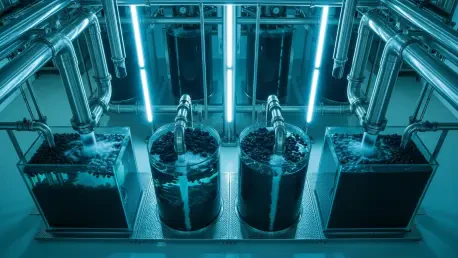

The rapid escalation of antibiotic residues in global water supplies has created a silent but pervasive crisis that threatens the very foundation of modern medicine and ecological health. These pharmaceutical compounds, often originating from hospital runoff, agricultural waste, and improper disposal, act as catalysts for the development of antibiotic-resistant bacteria, which could render common infections life-threatening by the end of the current decade. Traditional wastewater treatment facilities were not originally designed to filter out these complex molecular structures, leading to a steady accumulation of pollutants in rivers, lakes, and groundwater. To address this, environmental scientists are increasingly looking toward biochar—a carbon-dense material created from the pyrolysis of organic waste—as a sustainable and cost-effective remediation tool. However, the sheer variety of biomass sources and the intricate chemical interactions involved have long made the optimization of biochar a slow, labor-intensive process that struggles to keep pace with the growing rate of global water contamination.
Moving Toward Predictive Environmental Chemistry
The Power of Data-Driven Material Science
The shift from manual laboratory experimentation to AI-driven discovery represents a fundamental change in how environmental materials are synthesized and deployed. For years, the development of biochar-based catalysts involved a cycle of trial and error, where researchers would adjust carbonization temperatures and chemical precursors without knowing exactly how these changes would affect the final product’s performance. This empirical approach was inherently limited by time and resources, often taking months to yield a single optimized material for a specific antibiotic. By integrating the TabPFN deep learning model, scientists can now analyze massive datasets containing thousands of previous reaction results to predict the efficiency of a material before it is even created in a furnace. This high-precision forecasting allows for the rapid identification of the most effective carbon structures, effectively compressing years of traditional research into a matter of hours or days.
Predictive modeling goes beyond mere speed; it provides a structural blueprint that links the microscopic architecture of biochar to its macroscopic performance in contaminated water. The AI focuses on the “physical fingerprint” of the material, specifically targeting pore morphology and total surface area as the primary drivers of pollutant removal. When biochar is engineered with high porosity, it acts like a sophisticated molecular trap, providing ample space for antibiotic molecules to be adsorbed and subsequently neutralized. Through digital simulation, engineers can determine the exact pore size distribution needed to capture specific pharmaceutical classes, such as sulfonamides or tetracyclines. This level of customization ensures that water treatment is not just a general process but a targeted surgical strike against the most dangerous contaminants present in a particular geographic region, making the most of every gram of material used.
Advancing Material Design Through Artificial Intelligence
As the digitalization of chemistry progresses, the ability to simulate the behavior of biochar in complex aquatic environments has become a critical asset for environmental protection agencies. Beyond simple adsorption, the AI model evaluates how surface functional groups—chemical “hooks” on the biochar—interact with dissolved organic matter and various ions present in natural water bodies. This is a vital distinction because pure laboratory water rarely reflects the messy, multi-component reality of a polluted river. The deep learning framework can account for these interference factors, allowing researchers to develop materials that remain effective even in the presence of competing pollutants. By identifying the most resilient chemical configurations through data analysis, the scientific community is moving away from generic solutions toward highly specialized, high-performance environmental catalysts that can be deployed with confidence in diverse global settings.
This transition toward a data-centric methodology also fosters a more sustainable research ecosystem by significantly reducing the chemical and energy waste associated with failed experiments. In the past, dozens of batches of biochar might be discarded because they failed to meet performance benchmarks, but with AI-aided prediction, the success rate of the first physical synthesis is drastically improved. This efficiency is particularly important as the world moves toward a circular economy where agricultural residues like rice husks, wood chips, and manure are transformed into high-value environmental assets. By providing a mathematical framework for this transformation, deep learning ensures that the path from waste to water purification is as direct and resource-efficient as possible, setting a new standard for how we approach the engineering of sustainable materials in 2026 and beyond.
Mechanisms of Targeted Pollutant Degradation
Optimizing Catalytic Efficiency and Dosing
The actual destruction of antibiotics within a water system relies on a sophisticated process known as advanced oxidation, where biochar acts as a catalyst to trigger the formation of reactive oxygen species. These species, including hydroxyl and sulfate radicals, are the primary “chemical scissors” that chop complex pharmaceutical molecules into harmless byproducts like water and carbon dioxide. The AI model has been instrumental in uncovering the hidden role of persistent free radicals trapped within the biochar’s carbon lattice. These radicals serve as the essential engine for the catalytic cycle, yet their concentration and stability depend heavily on the original biomass source and the temperature of production. By using deep learning to map these relationships, scientists can fine-tune the pyrolysis process to maximize the radical density, ensuring that the biochar remains chemically active for much longer periods than previously thought possible.
Precision dosing is another area where AI-driven insights are fundamentally changing water treatment logistics and economics. A common misconception in environmental engineering was that increasing the amount of catalyst or oxidant would always lead to faster cleanup, but the AI model has revealed a more complex reality characterized by diminishing returns. Through rigorous data analysis, the model identified a “scavenging effect,” where an overabundance of chemical reagents causes them to react with each other rather than the antibiotics, effectively wasting the materials and slowing down the purification process. By calculating the exact “sweet spot” for dosing based on the specific concentration of pollutants, the AI ensures that treatment plants operate at peak efficiency. This prevents the unnecessary expenditure of resources and reduces the overall cost of water remediation, making it a viable option for municipalities with limited budgets.
Enhancing Reaction Kinetics Through Deep Learning
The ability of deep learning to dissect the kinetics of chemical reactions allows for a deeper understanding of how external factors like temperature and pH levels influence the degradation rate. Antibiotic molecules are sensitive to the acidity or alkalinity of their environment, and their charge can change depending on the water’s pH, which in turn affects how they bind to the biochar surface. The TabPFN model incorporates these variables into a unified predictive framework, allowing operators to adjust treatment parameters in real time to compensate for seasonal changes in water chemistry. For example, during heavy rainfall, the concentration and pH of a river may shift rapidly; an AI-informed system can instantly suggest the necessary adjustments to the biochar dosage or oxidant flow to maintain consistent water quality standards without the need for manual recalibration.
Furthermore, the integration of AI allows for the exploration of non-radical pathways, which are often more selective and less prone to interference from natural organic matter. While radicals are powerful, they are often “blind” and will attack anything in their path, whereas non-radical mechanisms can be designed to specifically target the molecular bonds unique to antibiotics. The deep learning model identifies which biochar surface features, such as specific oxygen-containing functional groups or graphitic structures, promote these selective pathways. By optimizing for selectivity, the treatment process becomes more robust and less likely to be hindered by the complex “background noise” of environmental water. This mechanical insight is a direct result of the AI’s ability to find patterns in multidimensional data that are far too complex for traditional human analysis to perceive.
Scaling Solutions for Global Impact
Digital Tools and Expanded Remediation Efforts
The ultimate value of AI-driven research lies in its ability to be scaled and implemented by those on the front lines of environmental management. To facilitate this, the research has culminated in the creation of an accessible, web-based platform that translates complex deep learning outputs into actionable data for non-specialists. Treatment plant operators, environmental engineers, and even local government officials can input basic parameters such as the type of antibiotic detected and the characteristics of their water source to receive immediate guidance on the best biochar configuration and dosage. This democratization of high-level science is a game-changer for regions that lack the infrastructure for advanced chemical modeling or extensive laboratory testing. It empowers local communities to take control of their water safety by providing them with the same technological advantages as major research institutions.
This digital approach also paves the way for a more collaborative global response to water pollution, as data from various geographic locations can be fed back into the model to continuously improve its accuracy. As more users interact with the platform and upload their results, the AI learns from a broader range of “real-world” scenarios, becoming increasingly adept at handling diverse and emerging contaminants. This creates a self-reinforcing cycle of improvement that is essential for staying ahead of the pharmaceutical industry’s development of new drugs. By building a living database of environmental remediation, the scientific community is creating a resilient infrastructure that can adapt to new challenges as they arise, ensuring that the tools used to protect our water supplies are always at the cutting edge of technological possibility.
Future Horizons in Environmental Restoration
Looking toward the immediate future, the framework established for antibiotic degradation is already being adapted to tackle a wider array of persistent organic pollutants that threaten global ecosystems. Industrial dyes from the textile industry, pesticides from large-scale agriculture, and per- and polyfluoroalkyl substances (PFAS) are all candidates for this AI-optimized biochar approach. The fundamental principles of using deep learning to match a carbon-based catalyst to a specific molecular target remain the same, regardless of the pollutant involved. This versatility suggests that we are entering an era of “programmable matter” for environmental science, where materials can be digitally designed and physically realized to solve specific ecological problems with a level of precision that was previously unimaginable in the field of wastewater management.
The successful implementation of AI-driven biochar technology has demonstrated that the most effective solutions to modern environmental crises lie at the intersection of diverse disciplines. By combining the computational power of data science with the practical applications of environmental chemistry, researchers have provided a roadmap for sustainable, scalable, and highly efficient water purification. Moving forward, the focus must remain on the integration of these digital tools into standard engineering practices and the continued exploration of waste-to-value pathways. As the global population continues to grow and industrial activity intensifies, the ability to rapidly deploy optimized catalysts will be the cornerstone of a comprehensive strategy to ensure that clean, safe water remains a fundamental right for all. The transition to model-informed engineering has already proven its worth, and its continued expansion will be vital for the long-term health of the planet.