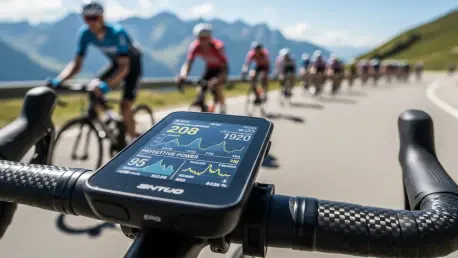

The modern professional cycling peloton is no longer just a theater of physical endurance but a high-speed laboratory where every micro-adjustment can determine the difference between a podium finish and total obscurity. As the 2026 season unfolds, the INEOS Grenadiers have signaled a definitive shift in their operational philosophy by entering into a deep, five-year technical partnership with the Danish technology firm Netcompany. This collaboration represents a significant departure from traditional sports sponsorships, as the tech firm is not merely placing a logo on a jersey but is acting as a primary technological architect. At the center of this initiative is the implementation of the PULSE AI platform, a system designed to consolidate and interpret the massive influx of metrics that now define the sport. By integrating advanced algorithms into the daily racing operations, the team aims to reclaim its historical dominance by mastering the digital landscape as effectively as they once mastered the physical training of their athletes.
Harnessing Predictive Intelligence from Global Logistics
The PULSE AI platform enters the world of professional road racing with a formidable reputation, having been developed and refined in some of the most complex logistical environments on the planet. Previously utilized to manage the intricate flows of Heathrow Airport and various large-scale government agencies, the technology is built to handle thousands of concurrent variables in real time. In the context of cycling, this means shifting the focus from descriptive data, which explains what has already happened, to predictive modeling that can forecast potential race scenarios before they occur. By treating a three-week Grand Tour with the same mathematical precision as international airport traffic, the platform allows the team to anticipate fluctuations in rider performance, mechanical reliability, and even environmental impacts. This cross-industry technology transfer suggests that the chaos of a professional bike race is not an unsolvable mystery but a complex system that can be optimized through sophisticated architectural design.
Beyond simply organizing existing information, the application of this logistical AI provides a framework for proactive strategy. In the past, tactical decisions were often made based on the intuition of a director in a team car or the immediate feelings of a rider on a climb. However, the integration of PULSE allows for the creation of digital twins for specific stages, enabling the team to run thousands of simulations based on projected weather patterns, road surfaces, and the power profiles of competitors. This level of preparation ensures that when a rider faces a critical moment on a mountain pass, the team has already accounted for the most likely outcomes. The shift toward predictive intelligence marks a new era where the “marginal gains” philosophy is no longer about better clothing or lighter bikes alone, but about possessing the most accurate map of the future. This strategic advantage is designed to remove the guesswork from high-stakes racing, providing a clearer path to victory in an increasingly tight field.
Filtering the Information Blizzard for Actionable Insights
Professional cyclists today are walking, breathing data points, generating a constant “blizzard” of metrics that include everything from real-time core temperature and oxygen saturation to precise aerodynamic drag and tire pressure. While this abundance of information is theoretically valuable, it often leads to a state of paralysis where staff and athletes are so overwhelmed by the sheer volume of numbers that they lose sight of the race itself. Netcompany’s primary objective is to act as a sophisticated filter, using AI to strip away the secondary noise and highlight only the most critical factors that directly influence the outcome of a stage. By identifying the vital few metrics that truly drive performance, the platform ensures that the feedback loop between the bike and the team car remains clear and efficient. This streamlined approach prevents the “data for data’s sake” trap, allowing the organization to maintain its focus on winning rather than just measuring.
The process of information alignment is particularly crucial during the heat of a race, where decisions must be made in a matter of seconds. When a rival team attacks or a sudden crosswind threatens to split the peloton, the director doesn’t need a spreadsheet; they need a definitive insight. The PULSE platform is designed to provide these “actionable nuggets” of intelligence, translating raw computational power into simple, high-impact guidance. This involves synthesizing fragmented data from various sensors into a single, cohesive narrative that characterizes the current state of the race. By reducing the cognitive load on the technical staff, the AI allows them to remain calm and decisive under pressure. Ultimately, the goal is to transform the blizzard of data into a clear lens, giving the INEOS Grenadiers a vision of the race that is more precise and focused than that of their competitors, thereby turning information into a tactical weapon.
Balancing Human Intuition with Algorithmic Precision
A pivotal element in successfully integrating this technology is the leadership of Geraint Thomas, who has moved from being a Tour de France champion to serving as the Director of Racing. Thomas acts as a vital bridge between the cold logic of the algorithms and the visceral, often unpredictable experience of the professional athlete. He understands that while an AI can suggest a theoretical maximum power output or an ideal tactical move, it cannot account for the mental fortitude or the “grit” required to push through a grueling mountain stage. During the current “discovery phase” of the partnership, the focus is on ensuring that the technology supports the riders’ instincts rather than overriding them. This balance is essential for maintaining the culture of the team, as it ensures that the athletes feel empowered by the data rather than controlled by it. The AI provides the map, but the rider remains the one who must navigate the terrain and make the final call.
The synergy between human experience and machine learning also serves to validate the data itself. Even the most advanced AI can produce “bad data” if the inputs are flawed or if it fails to account for the psychological nuances of a peloton. By having a veteran like Thomas oversee the implementation, the team can verify whether the platform’s suggestions align with the reality of the road. This human-in-the-loop system ensures that the AI’s predictive models are constantly being refined by real-world feedback. If a rider reports a feeling that contradicts a sensor reading, the team can investigate the discrepancy, leading to a more robust and accurate system over time. This approach recognizes that the sport is still fundamentally about the “guy on the bike,” and the technology’s most important role is to provide a supportive infrastructure that enhances the champion’s natural talent. The result is a more resilient organization where technology and tradition work in tandem.
Protecting Athlete Well-being through Mental Load Management
One of the most innovative aspects of this digital transformation is its explicit focus on the psychological impact of technology on the athletes. There is a growing awareness within the sport that “overloading” young, highly motivated riders with constant streams of performance data can lead to mental fatigue or even burnout. If a rider is constantly worried about their heart rate variability or their exact calorie consumption to the gram, they may lose the joy and focus necessary for peak performance. The PULSE platform is engineered to carry the heavy lifting of these calculations in the background, presenting the rider only with what is strictly necessary. By managing this mental load, the team allows the athlete to remain present in the physical act of racing. This strategy treats the rider’s mental energy as a finite and precious resource, just as important as their physical glycogen stores, and uses AI to protect it.
Furthermore, this focus on well-being extends to the long-term development of the team’s younger talent. By simplifying the interface between the rider and the data, INEOS ensures that the next generation of champions can develop their tactical awareness and physical capabilities without becoming overly dependent on a screen. The AI functions as a silent coach, providing subtle corrections and optimizations that don’t distract from the primary task of cycling. This holistic approach to technology usage sets a new standard for athlete care in the digital age, prioritizing the human element over the purely mechanical. When the athletes are less burdened by the minutiae of data management, they are more mentally resilient and better equipped to handle the psychological pressures of a Grand Tour. In this way, the partnership with Netcompany serves as both a performance enhancer and a safeguard for the longevity and health of the team’s most valuable assets.
Staying Ahead of the Curve through Strategic Synthesis
As the professional cycling world continues to follow the data-centric trajectory of Formula 1, the ability to consolidate fragmented information into a clear and actionable narrative has become the new frontier of the sport. The INEOS Grenadiers have recognized that the era of finding easy gains through training or equipment is largely over; the next decade of dominance will belong to those who can master “information alignment.” By partnering with a firm that specializes in the architecture of complex systems, the team has positioned itself at the forefront of this evolution. This strategic synthesis of art and science is not about replacing the traditional values of cycling with code, but about using code to give those values a more effective platform. The ultimate goal is to create a seamless integration where the technology is invisible but the results are undeniable, providing a foundation for consistent success in the 2026 season and well into the future.
Looking forward, the insights gained from this partnership are expected to have a lasting impact on how teams approach the management of professional athletes. The successful implementation of predictive AI suggests a future where racing strategy is increasingly personalized, with every aspect of a rider’s preparation and race-day execution tailored to their specific physiological and psychological profile. This move toward hyper-customization will likely trickle down to the broader cycling market, influencing how amateur riders and consumers interact with their own data. For the professional peloton, the immediate priority remains the pursuit of the yellow jersey and the mastery of the road. By turning the “blizzard of data” into a clear, navigable path, the INEOS Grenadiers have provided a blueprint for how a legacy team can reinvent itself in a digital world. The journey from London’s airports to the mountain peaks of Europe was a bold experiment that has now become a fundamental part of the team’s winning formula.