
The emergence of the CUBE 5.0 architecture allows Alibaba to deploy massive AI data centers in just 100 days, drastically reducing the time-to-market for new compute capacity. This unprecedented speed of expansion is the centerpiece of a broader structural transformation, signaling a definitive departure from Alibaba’s traditional identity as an e-commerce titan toward becoming a global leader in artificial intelligence infrastructure. Recent financial disclosures for the first quarter of fiscal 2027 reveal an irreversible shift where the cloud division has emerged as the primary engine for organizational growth. This strategic pivot is characterized by a surge in external commercialization revenue and the successful integration of proprietary hardware, positioning the company as a formidable challenger to the established Western cloud hegemony. By prioritizing the development of a localized and highly efficient compute ecosystem, the firm has effectively insulated itself from certain global supply chain fluctuations while simultaneously offering a more competitive price point for international enterprises seeking scalable AI solutions.
The company’s recent performance metrics place it in an elite tier of global technology providers, boasting a 45% year-over-year growth in external cloud revenue. This pace identifies Alibaba Cloud as the second-fastest-growing AI cloud provider globally, trailing only Google Cloud while notably outperforming major American competitors like Microsoft Azure and Amazon Web Services in specific growth sectors. Unlike the growth cycles of previous years driven by general internet migration, this current momentum is powered by specialized intelligent computing clusters, with AI-related products now reaching an annualized revenue run rate of approximately $7.4 billion. This revenue is no longer dependent on internal e-commerce traffic; instead, it is driven by a diverse portfolio of external clients ranging from financial services to industrial manufacturing. The market is witnessing a fundamental revaluation of the cloud business as it transitions from a back-end utility to a high-margin technology provider capable of sustaining significant top-line growth even as broader consumer spending habits fluctuate in the global economy.
Economics of Vertical Integration and Silicon Mastery
Achieving Profitability Through Proprietary Hardware
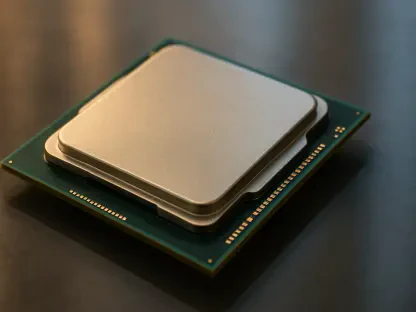
A defining factor in the recent ascent of the cloud division is the dramatic improvement in its profit margins, driven largely by the commercialization of in-house silicon. The company’s chip development arm, T-Head, has successfully deployed its Zhenwu series chips across a diverse range of industries, including financial services and autonomous driving. These custom-designed processors are optimized specifically for the high-concurrency demands of large language models, allowing for a more efficient allocation of power and thermal resources compared to general-purpose GPUs. By integrating its own GPUs and CPUs into the data center stack, the organization has mimicked a strategy pioneered by Amazon, effectively reducing its reliance on expensive third-party vendors and lowering the unit cost of compute for its customers. This vertical integration allows the provider to capture the margin that would otherwise be paid to semiconductor manufacturers, creating a buffer that can be used to either increase profitability or aggressively price compute services to gain market share in the competitive Asia-Pacific and European markets.
Building on this hardware foundation, the focus on proprietary silicon has enabled a level of software-hardware co-optimization that was previously unattainable. When the firmware of a server is designed in tandem with the AI models it is intended to run, the resulting latency reductions are substantial. For instance, in financial risk modeling and real-time autonomous vehicle navigation, milliseconds of difference in processing speed can translate into millions of dollars in value or critical safety outcomes. The Zhenwu series has proven capable of handling these high-stakes workloads with a higher degree of reliability than traditional architectures. Furthermore, the ability to control the supply chain at the silicon level has protected the company from the volatility of the global semiconductor market, ensuring that it can continue to scale its data centers even when third-party components are in short supply. This strategic independence has become a cornerstone of the company’s value proposition to large enterprises that require guaranteed uptime and predictable pricing for their long-term AI development projects.
Capitalizing on the Shift to AI Inference
The global AI landscape is currently transitioning from a focus on model training to a focus on inference, which involves the daily, high-concurrency use of AI models in production environments. Alibaba is uniquely positioned to capture this recurring revenue because its architecture is designed specifically to handle the continuous demand of real-world applications rather than just the burst-heavy requirements of model training. While training requires massive, short-term bursts of compute power to ingest data and adjust parameters, inference requires steady, reliable, and cost-effective processing to answer user queries and drive autonomous systems. By controlling the underlying infrastructure and the silicon that powers it, the company can offer a cost advantage that is difficult for competitors who rely solely on external chip suppliers to match. This focus on the inference stage of the AI lifecycle ensures a more predictable and sustainable revenue stream, as clients integrate these models into their core business operations, making the cloud service a “sticky” utility that is difficult to replace.
This shift toward inference-heavy workloads has also necessitated a redesign of how data centers handle data throughput and memory bandwidth. The proprietary architecture implemented across the global network allows for the simultaneous processing of thousands of inference requests with minimal degradation in performance. As enterprises move beyond the experimental phase of AI and begin deploying customer-facing chatbots, automated coding assistants, and complex logistical optimization tools, the demand for affordable and scalable inference will only increase. Alibaba’s ability to offer specialized instances optimized for specific inference tasks—such as image recognition or natural language processing—allows it to cater to a broader variety of client needs than providers who offer more generalized compute resources. This granular approach to compute allocation not only improves the user experience for the end customer but also maximizes the utilization rates of the data centers, directly contributing to the healthy operating margins reported in recent fiscal periods.
Investment Logic and the Infrastructure Payback Cycle
Strategic Capital Expenditure and Market Longevity
A commitment to a massive investment plan of over $56 billion in AI compute over the period from 2026 to 2029 reflects a high level of confidence in the long-term demand for infrastructure. This capital expenditure is aimed at securing the physical footprint and the technical components necessary to dominate the AI era. Despite the sheer scale of this spending, the company anticipates a relatively short payback period of two and a half to three years for its AI investments. This optimistic outlook is supported by a global industry consensus that the shortage of AI compute will likely persist until 2030, ensuring sustained pricing power for established providers. By investing heavily now, the organization is effectively pre-purchasing market share and building a moat of physical assets that will be difficult for newcomers to replicate. This strategy acknowledges that in the world of artificial intelligence, the most valuable commodity is not just the algorithm, but the electricity, silicon, and cooling capacity required to run it at scale.
Furthermore, the logic behind such aggressive capital expenditure is rooted in the belief that AI infrastructure is becoming the foundational layer of the modern economy, much like telecommunications or electricity grids in previous centuries. As more industries undergo digital transformation, the baseline requirement for sophisticated compute power grows exponentially. The $56 billion investment covers everything from the expansion of liquid-cooled data center facilities to the procurement of advanced networking equipment that facilitates high-speed data transfer between compute clusters. This long-term view allows the company to weather short-term market volatility and focus on building a resilient network that can support the next generation of AI applications, such as large-scale scientific simulations and city-wide autonomous logistics. By locking in energy contracts and land rights for data centers today, the firm is ensuring its operational viability for the next decade, positioning itself as a stable partner for governments and large corporations alike.
Rapid Deployment and Global Scale
To facilitate its aggressive expansion, the organization introduced the CUBE 5.0 architecture, a modular system capable of delivering massive AI data centers in just 100 days. This innovation allows the company to scale its footprint rapidly across dozens of global regions and over a hundred availability zones, providing a significant advantage in terms of geographic reach and data residency compliance. The modular nature of CUBE 5.0 means that individual components of a data center—such as cooling units, power distribution blocks, and server racks—can be manufactured off-site and assembled quickly, bypassing many of the delays associated with traditional construction. This speed is critical in a market where the demand for AI compute can surge overnight following the release of a new breakthrough model. Being able to go from a greenfield site to an operational data center in three months gives the company the agility to respond to market needs in real-time, capturing opportunities that slower-moving competitors might miss.
As the industry moves toward heterogeneous computing—a mix of general-purpose GPUs and custom accelerators—the early success with proprietary chips gives the provider a significant head start in the race to optimize data center efficiency. Heterogeneous environments are notoriously difficult to manage because they require sophisticated software layers to distribute workloads effectively across different types of processors. However, by designing both the hardware and the management software in-house, Alibaba has achieved a level of orchestration that maximizes the performance of every watt of electricity consumed. This efficiency is not just a technical achievement; it is a core economic driver. Lowering the power usage effectiveness (PUE) ratio of a data center directly reduces operating costs, which in turn allows for more competitive pricing in the global market. This combination of rapid physical deployment and superior operational efficiency creates a powerful flywheel effect, where faster growth leads to better economies of scale, further cementing the company’s position as a global leader.
Building a Self-Sustaining AI Ecosystem
The Qwen Model Series as a Growth Engine
The success of the cloud division is inextricably linked to its open-source model strategy, led by the Qwen series, which has surpassed 3 billion global downloads. By offering high-quality open-source models, the company attracts a massive community of developers who create derivative works, fine-tuned versions, and real-world applications based on the Qwen architecture. This ecosystem acts as a massive funnel, where increased model adoption leads directly to higher consumption of cloud computing power. Developers who build on Qwen are more likely to deploy their applications on the infrastructure where those models were born and optimized. This creates a self-sustaining loop of revenue and research development, as the feedback from the developer community helps the company improve its models and its infrastructure simultaneously. The open-source approach also fosters a level of trust and transparency that is highly valued by enterprises concerned about vendor lock-in or the “black box” nature of proprietary AI systems.
Moreover, the Qwen series has demonstrated that an open-source strategy can rival the performance of closed-source models from major Western labs. By consistently ranking at the top of global benchmarks for language understanding, coding, and mathematical reasoning, these models have become a standard for developers worldwide. This widespread adoption creates a network effect: the more people use and contribute to the Qwen ecosystem, the more valuable it becomes for everyone involved. This strategy effectively decentralizes the research and development process, allowing the company to benefit from the collective innovation of millions of users. It also serves as a potent marketing tool, showcasing the power of the underlying cloud infrastructure to a global audience of technical decision-makers. As these developers transition from individual projects to enterprise-scale deployments, the cloud provider stands ready to offer the scalable, high-performance compute environment they need to bring their AI-driven visions to life.
Navigating the Divergence in the AI Value Chain
In the current global market, a stark contrast has emerged between infrastructure providers who are generating massive cash flow and model developers who remain deeply in the red. While prominent AI startups face multi-billion dollar operating losses due to the astronomical costs of compute and talent, Alibaba occupies a unique position by straddling both worlds. It operates a high-demand model layer through its research initiatives while simultaneously owning the infrastructure that captures the profit. This dual-layered approach makes it one of the few entities globally capable of monetizing AI without being dependent on a single “killer app.” Whether the next big breakthrough comes from its internal teams or from an external developer using its open-source models, the company wins because the underlying compute remains the fundamental requirement for all AI activity. This strategic positioning provides a level of financial stability that is rare in the volatile AI sector, allowing for continued investment even during periods of market correction.
This divergence in the value chain highlights the importance of owning the “toll booths” of the digital economy. While the application layer is subject to the whims of consumer trends and intense competition, the infrastructure layer is a more resilient business model characterized by high barriers to entry and long-term contracts. By focusing on providing the essential compute, storage, and networking required for AI, the organization has shielded itself from the risks associated with building individual consumer products that may or may not find market fit. Instead, it profits from the success of every company that builds on its platform. This “pick and shovel” strategy, reminiscent of the California gold rush, ensures that the provider remains profitable regardless of which specific AI applications become the dominant players in the market. This structural advantage is increasingly recognized by institutional investors, who view the cloud division as a more reliable bet on the future of AI than the speculative startups currently dominating the headlines.
AI Platform as the New Super App
Redefining Success in the AI Era
The prevailing evidence suggests that the most successful product of the modern AI era may not be a consumer-facing chatbot, but the AI cloud platform itself. Consistent triple-digit growth in the AI segment, combined with expanding profit margins, proves that strategic investments have moved beyond the incubation phase into a stage of high-velocity commercialization. The platform has become the central hub where data, models, and compute converge, allowing businesses to build, deploy, and scale AI solutions with unprecedented ease. This full-stack approach provides a “pricing premium” that is increasingly recognized by global financial institutions and market analysts. Instead of selling raw compute as a commodity, the company is selling a comprehensive environment that includes pre-trained models, specialized hardware, and automated development tools. This added value allows for higher margins and creates a more robust competitive position than that of a simple infrastructure provider.
This evolution of the cloud platform into a “super app” for developers and enterprises represents a fundamental shift in how technology services are consumed. In the previous era of cloud computing, customers primarily looked for storage and basic virtual machines. Today, they are looking for integrated environments that can handle the entire machine learning pipeline, from data labeling to model monitoring. The organization’s ability to provide these integrated services under one roof reduces complexity for its clients and speeds up the development cycle. As more organizations realize that building their own AI infrastructure is prohibitively expensive and complex, the reliance on these comprehensive platforms will only grow. The platform’s success is measured not just by its revenue, but by the breadth and depth of the applications being built on top of it. In this new paradigm, the provider that offers the most versatile and efficient ecosystem becomes the de facto operating system for the AI-driven economy.
Establishing a Blueprint for Future Dominance
By controlling the entire value chain—from proprietary silicon and open-source models to high-speed data center delivery—the organization has created a blueprint for how legacy technology giants can lead the AI era. The ability to offer a comprehensive, vertically integrated solution ensures it is not merely a participant in the technological race but a primary architect of its future. As the global market matures, the competitive advantage will increasingly reside with those who control the underlying compute infrastructure that makes AI possible. The strategic foresight to invest in custom silicon and modular data center designs has already begun to pay dividends, providing a clear path to sustained growth and market leadership. The lessons learned during this transformation—particularly the importance of vertical integration and the power of open-source ecosystems—will likely serve as a guide for other companies attempting to navigate the complexities of the artificial intelligence landscape.
Financial analysts recognized the shift as a pivotal moment in the company’s history, marking the point where the cloud division officially outpaced traditional retail as the primary driver of enterprise value. The final stage of this transition demonstrated that a legacy e-commerce player could successfully reinvent itself as a high-tech infrastructure powerhouse by making bold, long-term bets on fundamental technology. The integration of the Zhenwu chips and the rapid deployment of the CUBE 5.0 architecture provided a tangible demonstration of technical prowess that silenced many skeptics in the international community. Moving forward, the focus remained on refining these integrated systems to further drive down costs and expand the reach of AI to every corner of the global economy. The blueprint established a clear precedent: in the age of intelligence, the winners were those who owned the means of production for compute, transforming raw energy and silicon into the digital insights that powered the world.