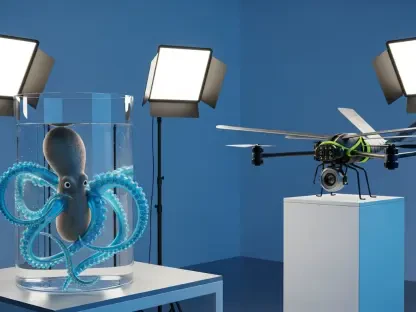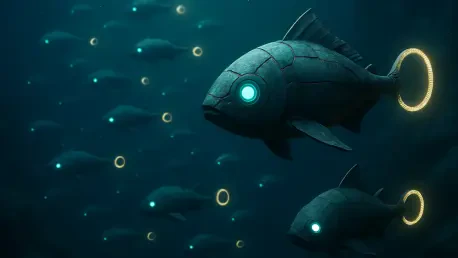

The crushing weight of four miles of seawater creates a barrier more formidable than the vacuum of space, yet we are finally peering through the darkness with a new kind of electronic eye. For decades, the gold standard for oceanography was the “solitary giant”—a single, bus-sized Autonomous Underwater Vehicle (AUV) packed with sensors and costing as much as a small fleet of private jets. These machines are marvels of engineering, but they possess a singular, catastrophic flaw: if one critical component fails in the abyss, the entire mission vanishes. As we move into 2026, the strategy is shifting from these lonely titans toward the collective power of the swarm, mimicking the very life forms that have thrived in the deep for eons.
This transition marks a fundamental departure from centralized control to distributed intelligence. Instead of putting all our scientific eggs in one titanium-reinforced basket, researchers are deploying dozens, or even hundreds, of smaller, inexpensive robots that work in concert. This approach does more than just mitigate the risk of financial loss; it fundamentally changes the geometry of exploration. A single vehicle can only be in one place at a time, providing a narrow “flashlight” view of the seabed. A swarm, however, acts as a wide-angle lens, capable of mapping vast swaths of the ocean floor or tracking migrating marine life across hundreds of miles of rugged underwater terrain.
The Silent Shift: From Solitary Giants to Robotic Schools
The traditional model of deep-sea exploration is increasingly viewed as an outdated relic of the early robotic age. When a single vehicle is deployed, every movement is calculated to avoid the slightest risk, leading to conservative and often inefficient mission profiles. In contrast, a school of smaller robots introduces a level of resilience previously thought impossible. If a handful of units are lost to a sudden volcanic vent or a mechanical failure, the remaining swarm simply recalibrates and continues the mission. This “graceful degradation” ensures that data collection never stops, even when the environment is at its most hostile.
Engineering these schools requires a total rethink of how machines interact with their surroundings. By looking at how fish maintain their positions within a moving group, scientists have developed algorithms that allow robots to maintain formation without a human pilot at the helm. This shift toward decentralized coordination means the “brain” of the operation is spread across the entire fleet. Each unit makes micro-adjustments based on the movements of its neighbors, allowing the group to flow around obstacles or expand its search area with a fluidity that looks more like a biological organism than a collection of metal and plastic.
The Bottleneck: Why Traditional Robotics Fail Underwater
The primary obstacle to conquering the abyss has never been just the pressure; it is the fundamental breakdown of physics. On the surface, we rely on a constant stream of electromagnetic data—GPS, Wi-Fi, and satellite links—to tell us where we are and what we are seeing. Once a robot descends just a few meters below the waves, the ocean swallows these signals. This leaves traditional AUVs effectively blind and deaf, forced to rely on internal gyroscopes that drift over time or acoustic modems that transmit data at the frustratingly slow pace of a 1990s dial-up connection.
To overcome this isolation, the latest generation of swarms is moving away from the “mother ship” model, where every robot must check in with a central hub. In high-latency environments, waiting for a command from the surface can lead to a collision or a missed discovery. Instead, these new systems are designed to think for themselves when the signal goes dead. By prioritizing “local sensing”—detecting only what is immediately adjacent—the swarm maintains its integrity without needing to broadcast across the entire ocean. This decentralized logic is the only way to operate effectively in a medium that refuses to transmit radio waves.
From Biology to Bits: The Mechanics of Collective Intelligence
Nature solved the problem of group coordination millions of years ago, and engineers are finally catching up by decoding “swarm intelligence.” By observing how pods of dolphins or schools of tuna move, roboticists have identified simple rules—alignment, cohesion, and separation—that prevent collisions while ensuring the group stays together. These rules allow a robotic swarm to behave as a unified entity, reacting to environmental cues like temperature changes or chemical plumes in real-time. This isn’t just about following a path; it is about “cooperative searching,” where the robots actively share local data to find the most efficient route to a target.
The next evolution in this field involves “heterogeneous swarm dynamics,” or mixing different types of robots within a single fleet. Just as a coral reef relies on a diverse ecosystem, a search mission might utilize some robots for high-resolution photography while others act as long-range communication relays or specialized chemical sniffers. This “mixed-talent” approach allows the swarm to tackle multi-dimensional tasks, such as tracking a deep-sea oil leak while simultaneously mapping the surrounding topography. By mimicking the specialized roles found in biological groups, these robotic fleets achieve a level of versatility that a single, general-purpose vehicle could never match.
Bridging the Reality Gap: Insights From Recent Research
A massive analysis of the field, spanning from 2026 back through the last two decades, reveals that the greatest challenge remains the “reality gap.” It is one thing for an algorithm to work perfectly in a clean computer simulation, but it is another thing entirely for that same code to function in the unpredictable currents and changing salinity of the Pacific. Researchers have found that environmental stochasticity—the sheer randomness of the ocean—often breaks the neat mathematical models used in laboratories. This has led to a new “resilience mandate” in marine engineering, where systems are built with the expectation that things will go wrong.
Expert consensus now suggests that the most successful swarms are those that integrate their coordination logic directly with their hardware limitations. For example, an algorithm that requires high-bandwidth communication is useless if the robots are equipped with low-power acoustic transducers. Modern research emphasizes that the software and the physical sensors must be inextricably linked. This holistic approach ensures that the swarm can adapt to “stochastic” events, such as a sudden thermal layer that blocks sound, by automatically switching to optical signals or changing their formation to maintain a line of sight.
A Framework: Deploying the Next Generation of Underwater Swarms
For these swarms to become the standard tool for global oceanography, developers are now adhering to a strict multidimensional framework focused on autonomy and efficiency. Since recharging a battery at a depth of 4,000 meters is an impossible task, every single “thought” and movement must be weighed against its energy cost. Algorithms are being streamlined to minimize computational overhead, ensuring that the robots spend their power on propulsion and sensing rather than crunching unnecessary data. This focus on energy scarcity is what allows these fleets to remain on station for weeks or even months at a time.
Furthermore, the logic governing these swarms must be infinitely scalable. Whether a scientist deploys five robots to inspect a shipwreck or five hundred to monitor an entire tectonic plate, the coordination rules must hold firm. This requires adaptive navigation systems that can sense changing oceanographic conditions—like a sudden increase in turbidity—and modify their behavior without waiting for human intervention. By building these systems to be as self-sufficient and resilient as a school of deep-sea fish, we are finally creating a way to explore the 95% of our planet that remains unmapped and misunderstood.
The shift toward bio-inspired swarms represented a fundamental reimagining of how humanity interacted with the deep ocean. Engineers moved past the era of the fragile, expensive probe and embraced a model of collective, resilient autonomy that mirrored the survival strategies of marine life. By prioritizing local communication and decentralized decision-making, these fleets overcame the traditional barriers of signal loss and high-pressure failure. The result was a new era of “perpetual presence” in the abyss, where the loss of a single unit no longer signaled the end of a mission but was merely a minor adjustment for a larger, more capable whole. These advancements provided the necessary tools to finally monitor the health of our global oceans with unprecedented detail and reliability.