
A transformative technology is quietly emerging from research labs, one that promises to fundamentally redefine the capabilities of machines and our interaction with them by bestowing upon them a sense of touch remarkably similar to our own. This innovation, known as neuromorphic artificial skin, moves far beyond the rigid, power-intensive sensors that have long limited robotic dexterity. Instead, it draws its inspiration directly from the biological blueprint of the human nervous system, employing a brain-inspired, or neuromorphic, approach to processing sensory information. By transmitting data in the form of discrete, energy-efficient electrical “spikes”—and only when a stimulus is detected or changes—this synthetic skin could enable robots to perceive and interact with the physical world with a sensitivity and nuance that was once the exclusive domain of living organisms. This powerful convergence of materials science, advanced neuroscience, and artificial intelligence is setting the stage for a new generation of machines that are not only more responsive and efficient but also more intuitive and capable of collaborating with humans in the most delicate of tasks.
The Science of a Synthetic Nervous System
The foundational principle guiding the development of neuromorphic skin is biomimicry, specifically the emulation of the brain’s incredible operational efficiency. The human nervous system is not a system of constant surveillance; individual neurons do not fire continuously but instead send out sharp electrical spikes only when they detect a change, such as the initial contact of a fingertip on a cool surface or a sudden increase in pressure. The artificial skin is engineered to operate on this same event-driven basis. It is typically composed of flexible, stretchable polymer layers embedded with a dense network of microscopic sensors. These sensors remain in a dormant, low-power state until they register a physical event—be it direct contact, a subtle shift in pressure, a change in surface texture, or a fluctuation in temperature. Upon activation, these sensors generate a series of neural-style spikes, effectively translating the physical interaction into a sparse, information-rich language that a machine’s processing unit can understand and act upon with minimal delay and computational effort. This method stands in stark contrast to conventional sensory systems that rely on continuous data streams, which are not only power-hungry but also generate a tremendous amount of redundant information that must be filtered and processed.
This brain-inspired design paradigm offers several decisive advantages over traditional approaches, positioning it as a superior method for robotic sensing. First and foremost, by processing information only when an event occurs, the system achieves a dramatic reduction in energy consumption, directly addressing one of the most significant limiting factors in the development of long-duration mobile and autonomous robots. This efficiency allows machines to operate for extended periods without being tethered to a power source. Secondly, this approach enables lightning-fast responsiveness. Because the system is not perpetually bogged down by a constant deluge of unnecessary background data, it can react almost instantaneously to new and relevant sensory input. A robot equipped with this advanced skin could, for example, grasp a delicate piece of fruit and immediately adjust its grip pressure based on the feedback spikes it receives, preventing the object from being bruised or crushed. This efficient, event-driven feedback loop is what allows robots to operate more autonomously and effectively in dynamic, unpredictable environments where the ability to make split-second, nuanced decisions is paramount.
Beyond Simple Touch What Can Robots Actually Feel
Modern neuromorphic skin has evolved significantly beyond the mere detection of pressure, now offering a rich, multimodal sense of touch that allows machines to perceive the world with startling clarity. Advanced prototypes are capable of perceiving a wide and complex spectrum of physical sensations, including the subtle feel of different textures, minute shifts in ambient temperature, faint vibrations propagating through a surface, and even the presence of certain chemical compounds in their immediate surroundings. This comprehensive “feel” is made possible by integrating a diverse array of specialized, microscopic sensors into the single, flexible substrate of the skin. Each type of sensor is tuned to a specific kind of stimulus, allowing the robot to receive a detailed, multi-layered stream of data that paints a complete tactile picture of the objects and environments it interacts with. This ability to sense multiple modalities at once is a critical step toward creating robots that can perform complex tasks requiring a holistic understanding of their physical context, much like a human does.
Of course, sensing is only one half of the equation; true understanding comes from intelligent interpretation. The streams of spike-based data generated by the neuromorphic skin are fed into sophisticated machine learning algorithms, particularly deep and convolutional neural networks that have been specifically trained to recognize and classify complex tactile patterns. This powerful synergy between advanced hardware and intelligent software is what allows a robot to develop a form of proprioception—an intrinsic sense of its own body’s position and movement in relation to the objects it touches. Through this process, a machine can learn to distinguish between the feel of silk and sandpaper, navigate a cluttered room by using touch to guide its way, or even perform highly delicate tasks like threading a needle, all of which require a truly nuanced and adaptive sense of touch. It is this capacity for learning and adaptation that transforms the robot from a machine that simply senses to one that perceives and comprehends its physical world.
From the Lab to Our Lives Real World Applications
The rapid maturation of this technology is driving its transition from laboratory prototypes to tangible, real-world applications, with the healthcare sector emerging as one of the most promising frontiers. For amputees, neuromorphic skin integrated into advanced prosthetics could restore a realistic and intuitive sense of touch, allowing for seamless control that makes the artificial limb feel like a natural extension of the body. In the operating room, this technology could give surgical robots the ability to feel subtle differences in tissue density and tension, providing surgeons with critical real-time haptic feedback that enhances precision and improves patient outcomes. The applications extend further into wearable and even implantable devices. Smart cuffs could provide highly accurate, continuous blood pressure readings, robotic grippers could non-invasively track bladder volume, and ingestible sensors could be used for internal diagnostics and targeted drug delivery. In the realm of elder care, robots endowed with a gentle and sensitive touch could assist individuals with daily tasks without the risk of causing inadvertent harm, fostering greater independence and safety.
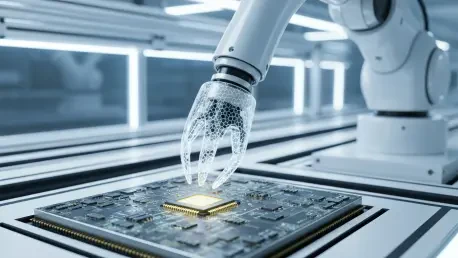
Beyond the medical field, this synthetic skin is poised to transform manufacturing, consumer robotics, and human-machine interaction. In industrial settings, robots equipped with tactile sensing could handle delicate and complex components with human-like dexterity, significantly improving precision and reducing waste on automated assembly lines. For the new wave of general-purpose humanoid robots, such as those under development by leading technology firms, a sensitive skin is not a luxury but an essential component for operating safely and effectively in homes, offices, and public spaces, whether they are tasked with folding laundry, stocking shelves, or navigating unpredictable disaster sites. Furthermore, the technology is enhancing wearable bioelectronics through smart fabrics that can monitor health metrics with unparalleled sensitivity. There is also growing excitement about its potential synergy with emerging brain-computer interfaces, which could one day lead to systems where a user could not only control a robotic avatar with their thoughts but also receive direct and rich tactile feedback from its perspective.
The Hurdles on the Path to a Feeling Future
The journey of neuromorphic skin from a conceptual breakthrough to a ubiquitous technology was defined by the need to overcome significant challenges. The research and development process revealed that for widespread adoption to become a reality, several major technical and manufacturing hurdles had to be addressed. Producing large, flexible sheets of this synthetic skin that were both durable and reliable at a commercially viable cost remained a primary obstacle. Ensuring the long-term performance of these sophisticated materials under the varied and often harsh environmental conditions of the real world was another critical area of focus. In response to this, innovations such as self-healing skins were pursued, with laboratory demonstrations showing that bio-inspired materials could be grown to attach to robotic surfaces and autonomously repair themselves after sustaining damage, a key step toward creating truly resilient systems.
In parallel with these technical pursuits, the advent of “feeling” robots raised profound ethical questions that demanded careful consideration. The prospect of machines capable of detecting damage and interpreting it as a negative stimulus analogous to pain brought the concepts of machine sentience and rights from the realm of science fiction into serious academic and industrial discourse. A central concern was how a robot’s programming for self-preservation should be balanced against its assigned duties, especially in high-risk scenarios where a machine might prioritize its own “safety” over the completion of its mission. Furthermore, as these highly advanced sensory systems were integrated with increasingly sophisticated and agentic artificial intelligence, the paramount importance of robust data security was recognized. It became clear that preventing the hacking or malicious use of a robot’s sensory data was an absolute prerequisite for safely and ethically integrating these intelligent, tactile machines into every facet of society.