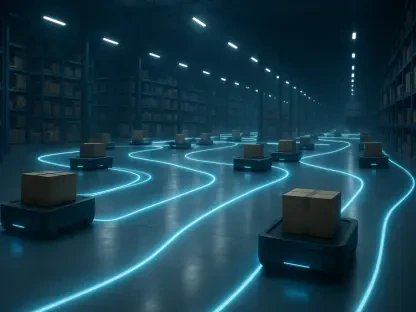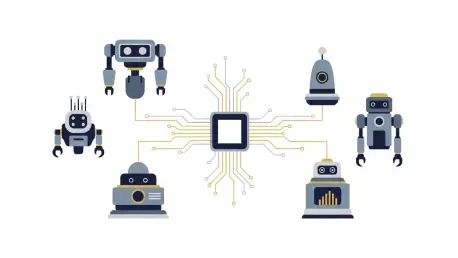

As industrial facilities increasingly transform into high-density ecosystems of automation, the fundamental challenge has shifted from simply deploying robots to managing a chaotic symphony of disparate machines that speak entirely different digital languages. In the current landscape, many organizations struggle with a heterogeneous environment where individual robot vendors provide their own isolated control software, leading to a fragmented operational workflow. This fragmentation forces warehouse managers to toggle between multiple screens, each monitoring a specific slice of the floor while ignoring the potential collisions or traffic jams occurring between different brands. When a specialized picking robot cannot communicate its intended trajectory to a neighboring autonomous forklift, the resulting efficiency losses negate the benefits of automation. To solve this, the industry has turned toward a higher level of software abstraction that acts as a universal conductor, translating proprietary signals into a common operational protocol that allows every machine to act as part of a single, cohesive unit.
The Technical Impasse: Why Proprietary Silos Fail
Expanding an automated fleet often encounters a significant hurdle when the initial hardware choice dictates the software constraints for all future investments. This phenomenon, known as vendor lock-in, occurs because most early-stage robotic systems were designed as closed loops, assuming they would be the only automated agents in a given space. Consequently, when a facility manager wants to add a new type of robot to handle specialized tasks, they find that the existing traffic management system is incapable of recognizing the newcomer. This technical debt creates a situation where companies are forced to continue purchasing from a single manufacturer even if better or more cost-effective options exist elsewhere. Breaking this cycle requires a fundamental shift toward hardware-agnostic platforms that can strip away the unique communication layers of various robots. By implementing a standardized middle-ware solution, operations can finally prioritize the best tool for the specific job rather than being limited by software compatibility.
Beyond the immediate technical friction, the human element of managing a multi-vendor fleet introduces substantial operational overhead that often goes overlooked during the procurement phase. Each proprietary system requires unique training for operators, specialized maintenance schedules, and distinct data dashboards that do not naturally aggregate into a single reporting tool. This lack of visibility makes it nearly impossible to optimize overall facility performance because key performance indicators are scattered across different platforms. For instance, an operator might see that picking robots are operating at peak efficiency in one dashboard, while failing to realize that the autonomous delivery tugs are stalled in a different sector of the floor. This visibility gap leads to reactive problem-solving rather than proactive optimization, which significantly increases the total cost of ownership. Transitioning to a single orchestration platform streamlines the training process and ensures that the workforce can oversee the entire fleet through a consistent, unified interface.
Architectural Evolution: The Rise of Universal Standards
Developing a centralized orchestration layer relies heavily on the adoption of universal standards such as VDA 5050, which facilitates communication between automated guided vehicles and a master control system. This protocol allows different robots to report their position, battery status, and intended paths in a language that the central platform can understand and act upon in real-time. Modern cloud-native solutions take this further by utilizing advanced application programming interfaces to bridge the gap between legacy hardware and modern AI-driven dispatching tools. These platforms act as a traffic controller, dynamically rerouting robots based on congestion or changing priorities without requiring changes to the underlying firmware of the individual machines. By decoupling the control logic from the physical hardware, organizations can treat their fleet as a fluid resource rather than a set of rigid, pre-defined routes. This architectural shift enables more complex maneuvers, such as collaborative multi-robot tasks, where robots from different manufacturers must synchronize their movements with precision.
Organizations that successfully navigated the transition toward multi-vendor orchestration realized that the primary investment was in software integration rather than just purchasing new hardware. These early adopters shifted their focus toward building a robust digital infrastructure that prioritized data interoperability and long-term flexibility over immediate, short-term deployment goals. They established clear communication protocols across their supply chain partners and demanded open API access as a prerequisite for any new equipment acquisition. This strategy effectively removed the silos that previously hindered operational agility and allowed for a more responsive, scalable automation strategy. For those looking to mirror this success, the logical first step involved conducting an audit of existing robotic assets and identifying critical points of friction. By prioritizing platforms that offered native support for emerging standards, these companies ensured that their automation investments remained robust. They demonstrated that a single platform could govern a diverse fleet, provided the strategy embraced a philosophy of openness and control.