
In a move that blurs the lines between science fiction and modern geopolitics, China is fundamentally transforming its approach to border security by deploying an army of autonomous humanoid robots along its frontier with Vietnam. This groundbreaking initiative marks a significant departure from traditional human-centric surveillance, representing a major step in the global trend of integrating sophisticated artificial intelligence and robotics into critical national security infrastructure. The project places China at the forefront of a technological revolution, challenging conventional notions of patrol and defense. This deployment is more than just a technological test; it is a clear statement of intent, showcasing a strategic vision where autonomous systems work alongside humans to secure sovereign territory. The implications of this development are profound, potentially setting a new global standard for how nations monitor their borders and manage security in an increasingly complex world.
A New Era of Border Surveillance
The Walker S2 and Its Strategic Deployment
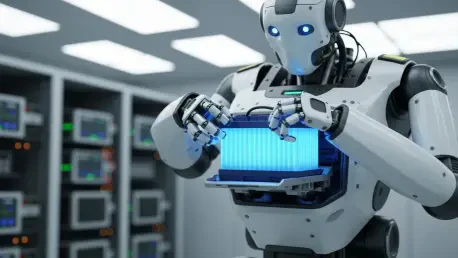
Underpinning this ambitious initiative is a US$37 million contract granted to China’s UBTech Robotics, a clear indicator of the government’s commitment to integrating advanced robotics into its national security framework. The initial deployment zone is the city of Fangchenggang in Guangxi, a key area near the Vietnamese border, with the first units slated to begin operations in December. The centerpiece of this project is the Walker S2 humanoid robot, a model launched in July that has been hailed as the world’s first of its kind capable of advanced autonomous functions. These include not just independent navigation and environmental perception but also the sophisticated ability to perform self-maintenance, including swapping its own batteries when low. The robots’ initial duties will be non-confrontational, focusing on guiding travelers at checkpoints and assisting human personnel with routine patrol and surveillance. This project is a flagship example of China’s broader strategy to commercialize AI technologies and embed robotics into practical, everyday applications, bolstered by significant state backing.
Advanced Capabilities in a Real-World Setting
The Walker S2 represents a significant leap in robotics, equipped with sophisticated muscle systems and advanced autonomous decision-making algorithms that allow it to operate effectively in dynamic environments. Its ability to perceive and interpret its surroundings in real-time enables it to navigate complex terrain and identify potential anomalies far more consistently than a human guard, who is susceptible to fatigue and distraction. This deployment serves as a crucial real-world test for these advanced systems, moving them from the controlled environment of a laboratory to the unpredictable reality of a national border. By taking on routine but essential tasks, the robots free up their human colleagues to focus on more complex, judgment-based responsibilities. This human-machine teaming model aims to enhance overall operational effectiveness, creating a security apparatus that is more resilient, efficient, and technologically advanced than ever before. The project is a clear reflection of a strategic imperative to not only innovate but also to operationalize cutting-edge technology in high-stakes security roles.
Beyond the Border: The Future of Humanoid Robotics
Expanding Roles in Industry and Public Safety
The technological prowess demonstrated by the Walker S2 has implications that reach far beyond the confines of border patrol, pointing toward a future where humanoid robots are integral to various sectors of the economy and society. Experts suggest that the same capabilities enabling the robot to patrol rugged terrain could be adapted for use in heavy industries, such as copper and steel manufacturing. In these settings, a humanoid robot could handle hazardous materials, perform physically demanding and repetitive tasks in extreme temperatures, and operate machinery with precision, significantly improving worker safety and productivity. Furthermore, its advanced mobility and perception systems make it an ideal candidate for security roles at large-scale public events, like concerts or sporting events. A fleet of autonomous robots could patrol a venue, identify security threats, and provide real-time information to a central command, offering a dynamic layer of security that static cameras cannot provide and augmenting the capabilities of human security teams.
The Next Generation of Surveillance and Response
As the technology matures, experts anticipate that these humanoid robots will evolve to undertake far more complex and critical missions. The future vision for these machines includes advanced surveillance roles, particularly in monitoring regions that are either too hazardous or physically inaccessible for human teams. They could be deployed to patrol remote wilderness areas, inspect critical infrastructure in dangerous locations, or monitor environmental conditions for signs of pollution or ecological distress. With further enhancements, they could serve as first responders in emergency situations, entering collapsed buildings after an earthquake, navigating through areas with hazardous chemical spills, or assisting in search-and-rescue operations. The long-term goal is to leverage their unique abilities to perceive and process vast amounts of data, extending human comprehension and enabling a more proactive approach to public safety and environmental protection. This evolution positions them as indispensable tools for tackling challenges that are currently beyond the scope of human capacity.
Redefining the Human-Machine Partnership
Ultimately, the stated purpose of this technological integration was not to replace human personnel but to fundamentally augment their capabilities and redefine the nature of their work. The primary objectives focused on mitigating the inherent risks associated with dangerous tasks, overcoming natural human limitations such as fatigue and sensory overload, and dramatically improving the overall efficiency and effectiveness of security operations. The introduction of these humanoid robots at the border was framed not as an alarming military escalation, but rather as a significant technological innovation within China’s security apparatus. By automating routine and strenuous tasks, the system was designed to allow human officers to dedicate their attention to higher-level analysis, strategic decision-making, and interpersonal interactions. This project represented a pioneering step toward a future where human-robot collaboration becomes the standard for managing complex and critical operations, ensuring that tasks were performed with greater reliability and precision.