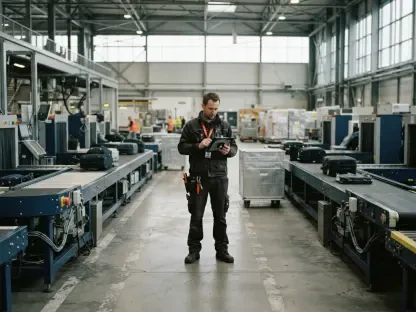

Reducing workplace injuries in physically demanding warehouse environments has led to the adoption of wearable robotic devices that offload strain from the upper and lower back. This technological shift is a central component of the vision presented at Cibus Tec 2026 in Parma, Italy, where Comau and Automha showcased a collaborative ecosystem designed specifically for the food and beverage industry. By integrating their specialized robotic and intralogistics expertise with digital software tools from Invent, the partners introduced a comprehensive portfolio that spans the entire production lifecycle. This initiative addresses every stage from the initial handling of raw ingredients to the complex logistics of final warehouse distribution, marking a significant step toward total process integration. The presentation highlights how modern manufacturing requires a cohesive strategy where hardware and software operate in unison to meet rising consumer demands and strict safety regulations.
The Strategic Vision: A Unified Automation Hub
Streamlining Operations: The Single-Hub Approach
The core of this partnership rests on the implementation of a single-hub concept, which is designed to simplify the operational landscape for food and beverage producers. In an era where complexity often slows down innovation, providing a unified architectural framework allows companies to bypass the traditional friction associated with managing a fragmented network of equipment providers. By synchronizing Comau’s high-performance robotics with the advanced storage solutions offered by Automha, the collaboration creates a seamless flow of data and materials across the factory floor. This strategic alignment ensures that every component of the production line—from processing to palletizing—is capable of communicating through a centralized digital interface provided by Invent. Such a holistic methodology enables real-time adjustments and predictive maintenance, ensuring that the facility remains operational at peak efficiency while minimizing the likelihood of bottlenecks.
Market Dynamics: Responding to Intralogistics Growth
This transition toward total integration is timely, as the global intralogistics market is currently on a trajectory to expand by 10% annually through 2030. The surge in e-commerce and the subsequent pressure for rapid fulfillment have made it necessary for manufacturers to adopt more sophisticated, data-driven logistics strategies. Within this context, the unified hub acts as a scalable foundation that can grow alongside the increasing volume and variety of products moving through the supply chain. Manufacturers are no longer looking for standalone machines; they are seeking ecosystems that offer visibility and control over the entire movement of goods. By leveraging the combined strengths of automation and intralogistics, the Comau and Automha partnership addresses these market shifts head-on. The ability to integrate high-density storage with robotic precision provides a competitive edge for companies aiming to modernize their infrastructure in the late 2020s.
Advanced Robotics and Ergonomic Support
Precision Handling: The Hygienic Oil Innovation
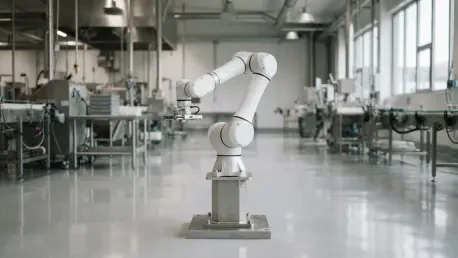
A pivotal component of the robotics showcase is the introduction of Comau’s Hygienic Oil (HO) robot family, representing a leap forward in primary food processing safety. These robots are specifically engineered to function in high-stakes environments where maintaining strict cleanliness standards is paramount. The primary innovation involves the use of NSF H1 food-grade lubricants, which are applied throughout the mechanical joints and gears of the SCARA and articulated robot lines. This allows the machines to operate in direct proximity to food products without the need for the bulky protective covers that are typically required in such settings. By eliminating these covers, Comau has made it easier for technicians to perform routine maintenance and cleaning, thereby reducing downtime. The HO family includes the Rebel SCARA and the Racer series, ensuring that versatility remains a core feature of these hygiene-focused automation systems while expanding reach into the clean zone.
Augmenting Human Performance: Wearable Technology
The focus on ergonomic support through the MATE series of wearable robotic devices highlights a growing commitment to the workforce within the food and beverage industry. These exoskeletons are designed to provide physical assistance to employees who spend their shifts engaged in repetitive motions or heavy lifting. By mechanically offloading the burden from the upper and lower back, these devices help to mitigate the long-term physical strain that often leads to chronic musculoskeletal injuries. This technology is valuable in warehouse settings where full automation may not yet be feasible or where human dexterity is still required for complex sorting tasks. The implementation of wearable robotics demonstrates that automation is not merely about replacing human labor, but about enhancing the safety and longevity of the human element. Providing workers with these tools reflects a modern industrial philosophy that prioritizes employee health alongside production metrics.
High-Density Storage and Logistic Synchronization
Intelligent Warehousing: Multidirectional Shuttle Solutions
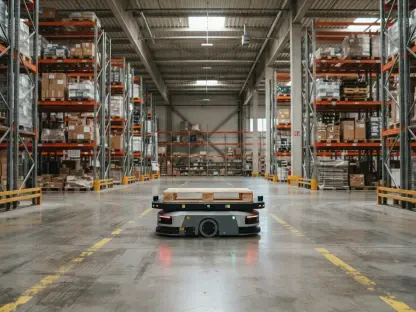
In the realm of storage and retrieval, Automha’s Quaterways multidirectional shuttle stands out as a solution for maximizing high-density warehouse efficiency. This technology allows for the movement of pallets in four different directions within a racking structure, facilitating deep-lane storage that significantly increases the total capacity of a facility. Unlike traditional shuttle systems that are limited to a single aisle, the Quaterways system can navigate complex grid layouts, making it ideal for high-volume inventory management. This capability is essential for food and beverage manufacturers who must deal with fluctuating inventory levels and the need for rapid turnover of perishable goods. By optimizing spatial density, manufacturers can reduce the physical footprint of their warehouses while simultaneously improving the speed at which items are stored and retrieved. The flexibility of this shuttle system ensures that it can be adapted to various warehouse configurations.
Strategic Integration: Future-Proofing the Supply Chain
The collaborative efforts between Comau, Automha, and Invent demonstrated a clear path toward the complete integration of food production and logistics. By focusing on hygienic design, ergonomic worker support, and high-density storage, the partnership successfully addressed the most pressing pain points within the modern industrial landscape. Moving forward, manufacturers should consider the adoption of these unified hubs to eliminate the complexities of vendor management and to ensure long-term operational resilience. The strategic shift toward holistic automation not only enhanced safety protocols but also provided a framework for navigating the evolving demands of the global supply chain. Stakeholders were encouraged to invest in scalable systems that bridge the gap between human capabilities and mechanical efficiency. Ultimately, the transition to synchronized automation proved to be a vital step for companies aiming to sustain growth and excellence in an increasingly competitive market.