
A single out-of-place truck arriving at a sensitive facility in the dead of night could represent a data point, an error, or a significant threat to national security, and the ability to distinguish between them automatically is becoming a cornerstone of modern surveillance. Deep learning vehicle recognition represents a significant advancement in the surveillance and national security sector, moving beyond simple identification to a more profound understanding of behavioral patterns. This review will explore the evolution of this technology, its key features, innovative training methodologies, and the impact it has had on various security applications. The purpose of this review is to provide a thorough understanding of the technology, its current capabilities, and its potential future development.
An Introduction to Advanced Vehicle Recognition
The core principle of advanced vehicle recognition is not merely to identify a car or truck, but to understand its context within a specific environment. By leveraging deep learning, these systems establish a “pattern of life” or behavioral baseline for a monitored area, learning the routine comings and goings of all traffic. This allows the technology to automatically flag anomalies—deviations from the established norm—that could signify a potential threat without requiring constant human oversight.
This sophisticated approach to surveillance emerged from dedicated research at government facilities like the Department of Energy’s Oak Ridge National Laboratory (ORNL). The technology was developed to address critical gaps in national security, particularly in monitoring for the illicit movement of materials. It represents a significant leap from traditional automated surveillance, which often struggled with environmental variables and lacked the nuanced understanding of context necessary for proactive threat detection.
Core Technological Capabilities
Viewpoint-Invariant Vehicle Matching
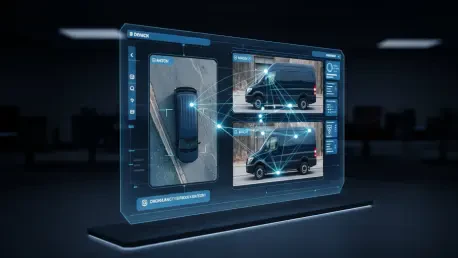
A fundamental breakthrough in this technology is its capacity for viewpoint-invariant matching. Historically, automated re-identification systems were severely limited by their dependency on consistent camera angles; a vehicle captured from the front could not be reliably matched with a side-view image of the same vehicle. This new generation of algorithms, powered by a novel neural network architecture, has effectively solved this problem.
This capability means the system can confidently identify the same vehicle from radically different and inconsistent perspectives. For instance, it can match a top-down aerial image captured by a high-altitude drone with a subsequent ground-level image taken from a security camera at a checkpoint. This overcomes one of the most persistent hurdles in tracking assets across a wide, multi-sensor surveillance network, making cohesive tracking a practical reality.
Anomaly Detection Through Behavioral Baselines
The system’s intelligence lies in its ability to learn and internalize the rhythm of a specific location. By analyzing traffic flow over extended periods, the algorithm builds a complex model of what constitutes normal activity. This baseline includes data on the types of vehicles typically present, their volume, the routes they take, and the hours they operate.
Once this “pattern of life” is established, the technology transitions into a vigilant monitoring role. It automatically flags any significant deviation from the learned norm as a potential anomaly requiring further investigation. This could be an unusual type of vehicle entering a restricted area, a sudden increase in truck activity at odd hours, or a vehicle lingering where none typically do. This proactive alerting system shifts security from a reactive to a preemptive posture.
Unique Signature Recognition for Individual Tracking
Beyond categorizing vehicle types and behaviors, the software possesses a remarkable precision that allows it to track a single vehicle over time. It achieves this by identifying and learning a vehicle’s unique and persistent features, which act as a kind of mechanical fingerprint. These can include minor, often overlooked details like dents, scratches, rust spots, or custom additions such as bumper stickers and roof racks.
This granular level of identification enables authorities to monitor a specific vehicle of interest with high confidence. The system can log its repeated visits to a sensitive location, even if the driver attempts to evade detection by using different routes for approach and departure on each occasion. This transforms surveillance from tracking general patterns to monitoring the specific actions of a high-interest asset.
Innovative Training Methodologies
Hybrid Datasets Combining Real and Synthetic Imagery
The algorithm’s high accuracy is a direct result of its sophisticated and expansive training regimen. The foundation of this training is a massive hybrid dataset, combining hundreds of thousands of real-world images from public sources with a vast, custom-built library of synthetic, computer-generated imagery. This dual approach ensures the model is exposed to a range of scenarios far exceeding what could be collected from physical cameras alone.
Researchers at ORNL were instrumental in creating the synthetic portion of the dataset, building detailed 3D digital models of numerous vehicle brands, including older models often absent from commercial datasets. These models were then used to generate a multitude of images under simulated conditions, systematically varying factors like paint jobs, viewing angles, and complex lighting. This process significantly enriches the dataset, preparing the algorithm for the immense variety of vehicles and conditions it will encounter in the real world.
Challenging-Condition Data Collection
To build a truly resilient and field-ready model, the development team intentionally sought out and collected imperfect data. Recognizing that real-world surveillance is rarely optimal, they conducted extensive data collection sessions using drones and ground cameras, deliberately capturing footage under challenging conditions. This included images where vehicles were partially obscured by trees or infrastructure, blurry shots caused by electronic interference, and low-resolution footage from nighttime operations.
This strategy of “stress-testing” the algorithm during its training phase is crucial to its robustness. By forcing the model to learn from poor-quality data, it becomes more adept at making accurate identifications when visibility is compromised by adverse weather, satellite imagery limitations, or other common operational issues. This approach ensures the system maintains its high performance levels outside the pristine environment of a lab.
Advanced Bias Mitigation Techniques
A common pitfall in machine learning is the development of algorithmic bias, where a model over-learns from repetitive data and fails to generalize. To counteract this, the researchers employed sophisticated bias mitigation techniques. The dataset was meticulously curated to remove redundant images of the same vehicle or camera angle that could skew the learning process toward superficial features.
Furthermore, the model was trained using a carefully balanced mix of correct and incorrect image pairs. For correct pairs, the images showed the same vehicle from different perspectives, forcing the algorithm to learn subtle, persistent characteristics instead of relying on simple cues like color or general shape. This methodology prevents common errors, such as misidentifying all front-facing white sedans as the same car, and makes the system far more discerning when faced with tricky real-world matches.
Real-World Applications and Implementations
National Security and Nuclear Nonproliferation
The primary application driving the development of this technology is enhancing national security, with a specific focus on nuclear nonproliferation. The system is designed to provide continuous, automated monitoring of sensitive sites, such as research facilities or storage depots, for suspicious shipment activities.
By establishing behavioral baselines and detecting anomalies, the technology can alert authorities to patterns that might indicate the illicit transport of nuclear materials or other critical threats. Its ability to track specific vehicles and understand complex traffic patterns provides an invaluable layer of security, augmenting traditional surveillance methods and enabling a more proactive defense posture against catastrophic risks.
Law Enforcement and Contraband Interdiction
The core capabilities of the vehicle recognition algorithm have significant potential for broader law enforcement applications. The same principles used to detect suspicious shipments at secure facilities can be applied to interdict the transport of dangerous or illegal substances across various modes of transportation.
This technology could be adapted to monitor ports, border crossings, and airports to identify and track vehicles, ships, or even airplanes suspected of involvement in trafficking operations. Its ability to piece together movements from disparate sensor data makes it a powerful tool for building cases and disrupting criminal supply chains.
High-Interest Vehicle and Asset Monitoring
For intelligence and law enforcement agencies, the ability to discreetly monitor a specific vehicle of interest is a critical operational need. The system’s unique signature recognition excels in this use case, allowing authorities to maintain a log of a target vehicle’s movements without requiring constant physical surveillance.
The software can automatically flag every time a high-interest vehicle visits a particular location, building a comprehensive pattern of activity over time. This persistent, automated tracking provides valuable intelligence for investigations, whether the goal is to understand a suspect’s network or to preempt a potential threat at a secure location.
Overcoming Technical Challenges
Mitigating Poor Image Quality and Visibility
One of the most significant technical hurdles in real-world surveillance is the prevalence of low-quality imagery. Images from satellites, drones, or security cameras are often compromised by poor lighting, atmospheric conditions, obstructions, or electronic interference. Traditional recognition systems frequently fail under these suboptimal conditions.
This technology addresses the challenge directly through its training methodology. By intentionally incorporating a vast amount of obscured, blurry, and low-resolution data into its learning process, the model becomes inherently robust against such imperfections. It learns to identify key features even when the overall image quality is poor, making it a far more reliable tool for practical, field-deployed surveillance operations.
Solving Viewpoint Dependency Limitations
The long-standing problem of viewpoint dependency has plagued vehicle re-identification systems for years, rendering them ineffective if they could not capture vehicles from a consistent angle. This limitation made it nearly impossible to reliably track a vehicle as it moved through a network of cameras positioned at different heights and orientations.
The novel neural network architecture at the heart of the ORNL system was specifically designed to overcome this obstacle. Combined with the diverse, multi-perspective training data, the algorithm learns a more abstract and holistic representation of a vehicle. This enables it to recognize a vehicle based on its fundamental geometric and feature-based properties, irrespective of the angle from which it is viewed, thus solving a critical challenge that has limited the effectiveness of automated tracking systems.
Future Outlook and Development Trajectory
Integration with Non-Visual Sensor Data
The development trajectory for this technology points toward a more holistic, multi-modal approach to surveillance. Ongoing research is focused on adapting the algorithm to incorporate data from sources beyond the visual spectrum. Integrating information from non-visual sensors, such as acoustic, seismic, or radio frequency detectors, could further enhance the system’s detection and verification capabilities.
This fusion of data would create a more comprehensive and resilient monitoring system. For example, sensor data indicating the weight or engine type of a vehicle could be combined with visual identification to provide a much higher degree of confidence in tracking and anomaly detection, making the system even more difficult to deceive.
Expansion to Multi-Modal Transportation Systems
While currently focused on ground vehicles, the core technology is fundamentally adaptable. The future of this platform likely involves its expansion to other forms of transportation, transforming it into a comprehensive global security tool. The same principles of learning behavioral patterns and identifying unique signatures can be applied to maritime shipping and aviation.
Adapting the algorithm to recognize specific ships or airplanes would allow for the monitoring of global supply chains and travel networks with unprecedented detail. This could aid in everything from tracking contraband on cargo ships to identifying unauthorized aircraft near sensitive airspace, significantly broadening the technology’s impact on international security.
Conclusion and Overall Assessment
This deep learning system represented a paradigm shift in automated surveillance. Its demonstrated accuracy of over 97% on challenging test data, combined with its innovative solutions to long-standing problems like viewpoint dependency and poor image quality, placed it at the forefront of its field. The technology’s strength was rooted in its unique training methodology, which blended real and synthetic data with a deliberate focus on imperfect, real-world conditions to build a uniquely robust and adaptable algorithm. By moving beyond simple identification to a nuanced understanding of behavioral patterns, the system provided a powerful new capability for national security and law enforcement. The development not only delivered a practical tool for immediate security challenges but also laid a foundation for the future integration of multi-modal sensor data and expansion into other transportation domains, signaling a major step forward in creating more intelligent and proactive security systems.