
The intersection of household convenience and industrial automation has reached a pivotal moment where high-level technology is becoming an accessible standard for the average family household. Science Centre Singapore is currently hosting RoboFest 2026, a four-day immersive event running from April 9 to April 12 that seeks to transform how the public interacts with intelligent machines. By moving beyond the sterile displays of traditional museums, this festival creates a vibrant ecosystem where technical complexity is translated into tangible, playful experiences. At an entry price of just four dollars, the initiative effectively removes the financial barriers that often prevent the broader community from engaging with advanced STEM fields. Visitors find themselves in a space where theoretical concepts like generative algorithms and autonomous navigation are no longer abstract ideas but interactive realities that invite direct experimentation and curiosity-driven exploration for both children and their parents. This festival acts as a bridge between specialized laboratories and the daily lives of citizens, ensuring that the rapid pace of innovation feels inclusive rather than intimidating. Every exhibit is designed to encourage active participation, allowing guests to manipulate the very frameworks that define modern automation and digital intelligence.
Interactive Learning and Entertainment Ecosystems
The Playground: Redefining Humanoid Entertainment
Central to the festival experience is an area known as The Playground, which functions as the primary entertainment core for visitors of all ages. This zone features high-energy spectacles such as live robot boxing, where attendees witness the mechanical precision and structural durability of modern humanoid combatants in a controlled environment. Beyond the physical displays of strength, the stage hosts a unique comedy production titled “My Colleague is a Robot Dog,” a performance that uses humor to explore the increasingly complex nuances of human-robot interaction. By utilizing a robotic canine as a central character, the show addresses the social anxieties often associated with automation while demonstrating the potential for harmonious coexistence in professional and personal settings. This approach allows the audience to visualize a world where machines are not merely tools, but collaborative partners capable of responding to social cues and environmental context. The integration of performance art into a technology festival highlights the importance of cultural acceptance in the adoption of new robotic systems.
The psychological impact of these performances is significant, as they serve to humanize advanced engineering through narrative and physical comedy. When visitors watch a robotic dog navigate a comedic script, the underlying sensors and actuators become less intimidating, replaced by a sense of familiarity and relatability. This zone effectively demonstrates that the evolution of robotics is not just a matter of increasing processing power or torque, but also about refining the interface between silicon and biological life. Experts participating in the festival note that the success of future robotics depends heavily on this emotional bridge, as machines enter the sensitive spheres of elder care, therapy, and domestic service. The Playground provides a safe space for families to test their comfort levels with these machines, moving from hesitant observation to direct engagement. By framing high-tech development within the context of play and storytelling, the festival ensures that the first point of contact for the next generation is characterized by wonder and intellectual engagement rather than suspicion.
The Learning Hub: Hands-on Technical Mastery
For those seeking to understand the underlying architecture of modern systems, The Learning Hub offers a structured educational environment filled with the latest technical resources. This zone provides exclusive access to sophisticated tools such as the new LEGO® Education Computer Science & AI Kit, allowing students to build and program their own intelligent models from the ground up. Educational specialists facilitate workshops where children and adults alike can practice coding for the “TonyBot” robot, a versatile platform designed for learning the basics of humanoid movement and logic. The emphasis is placed on moving from passive consumption to active creation, as participants learn to troubleshoot code and optimize hardware performance in real-time. This hands-on pedagogy is essential for developing the critical thinking skills required in a labor market that increasingly values technical literacy and system management. By providing a low-stakes environment for high-level learning, the hub empowers individuals to take ownership of their technological journey.
In addition to traditional coding, the hub introduces visitors to the cutting-edge field of prompt engineering through interactions with Ameca, one of the most advanced humanoids in existence. Participants learn how the specificity of language affects the outputs of generative AI, gaining a deeper understanding of how large language models interpret and execute human commands. This intellectual rigor is further amplified by the competitive spirit of RoboCup Singapore 2026, which takes place during the final two days of the festival. During these matches, teams showcase the synergy of human teamwork and machine precision through intense humanoid soccer games that push the limits of autonomous navigation and reaction speeds. Observing these competitions provides a clear look at how various technical disciplines—including computer vision, mechanical engineering, and algorithmic logic—converge to create a cohesive and functional entity. This comprehensive educational approach ensures that attendees leave with a practical understanding of how to influence the digital world around them.
Practical Applications and Environmental Sustainability
Robotics in Daily Life: The Domestic Revolution
The transition of robotics from specialized industrial settings into the privacy of the home is showcased in the Robotics in Real Life zone. This section of the festival highlights how modern engineering is being tailored to address the mundane challenges of daily routines and household management. A primary attraction is the “Robi Butler,” a gesture-controlled assistant designed to facilitate household tasks through intuitive human-machine interfaces. Unlike previous generations of static smart devices, the Robi Butler represents a move toward fluid, responsive automation that can interpret physical signals and adapt to the unique layout of a living space. This shift toward domestic utility demonstrates a broader consensus in the engineering community that for technology to be truly transformative, it must seamlessly integrate into the existing fabric of human life without requiring extensive technical training from the user. The exhibit allows visitors to experience firsthand how these systems can manage everything from simple organization to complex multi-room coordination.
Furthermore, the zone explores the evolution of the domestic robot from a single-purpose appliance to a multi-functional general utility assistant. Engineers are currently focusing on the development of machines that can perform a wide variety of tasks, reducing the need for multiple specialized devices that clutter the home environment. The festival provides a glimpse into this future by demonstrating how modular hardware and flexible software allow a single robot to switch between roles such as a security monitor, a delivery carrier, and a social companion. This trend toward general-purpose domestic robotics is driven by the need for efficiency and the desire for more streamlined living conditions. By showcasing these practical applications, RoboFest 2026 helps visitors visualize the tangible benefits of high-level automation, making the case that these innovations are not luxuries, but essential tools for improving the quality of life in an increasingly busy world. The focus remains on how these machines can free up human time, allowing for more creative and social pursuits.
Biomimicry: Engineering Inspired by Nature
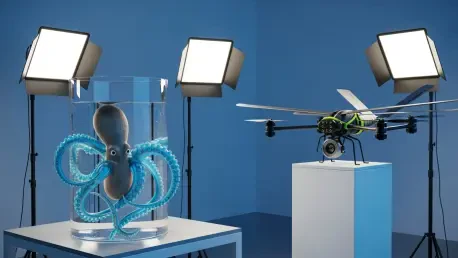
Nature has long provided the blueprint for mechanical efficiency, a concept that is fully explored through the bio-inspired innovations featured at the festival. One of the most striking displays includes an octopus-like swimming robot, which utilizes soft robotics and fluid dynamics to navigate underwater environments with a level of agility that traditional rigid submersibles cannot match. This approach to engineering, known as biomimicry, seeks to replicate the physical advantages found in the animal kingdom to solve complex human problems. By observing the movement of these machines, attendees can see how the flexibility of organic shapes allows for better interaction with unpredictable environments, such as the ocean floor or disaster recovery sites. This section of the festival highlights the creative synergy between biology and engineering, suggesting that the most effective solutions to our modern challenges may already exist in the natural world. These robots serve as a testament to the power of observation and the importance of ecological literacy in the tech sector.
Complementing the aquatic displays is the “Dragonfly” mosquito-control drone, an aerial system designed to mimic the flight patterns and efficiency of its namesake for environmental management. This technology represents a significant advancement in sustainable pest control, as it uses precision flight and targeted sensors to manage insect populations without the need for broad-chemical spraying. The integration of such drones into public health strategies illustrates how robotics can be used to protect both human populations and the surrounding ecosystem simultaneously. These innovations emphasize a growing trend toward environmental consciousness within the field of robotics, where machines are designed not only to serve humans but also to preserve the natural balance of the planet. By highlighting these bio-inspired tools, the festival encourages a forward-thinking perspective on how technology can be used for the greater good of the environment. Visitors are invited to consider how mimicking the wisdom of nature leads to more sustainable and efficient engineering practices.
The successful execution of RoboFest 2026 provided a comprehensive framework for understanding the essential role that intelligent systems played in the evolution of modern society. Organizers ensured that the experience was maximized by offering attendees complimentary access to the entire Science Centre Singapore, encouraging a full day of exploration across multiple scientific disciplines. The festival operated on a schedule that accommodated both the structured needs of school groups during the week and the leisure-oriented pace of families over the weekend. By blending high-energy entertainment with rigorous educational opportunities, the event moved beyond simple demonstration and fostered a genuine sense of agency among its participants. The next steps for those inspired by the festival involve moving from observation to active engagement in local STEM communities and specialized workshops. This transition ensured that the knowledge gained during the four-day event was applied toward creating a more informed and technically proficient community capable of shaping the future of automation.