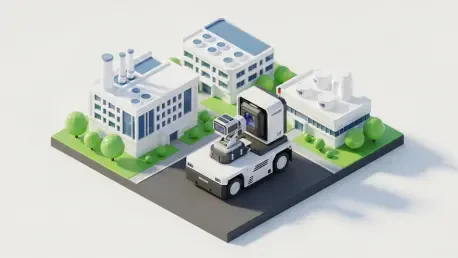

While many high-profile robotics firms prioritize complex humanoid prototypes or conceptual delivery schemes, the actual demand for labor in rugged outdoor facility maintenance remains largely unmet by existing autonomous solutions. Feasix AI, a South Korean startup led by Dr. Jongwon Kim, a mechanical engineering expert from Seoul National University, recently secured seed funding from Seoul Techno Holdings to address this specific industrial void. This investment validates a shift toward practical automation, where robots are designed not to replace the human workforce entirely but to mitigate the physical strain of labor-intensive tasks like parking enforcement, snow removal, and large-scale site cleaning. The company’s core technology features robust mobile platforms capable of transporting 100-kilogram payloads while utilizing sophisticated Vision AI. This funding round allows the team to accelerate the deployment of their machines, which integrate advanced vehicle and license plate recognition software directly into the mobile chassis for real-time operations.
Bridging the Gap Between Hardware and Intelligence
Success in the outdoor robotics sector requires a harmonious blend of specialized hardware and high-fidelity software, a combination that Feasix AI has internalized through rigorous engineering. By developing both the mechanical vehicle architecture and the underlying AI perception layers in-house, the company avoids the common pitfalls of third-party integration that often plague specialized robotics ventures. This internalized development strategy ensures that sensors and algorithms are optimized for the specific vibration and lighting conditions encountered in parking lots and industrial yards. Furthermore, the strategic emphasis on a human-robot collaboration model highlights a pragmatic understanding of the current market, focusing on immediate pain points where manual labor is either too costly or too dangerous. Investors noted that this realistic approach to automation, focusing on immediate problems, provides a clearer path to sustainable revenue. These robots are now poised to become indispensable tools for facility managers seeking to optimize workflows without discarding human expertise.
Establishing a Foundation for Global Expansion
The allocation of this seed capital prioritized the refinement of perception capabilities and the deployment of pilot programs across diverse environmental conditions. Looking toward the horizon from 2026 to 2029, the strategic roadmap involved the collection of vast amounts of operational data to develop a generalizable foundation model for outdoor mobile robotics. This initiative transitioned the company from providing specialized hardware to offering a versatile AI platform capable of adapting to various terrains and regulatory requirements globally. Industry leaders were encouraged to view these developments as a blueprint for integrating autonomous systems into existing infrastructure rather than building entirely new environments for machines. The expansion into international facility management sectors required a focus on modularity and cross-border software compliance. By prioritizing data-driven learning and real-world testing, the organization established a framework for scalable outdoor automation. These efforts ensured that the resulting technology remained resilient, adaptable, and ready for the complexities of global industrial maintenance.