
The creative landscape is no longer defined by the novelty of generative algorithms but by the seamless integration of artificial intelligence into the very fabric of professional operations. For years, the industry debated whether machines would replace human ingenuity, yet the current reality reveals a far more collaborative and sophisticated outcome where technology handles the mechanical chores. By automating the repetitive elements of the production cycle, professionals have reclaimed their cognitive capacity to focus on high-level conceptualization and strategic direction. This transition has moved past the era of experimental play, establishing AI as the backbone of modern workflows. Today, the most successful agencies are those that have successfully embedded these tools into their core systems, allowing them to navigate a rapidly shifting market with unprecedented agility and precision. As the focus shifts from manual labor to intellectual oversight, the definition of creative work is being fundamentally rewritten. This structural transformation ensures that talent is applied where it matters most, driving a new era of productivity and artistic innovation.
Streamlining Production: The End of Technical Drudgery
Historically, creative professionals found their daily routines disproportionately occupied by low-value technical tasks that drained mental energy without contributing to the overall vision. From resizing hundreds of visual assets for diverse social media platforms to performing laborious video export processes and document formatting, these chores were a constant bottleneck. Data from 2025 and 2026 indicates that nearly 87% of creators have now integrated automated systems to handle these manual burdens, with over 40% utilizing sophisticated AI tools on a daily basis to maintain their competitive edge. By offloading these mechanical requirements to intelligent algorithms, teams have effectively eliminated the drudgery that once stifled innovation. This shift is not merely about convenience; it is a fundamental reallocation of human resources toward more complex tasks. Consequently, the “busy work” that once defined the junior designer’s experience is rapidly vanishing, replaced by roles that demand higher levels of critical thinking and creative problem-solving from the very start.
This widespread adoption of automation effectively raises the production ceiling for what a small, agile team can achieve in a modern market. By delegating tasks such as initial script drafting, content adaptation, and complex image manipulation to AI-driven software, post-production timelines have been reduced by nearly fifty percent without any detectable sacrifice in final quality. Small boutique agencies are now finding themselves capable of delivering high-volume outputs that previously required the vast resources of a full-scale global firm. This democratization of high-level production tools allows creators to focus on the “soul” of their projects rather than the technical minutiae. As these systems become more intuitive, the barrier between a conceptual idea and its physical execution continues to thin. The result is a more vibrant industry where the speed of delivery matches the speed of thought, allowing for a more iterative and experimental approach to content creation that was previously impossible under old manual constraints.
Unified Ecosystems: Overcoming the Coordination Bottleneck
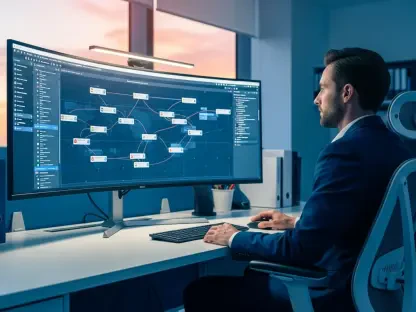
A critical insight within the contemporary creative discourse is that the primary obstacle to high-quality output is rarely a lack of talent, but rather a catastrophic failure of coordination. Traditional creative environments have long suffered from a fragmented stack of disconnected applications for messaging, task management, file storage, and collaborative editing. Every time a professional is forced to switch between these siloed tools, momentum is lost, and the risk of miscommunication or versioning errors increases exponentially. To combat this friction, the industry is moving aggressively toward unified platforms like BridgeApp, which consolidate communication and project management into a single, cohesive ecosystem. These platforms utilize no-code AI agent builders to automate the routine handoffs that occur between different stages of a project life cycle. By creating a seamless digital environment, organizations can ensure that the creative flow remains uninterrupted, allowing designers and writers to stay in a state of “deep work” for much longer periods.
Building on this unified approach, the real power of artificial intelligence is realized only when it is treated as a core architectural element rather than an isolated software feature. The trend toward integrated workflows means that AI agents can now monitor project progress in real-time, automatically updating stakeholders and preparing the necessary assets for the next phase of production. This level of synchronization eliminates the administrative overhead that typically consumes up to thirty percent of a creative lead’s time. Instead of manually tracking down files or status updates, the system handles the logistical heavy lifting. This evolution suggests that the future of the industry lies in sophisticated workflow design rather than just the adoption of individual creative tools. When the underlying infrastructure is intelligent, the entire team functions as a single, well-oiled machine. This allows for a higher degree of strategic focus, as the logistical barriers that once hindered large-scale collaboration are systematically dismantled by smart integration.
Strategic Roles: The Rise of the AI Creative Director
There is a growing body of evidence suggesting that fears of artificial intelligence making human creativity redundant were largely unfounded, as a significant role shift is currently occurring. Human designers, writers, and strategists maintain essential ownership over brand voice, emotional resonance, and artistic direction—qualities that algorithms cannot independently replicate or understand. In this new paradigm, AI serves as a production multiplier, handling iterative tasks like generating dozens of layout variations for A/B testing or localizing complex copy for global markets. This allows human professionals to act as the ultimate curators of ideas, spending their time refining the best outputs rather than building every version from scratch. Research into tools like Photoshop reveals that generative features are primarily utilized for rapid prototyping and exploration. This accelerated process allows ideas to be visualized and either discarded or refined at a pace that was physically impossible through manual effort alone, enhancing the creative’s role as a visionary.
This evolution has given rise to the AI Creative Director, a professional archetype focused on systems thinking rather than just execution. Unlike traditional production roles, this position centers on designing the complex prompts and managing the multi-model AI systems that drive the modern agency. These leaders are responsible for ensuring brand consistency across automated workflows and supervising the intersection between human talent and machine processing power. By mapping out which parts of the creative process are ripe for automation, they build scalable infrastructures that transform AI from a simple novelty into a fundamental business asset. This shift requires a deep understanding of both technology and aesthetics, as the director must curate the machine’s output to meet the nuanced requirements of a creative brief. As execution speed reaches new heights, the value of this human oversight only increases. The ability to manage these sophisticated systems effectively has become the new benchmark for leadership within the most innovative creative organizations.
Practical Strategies: Navigating the New Creative Frontier
In summary, the transition to AI-integrated workflows represented a permanent shift in the creative industry’s operational philosophy. Organizations that thrived recognized that artificial intelligence lacked the “taste” and psychological insight required to interpret complex human desires. These successful teams utilized the technology to accelerate the journey from initial concept to final reality, yet they kept the human professional as the final arbiter of quality and impact. The focus moved from the labor of production to the strategy of curation and direction, which allowed for a more scalable and sustainable business model. Agencies that mapped their internal processes to identify repeatable tasks gained a significant competitive advantage over those that treated AI as a sporadic experiment. By building a robust infrastructure that married human intuition with machine speed, these firms established a new standard for excellence. The era of manual drudgery ended, giving way to a more sophisticated landscape where creativity was limited only by the boundaries of human imagination.