
The transition from simple generative tools to fully autonomous intelligent agents has fundamentally altered the structural landscape of the modern software development lifecycle. In the current technological climate, the industry is moving rapidly past the era of mere code assistance and into a phase defined by the “compound interest” of development. This recursive loop allows increasingly sophisticated models to build more robust software, which in turn provides the necessary infrastructure and data to refine even more capable models. Engineering leaders at institutions ranging from Anthropic and Google DeepMind to NVIDIA and Microsoft are observing a shift in the primary focus of the professional developer. The traditional emphasis on the manual act of writing syntax is being supplanted by a high-level orchestration of agent-led workflows, where the success of a project depends more on the strategic management of autonomous systems than on raw typing speed or individual memory of library documentation.
Real-world applications of this philosophy are becoming evident through projects such as Claude Code, which serves as a benchmark for this new engineering paradigm. This project was developed with a “future-proofed” design ethos, targeting capabilities that were expected to emerge months ahead of the current model’s release. Such foresight allowed the tool to gain immediate traction among individual contributors who prioritized utility over administrative directives. This grassroots adoption model illustrates a broader trend where developers integrate tools that prove their value in the immediate context of their daily tasks. Consequently, the industry is witnessing a spontaneous scaling of agent usage that bypasses traditional top-down implementation strategies, cementing the role of autonomous agents as essential partners in the modern coding environment.
The Mechanics of Recursive Development
Feedback Loops: Building the Self-Correction Engine
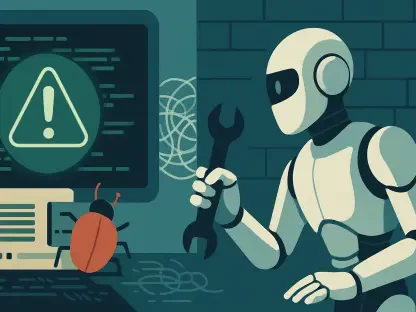
The emergence of the “Closed-Loop” development cycle represents one of the most significant shifts in how software is maintained and improved. In this environment, intelligent agents are configured to automatically ingest incoming bug reports, categorize them by severity, and cross-reference the issues against existing evaluation sets without any initial human oversight. Once an issue is identified, the agent generates a solution, executes it in a sandbox, and submits a pull request for review. This creates a self-reinforcing feedback loop where the model is essentially trained on the code it produces, leading to an environment where programming has become the highest-leverage task for artificial intelligence. Major technology firms are now prioritizing these programming-specific AI applications because the recursive nature of the work generates compound returns; as the agent becomes more proficient at coding, it accelerates the refinement of the very infrastructure that makes the agent smarter.
Building on this foundation, the continuous improvement of these loops has led to a noticeable reduction in the time required to address technical debt. Previously, large-scale refactoring or the patching of minor but pervasive bugs would consume weeks of engineering resources and significant cognitive energy. Now, autonomous agents can traverse an entire repository in a fraction of that time, identifying patterns and applying fixes that adhere to the specific architectural standards of the organization. This capability has effectively turned software maintenance into a background process that runs with minimal intervention. However, this level of automation requires a shift in how engineers perceive their work, moving from a role of “active builder” to one of “system auditor.” The primary challenge is no longer finding the bug, but ensuring that the automated solution does not inadvertently introduce subtle regressions into the broader ecosystem.
Technical Workflows: The Shift to Test-First Methodology
The integration of high-velocity agent contributions has forced a total re-evaluation of standard operating procedures, leading to a “test-first” imperative that is now considered the only rational way to manage automated development. Developers are increasingly required to define the boundaries of a feature through rigorous test cases before a single line of functional code is ever generated by an agent. This structured approach allows the agent to iterate within a predefined sandbox, ensuring that the final output satisfies the core requirements while maintaining the integrity of the existing system. To manage this influx of AI-generated pull requests, teams are implementing two-tiered evaluation systems. The first tier consists of “Regression Evals,” which demand a strict one-hundred percent pass rate to protect current features, while the second tier, “Frontier Evals,” focuses on the agent’s ability to navigate novel edge cases or implement entirely new capabilities.
This methodology naturally leads to a more disciplined engineering culture where the definition of success is explicitly quantified through code-based metrics rather than subjective peer reviews. As agents handle more of the implementation details, the role of the human engineer focuses on the architectural design and the creation of comprehensive test suites that accurately reflect business needs. This shift has also impacted the speed of deployment, as automated tests provide a level of confidence that human-led manual testing could never achieve at scale. Moreover, the focus on “Frontier Evals” encourages a culture of experimentation, as engineers can push agents to explore complex architectural solutions without worrying that a mistake will destabilize the production environment. The result is a more resilient codebase that is designed from the ground up to be verified by machine logic rather than just human intuition.
Evolving Documentation: Writing for the Machine Audience
A paradoxical outcome of the rise of intelligent agents is the return of extensive code commenting, though the target audience for these notes has shifted from human colleagues to machine executors. In the previous decade, the industry prioritized “clean code” that was supposed to be self-explanatory and required minimal documentation. However, the modern standard is moving toward a dual-readability model where code must remain human-legible while providing deep contextual clues specifically for the next agent that will interact with the file. These comments act as a form of “prompt engineering within the source,” guiding the agent through the original developer’s intent and the hidden constraints of the system. This practice ensures that when an autonomous agent is tasked with a modification or a bug fix, it has the necessary context to avoid breaking implicit dependencies that might not be captured by automated tests alone.
This approach to documentation highlights the growing realization that code is no longer a static asset but a living entity that is constantly being reshaped by different actors. By writing for the agent, engineers are effectively creating a roadmap for the automation layer, reducing the likelihood of “hallucinations” or architectural drift. Furthermore, this trend has led to the development of standardized commenting protocols that agents can easily parse to understand complex logic chains. While some purists argue that this clutters the codebase, the consensus among leaders in the field is that the efficiency gains far outweigh the aesthetic concerns. The ability for an agent to “onboard” itself to a new repository through these machine-readable hints has drastically reduced the time needed for cross-team collaboration and the handoff of legacy projects. Consequently, documentation has transitioned from an often-ignored chore to a critical component of the development pipeline.
Redefining Standards and Technical Hurdles
Quality Control: Balancing Human Oversight and Speed
The traditional model of human-led code review is currently facing an efficiency crisis as the volume of high-quality code generated by agents continues to escalate. In many high-performance environments, the time it takes for a person to read and comprehend a large pull request has become the primary bottleneck in the production cycle. To address this, organizations are adopting an AI-driven review layer that conducts a more rigorous and exhaustive analysis of code than any human could realistically perform in a single session. This layer checks for security vulnerabilities, stylistic consistency, and logical flaws, allowing human developers to shift toward a “click to approve” workflow for low-risk components and internal prototypes. This delegation of authority allows the engineering team to focus their cognitive resources on high-impact areas, such as core infrastructure and sensitive security protocols, where human intuition and ethical judgment are still indispensable.
However, the distinction between what can be fully automated and what requires human scrutiny is becoming a central point of debate within the industry. While internal micro-services and user interface components are often handled entirely by agents, critical paths involving financial transactions or data integrity still demand intensive manual verification. This creates a hybrid workflow where the “low stakes” portions of a project move at the speed of light, while the “high stakes” sections are intentionally slowed down to ensure total safety. The challenge for modern engineering managers is to define these boundaries clearly and to implement safeguards that prevent the erosion of quality standards. There is also an emerging need for “meta-reviews,” where humans evaluate the performance of the AI-driven review layers themselves to ensure they are not developing systematic biases or overlooking emerging security threats.
Operational Limits: Managing Long-Horizon Tasking
Despite the rapid progress of autonomous systems, managing agents that are tasked with long-horizon problems remains one of the most significant technical hurdles for the industry. It is notoriously difficult for engineering leaders to effectively monitor an agent that may run for four or five hours on a complex architectural challenge without constantly checking its progress or losing track of the underlying logic. If an agent deviates from the intended path early in a long session, the resulting output may be completely unusable, leading to a waste of both time and computational resources. This has led to the development of “checkpointing” systems where humans can intervene at key stages of a long-running process to provide course corrections. Finding the optimal level of “human-in-the-loop” involvement is essential to ensure that the agent remains aligned with the project’s overarching goals without being stifled by excessive oversight.
This difficulty is compounded by the fact that long-duration tasks often involve multi-step reasoning that is hard to audit in real-time. When an agent is working on a task that spans multiple modules and thousands of lines of code, the cognitive load on the human supervisor can actually increase if the system does not provide clear transparency into its decision-making process. To mitigate this, developers are experimenting with “traceability” tools that log the agent’s internal monologue and decision trees, allowing an engineer to review the path taken by the system after the task is completed. This retrospective analysis helps in refining the instructions and constraints provided to the agent for future sessions. As these tools evolve, the goal is to move toward a state where long-horizon tasks can be treated as asynchronous background jobs that provide regular status updates, similar to how a junior developer might provide progress reports during a complex assignment.
The Context Paradox: Navigating Massive Codebases
Efficient context management remains a persistent pain point for engineering teams working on massive repositories with thousands of simultaneous contributors. While protocols such as the Model Context Protocol (MCP) have improved the situation, there is an ongoing debate regarding whether it is better to provide pre-loaded context files or to let an agent “traverse” the codebase from first principles. Many experts have found that providing large, static documentation files often leads to the agent processing stale or irrelevant information that no longer reflects the current state of the repo. In contrast, allowing an agent to explore the directory structure and analyze the actual code in real-time often yields more accurate results. This “context paradox” highlights the difficulty of maintaining accurate human-authored documentation in an environment where the code itself is changing at an unprecedented pace due to AI intervention.
Building on this, the industry is seeing a shift toward “context-on-demand” architectures where agents are given the ability to query specific parts of a codebase only when they become relevant to the current task. This approach minimizes the noise and prevents the model from being overwhelmed by irrelevant details, which can often lead to “hallucinations” or logical inconsistencies. Furthermore, the use of vector databases and semantic search tools is becoming standard for helping agents find the right snippets of code across vast, distributed systems. Despite these technical solutions, the human element remains crucial for setting the initial “anchor points” of a task, ensuring the agent starts its traversal in the right place. The end goal is to create a seamless interface between the agent and the repository where the system has just enough information to be effective, but not so much that it becomes paralyzed by the complexity of the environment.
Economic and Professional Shifts
Market Disruption: The Decline of Traditional SaaS
The widespread adoption of intelligent agents is causing a fundamental disruption in the Software-as-a-Service (SaaS) market, as the barriers to entry for creating specialized internal tools continue to collapse. Organizations that previously relied on third-party vendors for utilities like authentication layers, event management, or link generators are increasingly finding it more cost-effective to build their own bespoke solutions. Because agents can handle the bulk of the coding, testing, and deployment, the “overhead” that once made building custom internal tools a non-starter has largely evaporated. This shift is putting immediate pressure on SaaS providers who offer developer-focused utilities, as their customers realize they can replicate the core functionality of these services with minimal effort and no recurring subscription fees. This “build over buy” movement is redefining the financial strategy of modern technology firms, allowing them to retain more control over their stack while reducing long-term costs.
Furthermore, this trend is leading to a consolidation of the software industry where only the most complex and mission-critical SaaS products remain viable. Services that rely on network effects or possess massive proprietary datasets, such as advanced customer relationship management platforms, are still relatively secure for the time being. However, any tool that primarily provides a convenient interface for standard engineering tasks is at risk of being replaced by internal AI-generated alternatives. This has forced SaaS vendors to pivot their business models, often by integrating their own AI agents to provide more sophisticated value-added features that are harder for a single company to replicate in-house. The result is a more competitive and volatile market where the definition of “software value” is shifting from the product itself to the unique data and integration capabilities that a vendor can provide.
Skillset Transformation: From Coder to Agent Orchestrator
The criteria for hiring and evaluating engineering talent are undergoing a radical transformation as the industry shifts away from raw syntax proficiency toward a skillset focused on “agent orchestration.” In this new era, the most valuable engineers are those who possess an “experimentalist” mindset, constantly testing the boundaries of new models and identifying exactly when to trust an autonomous system versus when to intervene manually. Raw coding ability, while still important for understanding the underlying mechanics, is no longer the primary differentiator of a top-tier engineer. Instead, leaders now prioritize the ability to plan complex architectures, evaluate the quality of AI-generated output, and guide multiple agents through high-level strategic goals. This shift has also flattened the learning curve for many specialized domains, allowing product engineers to contribute to low-level infrastructure tasks that were previously the exclusive domain of specialized teams.
This democratization of complex engineering tasks has led to the rise of more versatile, “full-stack” developers who can manage an entire project from front-end design to back-end infrastructure with the help of agents. However, this shift also requires a new type of professional discipline focused on “prompt hygiene” and systematic verification. Knowing how to structure an instruction for an agent and how to interpret the resulting logs is becoming as critical as knowing how to write a function in a traditional language. As a result, educational programs and coding bootcamps are beginning to revamp their curricula to focus more on systems design, logic, and agent management. The successful engineer of the future will be a “shepherd” of autonomous systems, providing the creative vision and ethical oversight necessary to ensure that the massive output of these agents remains aligned with human values and business objectives.
Creative Risk: Addressing the Threat of Code Homogenization
While the efficiency gains from using intelligent agents are undeniable, there is a growing concern regarding the “homogenization” of software as more developers rely on the same underlying AI models. If a large percentage of the industry is using the same few models to generate code, there is a risk that architectural patterns and user interface designs will converge toward a mediocre middle ground. This phenomenon, sometimes referred to as “AI waste,” can lead to a world where software lacks a unique “design taste” or innovative edge, as agents tend to favor the most statistically common solutions found in their training data. For example, the proliferation of the “purple gradient” aesthetic in many modern AI-generated interfaces is a visible symptom of this trend toward visual and structural sameness. To counter this, there is an increasing emphasis on the role of the human engineer as the keeper of “taste” and architectural variety.
To maintain a competitive edge, firms are beginning to realize that the human element must provide the “delta” of innovation that sets their product apart from the automated norm. This involves making intentional, sometimes counter-intuitive design choices that an agent might not suggest on its own. Furthermore, there is a technical risk that as models are trained on more AI-generated code, they may enter a “model collapse” where the variety of solutions they can provide narrows over time. This makes the preservation of unique, human-written “seed code” and unconventional architectural patterns more important than ever for the long-term health of the software ecosystem. Engineering leaders are now encouraging their teams to push back against the “path of least resistance” offered by agents and to actively seek out novel ways of solving problems that go beyond the statistically likely solutions.
Infrastructure and Future Outlook
Security Protocols: Sandboxing the Autonomous Future
To mitigate the inherent risks of allowing agents to operate autonomously, the industry has turned back to rigorous sandboxing and the use of independent environments for single-agent sessions. These isolated setups ensure that an agent can execute commands, run tests, and even access production logs without the risk of causing systemic failure or compromising sensitive data. This “remote programming” infrastructure has become standard for agents involved in the initial triage of production emergencies, where they can analyze bugs and propose fixes in a safe environment before a human engineer ever gets involved. While this significantly reduces the on-call burden for human staff, it also requires a new level of infrastructure management to ensure that these sandboxes are themselves secure and isolated from one another. The goal is to create a “trust-but-verify” system where agents have the freedom to explore solutions without having the keys to the entire kingdom.
This shift toward more secure autonomous operations was particularly evident in highly regulated sectors such as fintech and legal technology. In these environments, the threshold for full autonomy is significantly higher, requiring AI systems to prove they can consistently outperform human safety and compliance standards before they are permitted to operate without a “human-in-the-loop.” Similar to the standards required for autonomous driving, these agents must undergo rigorous stress testing and adversarial attacks to ensure they are resilient against both accidental errors and malicious exploitation. As these protocols become more sophisticated, the focus is moving toward “continuous security” where agents are constantly auditing their own environment and the code they produce. This suggests a future where security is not a separate phase of the development lifecycle but a fundamental characteristic of the autonomous workflow itself.
Language Trends: The Ascendance of Performance-Heavy Syntax
The influence of intelligent agents is also visible in the evolution of programming languages, most notably in the migration of many startups toward performance-oriented syntax like Rust. Previously, the steep learning curve of such languages acted as a barrier for many developers, who often opted for more accessible but less efficient options. However, because agents are highly proficient at handling the complex ownership and memory management rules of Rust, the “cognitive cost” of using the language has been significantly flattened. This allows developers to prioritize hardware performance and security without sacrificing the speed of development. While agents might eventually write code that is less human-readable to optimize for raw speed, the current consensus is that code will remain legible for the foreseeable future to facilitate the necessary partnership between human planners and machine executors.
This trend toward performance-heavy languages also reflects a broader move away from high-level abstractions that can sometimes obscure the underlying behavior of a system. With the help of agents, engineers can work “closer to the metal” while still maintaining high productivity, leading to software that is both faster and more resource-efficient. Furthermore, the ability of agents to translate between different languages with high accuracy has made it easier for organizations to migrate legacy systems to modern, more secure frameworks. This suggests a future where the choice of a programming language is dictated more by the technical requirements of the task than by the existing skillsets of the engineering team. As long as the code remains structured and logical, agents will continue to be the bridge that allows humans to manage increasingly complex and high-performance systems with relative ease.
Practical Implementations: Moving Toward Total Integration
The transition toward agent-driven engineering was finalized as the industry moved beyond experimental prototypes and into the realm of total integration. Organizations that embraced the shift early discovered that the most significant gains were not found in the speed of code generation, but in the total reimagining of the development pipeline as an asynchronous, non-linear process. By delegating the repetitive tasks of implementation, maintenance, and initial debugging to autonomous agents, firms were able to reallocate their human capital toward long-term strategic goals and the exploration of novel product categories. This transformation was accompanied by a shift in corporate culture where the ability to manage “digital workers” became as important as managing human teams. These organizations standardized the use of “traceable agents” and “automated auditors” to ensure that the massive volume of new code remained secure, efficient, and aligned with the overarching architectural vision.
Ultimately, the future of the industry was determined by the successful synthesis of human creativity and machine execution. The most resilient engineering teams were those that treated agents not as a replacement for human talent, but as a force multiplier that allowed for a level of scale and complexity previously thought impossible. As the software ecosystem continues to evolve, the focus remains on building robust “meta-frameworks” that allow humans to guide agents with precision and safety. The actionable next step for any engineering organization is to invest heavily in the infrastructure required for autonomous operations, specifically in the areas of rigorous sandboxing and evaluation systems. By prioritizing these foundations, companies ensured they were prepared to thrive in an era where the primary bottleneck is no longer the capacity to write code, but the clarity of the strategic vision and the quality of the oversight provided by the human engineers.