
The Spring Festival Gala, an annual cultural institution watched by hundreds of millions, has dramatically transformed from a beloved entertainment spectacle into a formidable stage for China’s technological supremacy. In its most recent broadcast, the event was so saturated with advanced technology that viewers widely referred to it as the “first year of the Robot Spring Festival Gala,” a moniker that captures a profound shift in the nation’s cultural and industrial landscape. This was not a mere showcase of novel gadgets; it was a deeply integrated display of artificial intelligence and robotics woven into skits, martial arts routines, and musical performances. The gala served as a grand, nationwide popularization of cutting-edge innovation, presenting a tangible vision of the future to a mass audience while simultaneously revealing the intense and accelerating competition among the country’s leading technology firms. The event’s content was driven by several dominant themes, most notably the unprecedented capabilities of humanoid robots, the pervasive, behind-the-scenes integration of AI into media production, and the strategic convergence of technology, entertainment, and commercial promotion.
The Humanoid Robot Revolution on Stage
The Main Stage Headliners
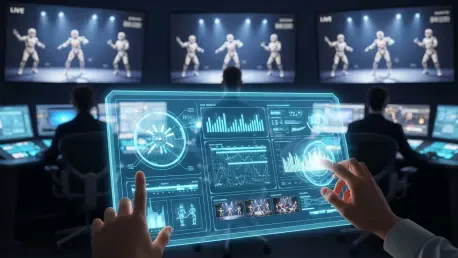
The most visually arresting element of the gala was the deployment of humanoid robots that demonstrated a staggering leap in sophistication and performance ability. Songyan Dynamics captured the audience’s attention with a compelling collaboration in the skit “Grandma’s Favorite,” where its robots shared the stage with veteran actress Cai Ming. The performance cleverly highlighted the company’s core technological strengths through a trio of its models: the compact Bumi, the athletic N2, and the general-purpose E1. The robots displayed remarkable interactive capabilities, with one delivering a perfectly timed punchline, showcasing advancements in human-robot social interaction. Beyond dialogue, their physical prowess was on full display as they executed dynamic sprints and agile backflips, proving a significant evolution in motion control. The segment’s true showstopper, however, was the reveal of a hyper-realistic bionic robot modeled after Cai Ming herself. Developed in an astonishingly short two-month timeframe, this creation featured lifelike skin textures and highly expressive facial movements powered by 32 internal motors, a dozen of which were dedicated solely to mouth articulation for realistic speech. The E1 model also added a touch of the surreal with a neck capable of suddenly extending by 50 centimeters, a feature that, while peculiar, ensured the performance was unforgettable.
In a powerful display of rapid progress, Unitree Technology presented what was arguably the most significant year-over-year improvement in robotic performance. Their G1 humanoid robots took center stage in the program “Wu BOT,” where they were cast as formidable “martial arts masters.” The machines performed a fluid and powerful sequence of backflips, side-kicks, and vaults that blurred the line between mechanical engineering and athletic artistry. In a “human-machine duel,” the robots skillfully wielded nunchucks and practiced with staffs, demonstrating precise rhythm and control that extended to the complex, swaying motions of “drunken boxing.” Unitree proudly claimed to have achieved several global firsts during this broadcast, including continuous table-flipping parkour, an ejection flip that exceeded three meters in height, and a breathtaking seven-and-a-half-turn Airflare spin. The performance culminated with the appearance of the company’s larger ## model, which performed an elegant sword dance. In a clever cross-promotional move at a branch venue, this same ## robot was customized to resemble the protagonist Sun Wukong from the highly anticipated video game “Black Myth: Wukong,” further illustrating the robot’s versatility and the deepening ties between the tech and entertainment industries.
Showcasing Versatility and Collaboration
While some companies focused on acrobatics, others emphasized the potential for multi-robot collaboration and practical, real-world applications. Magic Atom took a multifaceted approach, demonstrating their technology across different venues and formats. At the Yibin branch venue, their humanoid robots were cast in the whimsical role of “cyber noodle-fishing chefs.” The Gen1 model performed the continuous, repetitive actions of fishing, lifting, and pouring noodles, while the Z1 model operated as a delivery robot, showcasing a coordinated workflow. Back on the main stage, the company presented a more artistic vision with a team of eight robots performing a tightly synchronized dance routine alongside human artists. The machines executed rapid turns and complex choreography, a testament to advanced multi-agent coordination. Not to be outdone in agility, the Z1 model also performed a 360° Thomas spin and a side-flip. In a final, large-scale demonstration, Magic Atom deployed over one hundred of its quadruped robots, MagicDog, which moved in perfect, millisecond-level precision through synchronized running and dancing formations, creating a mesmerizing spectacle of collective intelligence.
In contrast to the high-energy performances of its competitors, Galaxy Universal opted for a more subdued but equally impressive showcase of its wheeled, dual-armed Galbot G1 robot. Featured in a short micro-movie, the robot was portrayed as a “close buddy,” a helpful companion in a domestic setting. This narrative allowed the company to highlight the robot’s dexterity and utility in everyday tasks. The Galbot G1 was shown manipulating walnuts, retrieving items from a shelf, and methodically tidying a messy desktop. The demonstration extended to more complex activities like folding clothes and even grilling and selling sausages, all designed to underscore its potential value in service and home environments. This focus on practical assistance provided a compelling counterpoint to the more entertainment-focused displays, painting a picture of a future where robots are not just performers but integral, helpful members of the household. The varied approaches taken by these companies illustrated the broad spectrum of development within the robotics industry, from high-performance entertainment to functional domestic support.
The Tech Invasion Spreads to Local Galas
The robot revolution was not confined to the main CCTV event; a wide array of robotics companies secured prominent roles in regional satellite TV galas, signaling a broad and deep industry-wide trend. This decentralization of the tech showcase demonstrated that the integration of robotics into mainstream entertainment is no longer the exclusive domain of a few top-tier firms but a widespread strategic objective. For instance, Zhi Yuan Robotics achieved significant visibility by featuring its creations in multiple local galas, amplifying its brand recognition across different regional audiences. On Shenzhen Satellite TV, Zhongqing Robotics delivered a culturally resonant performance by having its robots execute the famous “Ax Gang” dance, a pop culture reference that immediately connected with viewers. Meanwhile, on Liaoning Satellite TV, Luming Robotics broke new ground by having its robot engage in a traditional cross-talk comedy performance with the renowned comedian Feng Gong, testing the boundaries of human-robot interaction in a comedic context.
The diversity of these local performances highlighted the specialized capabilities emerging within the industry. Hubei Satellite TV featured a robot from Optics Valley East Intelligence performing a traditional Chinese music piece, a showcase of fine motor control and artistic sensitivity. At the Guangxi gala, the spotlight was on industrial application, with China Southern Power Grid’s quadruped inspection robot, Qilin, making an appearance. This move cleverly framed a piece of industrial infrastructure as a technological marvel worthy of celebration. The proliferation of robots across these regional broadcasts served a dual purpose. It provided a crucial platform for smaller or more specialized companies to reach a mass market, and it reinforced the national narrative of widespread technological advancement. By embedding these sophisticated machines in familiar cultural formats, from comedy to music, the local galas played a vital role in normalizing the presence of advanced robotics in everyday life and solidifying the Gala’s new identity as a national technology fair.
The Invisible Force AI’s Deep Integration
Powering Production from Behind the Scenes
While the physical robots commanded the spotlight, artificial intelligence operated as the invisible yet indispensable force that shaped nearly every aspect of the gala’s production and broadcast. ByteDance, through its cloud service division Volcengine, served as the exclusive AI cloud partner and was deeply embedded in the show’s technical backbone. The company’s Doubao large-scale models were instrumental in the creative process, with the Seedance 2.0 video generation model being used to create visual elements for various programs. The Shidian Ancient Books model likely contributed to the development of culturally themed content, leveraging AI to mine and interpret historical texts for modern performances. This behind-the-scenes integration represents a significant shift for AI, moving it from a conceptual topic of discussion to a practical, industrial-grade tool capable of supporting one of the world’s largest live media events. The company’s influence was felt by the audience even before the show began, with its AI programming tool, TRAE, being advertised during the pre-show broadcast.
ByteDance’s consumer-facing platforms also played a crucial role in managing the audience experience, seamlessly bridging the gap between the broadcast and the viewer. Its popular applications, Doubao and Douyin, were responsible for managing the massive volume of online interactions, creating a participatory element for the show. These platforms also powered the generation of real-time subtitles, a computationally intensive task that requires sophisticated speech recognition and natural language processing to function accurately at scale. Furthermore, the entire video live-streaming infrastructure, which had to deliver a high-quality, uninterrupted feed to hundreds of millions of concurrent viewers, relied on the company’s cloud services. This deep, systemic integration of AI into the core functions of the broadcast—from content creation to audience interaction and final delivery—underscores a new era in media production, where artificial intelligence is no longer a futuristic concept but a fundamental component of the operational stack.
From AI Tools to Smart Product Placement
The Spring Festival Gala was also strategically utilized as a colossal platform for promoting smart devices and AI-powered applications, blurring the lines between entertainment and a high-tech product launch. The integration of these products was often woven directly into the programming, providing them with unparalleled visibility. The Huawei Mate 80 smartphone, for example, was prominently used for vertical-screen live-streaming, showcasing its camera capabilities to a massive audience. Other products from the brand were frequently featured throughout the event, reinforcing its association with cutting-edge technology. Smart home appliance brands like Dreame, MOVA, and Shouqu also enjoyed extensive exposure, appearing in as many as nine different programs, from skits to musical numbers, effectively turning segments of the gala into subtle lifestyle advertisements for an AI-enhanced home.
This commercial integration became even more direct in a skit that heavily featured “Afu,” an AI health application from Ant Group. The branding was impossible to miss, with the app’s logo visible on the set and the protagonist of the skit even being named “Afu.” This level of product placement turned the performance into a narrative-driven advertisement for the application’s health-tracking features. The technological showcase extended to more niche products as well, such as Photon Leap’s 8K AI thumb sports camera, which was featured during a song program to highlight its advanced imaging capabilities. The Harbin branch venue took this a step further by presenting an entirely AI-generated song, demonstrating the creative potential of generative AI. While this fusion of technology and commerce amazed many viewers with its futuristic vision, it also created a polarizing experience, with some critics lamenting that the cultural celebration had begun to feel more like a “technology press conference” or a series of elaborate promotional videos.
A Celebration of National Scientific Prowess
From Entertainment to National Pride
Beyond the immediate spectacle of consumer-facing robots and AI applications, the gala dedicated significant airtime to celebrating China’s foundational achievements in scientific research, explicitly linking entertainment with national pride. In a unique and artistically rendered segment, the Hefei branch venue brought together leading scientific teams to present some of the nation’s most ambitious and significant research projects. These were not dry, academic presentations but rather creative interpretations designed to make complex science accessible and inspiring for a general audience. The segment highlighted monumental national-level initiatives, including the “Artificial Sun,” an experimental fusion reactor aimed at providing a source of clean and virtually limitless energy. The presentation transformed the complex physics of fusion into a visually stunning display, symbolizing the nation’s quest for energy independence and a sustainable future.
This strategic showcase of scientific might continued with presentations on the “Micius” satellite, a groundbreaking project in the field of quantum information science that has established China as a leader in secure quantum communications. The segment artfully conveyed the esoteric concepts of quantum entanglement and teleportation, framing them as key components of future information security. The gala also celebrated the country’s deep-space exploration initiatives, highlighting recent missions and future ambitions in exploring the cosmos. By weaving these monumental scientific endeavors into the fabric of a beloved cultural event, the broadcast did more than just entertain; it served a powerful political and social function. It aimed to cultivate a sense of national unity and pride around scientific and technological progress, effectively using one of the world’s largest media platforms to communicate a clear message about the country’s technological ambitions and its rising status as a global leader in innovation.
A New Stage for Technological Ambition
The Spring Festival Gala ultimately served as an unprecedented, nationwide demonstration of the rapid maturation of China’s AI and robotics sectors. The event successfully pulled these advanced technologies from the confines of research laboratories and industry conferences and placed them directly into the living rooms of hundreds of millions of citizens. This grand popularization of science and technology, while creating a polarizing experience for an audience accustomed to more traditional entertainment, had an undeniable impact. The heavy emphasis on technology, which elicited both awe at the innovation and criticism of the overt commercialism, effectively harnessed a premier cultural institution to drive a national conversation. The gala was less a simple variety show and more a powerful declaration of technological capability and ambition, broadcasting to both a domestic and global audience that the future is being actively shaped by the twin forces of artificial intelligence and robotics. It marked a pivotal moment where a cultural touchstone was repurposed into a platform for projecting national strength and a shared vision for a technologically advanced future.