
The modern industrial landscape is undergoing a profound metamorphosis as sophisticated algorithms and autonomous machines transition from experimental novelties to essential protective measures. Current labor market assessments indicate that approximately 60% of employees are now seeing their professional roles significantly transformed by artificial intelligence, marking a shift toward a more augmented workforce. This revolution is not merely about increasing efficiency but is fundamentally rooted in the preservation of human life and the mitigation of long-term physical harm. By integrating real-time biometric monitoring and predictive analytics, organizations are moving toward a future where workplace fatalities and chronic illnesses are drastically reduced through technological intervention.
The significance of this subject lies in its potential to solve age-old safety challenges that manual oversight could never fully address. High-risk environments, such as construction sites and chemical plants, have historically relied on reactive protocols that only trigger after an incident has occurred. Now, the emphasis is on a proactive infrastructure that identifies hazards before they manifest as accidents. This article explores how intelligent systems, ranging from wearable sensors to autonomous drones, are reshaping the socio-ethical and physical boundaries of professional safety.
The Evolution of Workplace Protection Through Intelligent Systems
The shift toward intelligent safety systems represents a departure from traditional “check-the-box” compliance toward a dynamic, data-driven methodology. In the past, safety officers relied on scheduled audits and historical accident reports to formulate prevention strategies. Today, the connectivity provided by the Internet of Things (IoT) allows for a continuous stream of information that keeps safety protocols updated in real-time. This connectivity ensures that the environment adapts to the worker, rather than forcing the worker to navigate a static and potentially hazardous space.
Industry leaders recognize that this technological leap is necessary to address the plateau in safety improvements seen over the last decade. While mechanical safety features and better training have saved countless lives, human error and environmental unpredictability remain persistent threats. By embedding intelligence into the very fabric of the workplace, companies can create a “digital twin” of their safety operations, allowing them to simulate risks and implement safeguards with surgical precision. This proactive stance is becoming the new standard for excellence in corporate responsibility.
Intelligent Wearables and the Rise of Biometric Safety Infrastructure
Smart Personal Protective Equipment (PPE) has moved far beyond basic helmets and vests, evolving into sophisticated data-collection platforms that monitor the wearer’s physiological state. For instance, healthcare professionals are increasingly adopting garments with embedded posture-tracking sensors to prevent debilitating back injuries during patient transfers. Similarly, industrial workers use haptic-feedback gloves that monitor repetitive strain, vibrating to alert the user when their movement patterns exceed safe ergonomic thresholds. These devices provide a granular level of detail regarding heart rate, body temperature, and localized vibration exposure.
However, the adoption of these technologies is not without its debates, particularly regarding the balance between safety and comfort. While data shows a significant reduction in injury claims in sectors like mining and heavy manufacturing, some workers express concerns about the physical weight or heat generated by high-tech gear. Furthermore, the accuracy of biometric sensors can vary based on environmental factors, leading to “alert fatigue” if a device triggers too many false positives. Despite these challenges, the ability to detect a worker’s fatigue or heat stress before it leads to a collapse remains a powerful argument for the widespread implementation of smart wearables.
Autonomous Intervention: Shielding Humans from High-Risk Environments
Robotics and drones are effectively redrawing the lines of danger by stepping into roles that were previously too hazardous for human occupancy. In the demolition and nuclear sectors, compact robots controlled via sensory-enhanced tele-operation allow operators to navigate unstable structures from a safe distance. These machines provide haptic and auditory feedback, enabling a human supervisor to “feel” the resistance of a wall or “hear” the structural groans of a ceiling without being physically present. This separation of the worker from the hazard is perhaps the most direct way AI is lowering fatality rates in “dirty, dull, and dangerous” jobs.
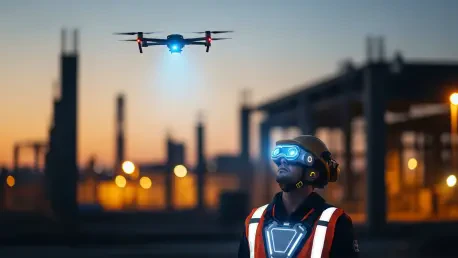
The application of autonomous systems also extends to sub-surface mining and deep-sea maintenance, where environmental pressures and limited oxygen pose constant threats. Drones equipped with LiDAR and thermal imaging can perform inspections of confined spaces, identifying structural weaknesses or gas leaks that would be invisible to the naked eye. While the initial investment in such robotics is high, the competitive advantage gained through reduced downtime and lower insurance premiums makes it a compelling choice for modern enterprises. The risk, however, lies in the potential for over-reliance on technology, which could lead to a degradation of traditional safety skills among the remaining human staff.
Neural Networks and the Prediction of Long-Term Health Outcomes
Artificial intelligence is proving to be a game-changer in identifying slow-moving health crises that traditional safety measures often overlook. By utilizing neural networks to analyze decades of health data alongside current environmental readings, companies can now model long-term risks like permanent hearing loss or respiratory issues. Algorithms can track cumulative noise exposure across a steel factory, suggesting rotations for workers before they reach a threshold of irreversible damage. This transition from preventing “accidents” to managing “outcomes” represents a sophisticated evolution in occupational medicine.
Emerging trends also point toward a regional divergence in how these predictive models are applied. In some jurisdictions, the focus is heavily on ergonomic longevity for an aging workforce, using AI to suggest localized modifications to workstations that extend a worker’s career. In other regions, the priority is on monitoring chemical exposure in rapidly developing industrial zones. These systems challenge the common assumption that occupational illness is an inevitable byproduct of industrial labor. Instead, they suggest that with enough data and processing power, chronic work-related conditions can be treated as preventable variables rather than unavoidable risks.
The Socio-Ethical Landscape: Navigating Privacy and Mental Well-being
The integration of AI into the workplace introduces a complex layer of psychological and ethical considerations that go beyond physical protection. There is a growing concern that safety monitoring can easily slide into performance surveillance, creating a high-pressure environment where workers feel constantly judged by an algorithm. Experts suggest that when employees feel they are under perpetual observation, the resulting anxiety can manifest as a new type of psychosocial hazard, potentially offsetting the physical safety benefits the technology provides.
Comparative analysis of different corporate cultures reveals that worker trust is the primary factor in the success of AI safety initiatives. When data ownership is transparent and employees are assured that biometric information will not be used for disciplinary actions, adoption rates soar. Conversely, a “top-down” implementation without worker consultation often leads to resistance or the intentional sabotage of sensors. Future directions in this field will likely involve the development of “privacy-by-design” systems that anonymize individual data while still providing the aggregate insights necessary to maintain a safe work environment.
Strategic Implementation: Bridging the Gap Between Innovation and Regulation
Successfully integrating AI into safety protocols requires a deliberate strategy that aligns technological capability with existing regulatory frameworks. Organizations should prioritize interoperability, ensuring that new AI tools can communicate with legacy safety systems to create a unified oversight network. Actionable recommendations for businesses include conducting thorough risk and impact assessments before deployment and establishing clear protocols for data governance. It is essential to treat AI as a collaborative partner to the human safety officer rather than a replacement, maintaining a “human-in-the-loop” approach for all critical decision-making processes.
Furthermore, training programs must evolve to include digital literacy as a core component of occupational safety. Workers need to understand not only how to wear or operate new devices but also how to interpret the data these systems provide. Industry best practices suggest that the most effective implementations are those where safety committees, including both management and labor representatives, have a voice in selecting and auditing the technology. This collaborative approach ensures that the innovation serves the practical needs of the people on the front lines.
Synthesizing Technology and Human-Centric Safety for the Future
The journey toward an AI-driven safety paradigm has fundamentally redefined the relationship between the laborer and the work environment. It was determined that the most successful systems were those that prioritized the physical and psychological well-being of the individual over mere operational metrics. As autonomous systems took over the most high-risk tasks, the human role shifted toward high-level oversight and complex problem-solving, creating a more sustainable and dignified professional experience. The integration of predictive modeling and real-time intervention has turned the goal of “zero harm” from a corporate slogan into a technically feasible objective.
Moving forward, the focus must shift toward creating global standards that ensure these safety benefits are accessible across all sectors and regions. Stakeholders should actively engage in the development of legislative frameworks that protect worker privacy while encouraging the adoption of life-saving innovations. Future considerations will likely involve the refinement of AI-human collaboration, ensuring that as technology becomes more autonomous, it remains transparent and accountable to the people it is designed to protect. The strategic takeaway is clear: the most effective safety revolution is one that is built on a foundation of ethical governance and human-centric design.