
In the relentless, high-stakes world of global logistics, efficiency is the currency of success. United Parcel Service Inc. (UPS), a titan of the industry, is embarking on a transformative journey, betting billions on automation to redefine its operational playbook and secure a more profitable future. This strategic pivot is not merely about upgrading equipment; it’s a fundamental reimagining of its vast network, driven by advanced robotics and artificial intelligence. This article delves into UPS’s landmark investment in automation, exploring how its partnership with robotics startup Pickle Robot Co. serves as a cornerstone for a sweeping initiative aimed at cutting costs, enhancing productivity, and ultimately, boosting the bottom line in an increasingly competitive market.
From Manual Labor to Robotic Precision: The Evolution of the Warehouse
For decades, the logistics industry has been powered by human muscle. The process of unloading millions of packages daily from trucks and shipping containers has remained a stubbornly manual, physically demanding, and time-consuming bottleneck. This traditional reliance on manual labor has not only limited throughput but also exposed companies to rising labor costs, workforce shortages, and the risk of workplace injuries. The e-commerce explosion further intensified these pressures, flooding networks with unprecedented package volumes and demanding faster, more accurate processing. This industry-wide challenge set the stage for a technological revolution, transforming automation from an experimental concept into a critical necessity for survival and growth.
Dissecting the Multi-Billion Dollar Automation Blueprint
The Pickle Robot Deal: Targeting the First-Mile Bottleneck
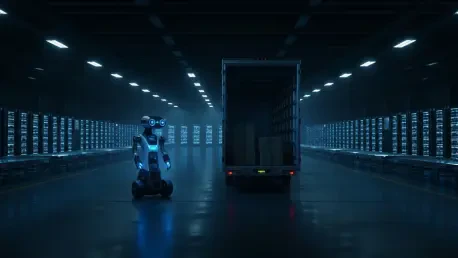
At the heart of UPS’s strategy is a calculated $120 million investment to acquire 400 truck-unloading robots from Pickle Robot Co. This move is the first tangible step in a far broader $9 billion, four-year automation plan designed to generate $3 billion in annual cost savings by 2028. Pickle’s technology directly addresses the “first mile” of the warehouse process—autonomously unloading packages with a sophisticated mobile platform and an AI-guided suction arm. Each robot can handle boxes up to 50 pounds and clear a standard truck in about two hours, a task that is physically taxing for human workers. Crucially, these robots are designed for “plug-and-play” deployment in existing facilities, eliminating the need for costly infrastructure overhauls and offering a compelling return on investment in as little as 18 months through labor savings.
A Catalyst for Network-Wide Transformation
This robotics investment is not an isolated upgrade but a key enabler of a much larger network reconfiguration. In conjunction with its automation push, UPS has already closed 93 facilities and eliminated 34,000 jobs this year. These actions are part of a deliberate consolidation effort to streamline operations and shed low-margin business, most notably reducing its volume of packages from e-commerce giant Amazon.com Inc. By automating foundational tasks like unloading, UPS can reallocate resources, optimize its physical footprint, and focus on higher-profitability services. This holistic approach demonstrates that automation is not just about replacing manual tasks but about fundamentally redesigning the entire logistics network for maximum efficiency and profitability.
Navigating a Competitive and Rapidly Innovating Robotics Market
UPS’s strategic move places it squarely within a burgeoning “robotics gold rush” in the logistics sector. While a pioneer, it is not alone. Amazon revolutionized its fulfillment centers years ago with its acquisition of Kiva Systems, whose robots focus on moving goods within the warehouse. In contrast, Pickle’s technology tackles the initial entry point at the dock doors. Other competitors, like Boston Dynamics with its “Stretch” robot, are also vying for market share in this lucrative space. The intense competition is fueling innovation and attracting massive venture capital, with investments in robotics companies projected to set a new record in 2025. This dynamic landscape validates UPS’s strategy and underscores the industry-wide consensus that advanced robotics is the future of logistics.
The Future Trajectory: An AI-Driven, Integrated Supply Chain
The deployment of these 400 robots, set to begin in late 2026, is just the beginning. The future of logistics points toward fully integrated, AI-driven supply chains where humans and robots collaborate seamlessly. Success in this initial phase will likely accelerate further investments, expanding automation into more complex sorting, handling, and even last-mile delivery tasks. As AI models become more sophisticated, robots will be able to handle a greater variety of package shapes, sizes, and weights, further reducing the need for manual intervention. This technological evolution promises to create a logistics network that is not only faster and cheaper but also more resilient, adaptable, and safer for its human workforce.
Key Takeaways and Strategic Imperatives for the Industry
The core takeaway from UPS’s initiative is that strategic automation is now a definitive pathway to enhanced profitability in logistics. By targeting a critical, long-standing bottleneck with adaptable and financially viable robotic solutions, the company is creating a blueprint for the rest of the industry. For other logistics providers, the imperative is clear: invest in scalable automation, foster partnerships with agile tech startups, and view technology as a catalyst for comprehensive business model transformation. For professionals within the sector, this signals a critical shift in required skills, moving from manual labor to the technical oversight, management, and maintenance of sophisticated automated systems.
Conclusion: Engineering the Future of Global Commerce
UPS’s $120 million investment in Pickle Robot’s technology is more than just a capital expenditure; it is a clear and powerful declaration about the future of global commerce. By systematically replacing manual friction with robotic efficiency, UPS is not only aiming to secure its own financial future but is also setting a new competitive benchmark for the entire logistics industry. This bold, calculated move underscores a permanent shift where profitability is inextricably linked to technological prowess. As these robots begin rolling into warehouses, they will be doing more than just moving boxes—they will be building a more efficient, resilient, and profitable foundation for the flow of goods around the world.