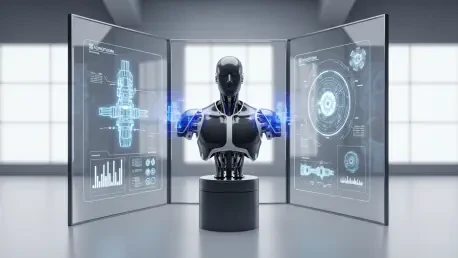

The strategic landscape of global manufacturing is undergoing a profound transformation as China officially implements its 15th Five-Year Plan, a policy framework that prioritizes the fusion of advanced artificial intelligence with physical robotic systems to redefine industrial productivity. This pivotal era, spanning from 2026 to 2030, represents a shift away from traditional, rigid automation toward what policy experts describe as embodied intelligence. By positioning robotics at the core of its modern industrial framework, the nation is not merely increasing its factory output but is fundamentally altering the interaction between software and physical machines. Recent data indicates that the operational stock of robots in the country has reached approximately 2 million units, a figure that is roughly four and a half times the capacity of Japan, which remains the world’s second-largest market. This massive scale provides a unique, real-world laboratory for testing how high-level AI can be integrated into business and heavy industrial sectors at a pace that few other nations can currently match or even effectively replicate in the near term.
Strategic Pivot: The Foundation of Industrial Scale
The 15th Five-Year Plan functions as the primary blueprint for all levels of government action, effectively mandating that regional and sectoral strategies align with the development of high-end, intelligent robotics. This centralized approach ensures that infrastructure, research funding, and industrial subsidies are concentrated on moving beyond simple mechanical tasks toward complex, data-driven operations. With China already accounting for 54% of all global industrial robot installations, the sheer volume of data generated by these machines provides an unparalleled advantage for training the next generation of neural networks. The focus is no longer just on how many robots are deployed, but on how intelligently they can communicate with one another and adapt to changing environments without constant human intervention. This shift is expected to streamline supply chains and reduce the costs associated with custom manufacturing, allowing for a level of flexibility that was previously unattainable in high-volume production settings.
Furthermore, the integration of AI within this industrial framework is designed to address demographic shifts and rising labor costs by automating increasingly complex cognitive tasks. As regional governments across the country begin to execute these federal mandates, we see a surge in specialized industrial clusters where hardware manufacturers and AI software developers work in close proximity. This geographic concentration of resources fosters a rapid feedback loop between the digital and physical realms, accelerating the deployment of specialized machines that can handle intricate assembly processes with minimal downtime. The plan also emphasizes the standardization of robotic communication protocols, which is a critical step in ensuring that different brands of machinery can operate within a single, unified factory ecosystem. By creating this cohesive environment, the nation is building a resilient industrial base that is less dependent on external technology and more capable of leading global trends in intelligent manufacturing and automated logistical solutions.
Technical Realities: Humanoid Development vs. Practical Application
A prominent feature of the current technological roadmap is the aggressive push toward humanoid robots, which serve as the ultimate demonstrator for embodied intelligence. While televised events and public robot marathons highlight the impressive mobility and human-like interactions of these machines, they remain largely in the pilot or demonstrator stage rather than full-scale commercial use. A significant hurdle in this space is the technical decoupling of hardware and software; frequently, the physical chassis of a robot is designed by one firm while the AI brain that controls its movements and decision-making is developed by another. This fragmentation often leads to integration challenges that prevent these versatile machines from reaching mass adoption in the immediate future. While humanoids offer the promise of universal mobility in environments designed for people, such as households or hospital wards, their complexity currently makes them less cost-effective than their specialized counterparts for most high-speed industrial applications.
In contrast to the visual appeal of humanoid robots, traditional industrial systems continue to follow the principle that form must strictly follow function to maintain efficiency. For high-precision environments requiring millimeter-level accuracy, the multi-jointed complexity of a human-like hand or leg is often a disadvantage compared to a specialized robotic arm with fewer points of failure. Experts in the field note that while a humanoid robot might be better suited for service roles where human interaction is a priority, the backbone of the manufacturing sector remains focused on specialized machines that prioritize speed and reliability. The 15th Five-Year Plan acknowledges this distinction by funding both the aspirational development of general-purpose humanoids and the practical refinement of task-specific AI for existing industrial hardware. This dual-track strategy ensures that while the country explores the far-off frontiers of robotics, it simultaneously maintains its lead in the practical, high-output sectors that drive the current economy.
Market Dynamics: Domestic Growth and Strategic Implementation
The success of the national strategy is deeply intertwined with the rapid expansion of the domestic robotics market, where local suppliers have significantly increased their influence over the past several years. In the electronics industry, which is a major driver of global technology trends, local manufacturers now host approximately 64% of all robot installations, providing a robust internal demand that fuels continuous innovation. This domestic growth is even more pronounced in the metal and machinery sectors, where local suppliers have secured a dominant 85% market share. By reducing reliance on foreign components and control systems, the industry has become more resilient to global supply chain fluctuations and trade pressures. This self-sufficiency is a key objective of the current plan, as it allows for a more controlled and rapid rollout of AI enhancements across the entire industrial spectrum, ensuring that the latest software updates can be implemented simultaneously across millions of domestic units.
To capitalize on these advancements, global stakeholders and industry leaders looked toward a more integrated approach that prioritized software compatibility and data security above all else. Organizations focused on the long-term viability of their manufacturing lines began to transition away from isolated machines toward fully networked environments where every robot served as a data node. The 15th Five-Year Plan successfully leveraged China’s massive domestic demand and established infrastructure to transition from simple automation to AI-driven intelligent systems that were capable of learning from their own operational history. This shift solidified the nation’s role as the primary driver of global robotics innovation, offering a model for how centralized planning could accelerate the adoption of complex technologies. By the conclusion of the initial implementation phase, the focus had moved toward creating actionable insights from the vast amounts of industrial data collected, providing a clear path for future developments in autonomous systems and human-machine collaboration.