
While futuristic visions of bipedal robots seamlessly integrating into warehouse operations have captured the industry’s imagination, a stark reality check is underway for supply chain leaders evaluating their next steps in automation. The pervasive excitement surrounding humanoid robots often obscures the significant gap between their current capabilities and the demanding, high-velocity environments of modern logistics and manufacturing. For Chief Supply Chain Officers (CSCOs), the critical task is to distinguish between speculative potential and practical, deployable technology. Current analysis suggests that the dream of a versatile, human-like robotic workforce is still years from being a cost-effective or operationally viable solution. The consensus points toward a more cautious approach, advising against substantial investment in a technology that remains in its infancy, despite the ambitious projections and high-profile demonstrations that dominate industry headlines and investment circles.
The Gap Between Concept and Capability
The primary obstacle preventing widespread adoption lies in the profound technological immaturity of current humanoid robot models when measured against the complex, unstructured tasks common in supply chains. These machines currently lack the sophisticated dexterity, advanced intelligence, and adaptive learning required for jobs like picking mixed SKUs from a bin or handling unexpected exceptions on a fast-moving conveyor line. Projections indicate that fewer than 20 companies, including names like Unitree, UBTech, Agility Robotics, and Tesla, will actively market these robots over the next three years. However, any production deployments during this period are expected to be confined to highly controlled, predictable settings that bear little resemblance to the dynamic and often chaotic nature of a typical high-throughput warehouse. This limitation means they are not yet ready to replace or even effectively augment human labor in roles that demand problem-solving and fine motor skills under pressure, a core requirement for adding real value in logistics.
Beyond their technical shortcomings, the economic and operational arguments for humanoid robots are currently unfavorable. The total cost of ownership, which includes a substantial upfront investment and significant ongoing maintenance, presents a challenging return on investment. At present, a single humanoid robot can cost several times more than a specialized, purpose-built automation solution while delivering demonstrably lower throughput for specific tasks. Furthermore, integrating these complex machines with existing warehouse management systems (WMS) and established operational workflows introduces another formidable layer of complexity and expense. A final, critical constraint is energy consumption; the limited battery life of current models severely restricts their operational uptime, particularly for high-mobility tasks that require constant movement across large facilities, making them an impractical choice for multi-shift operations without significant downtime for recharging.
A More Practical Path to Automation
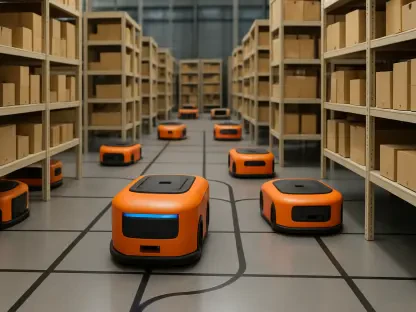
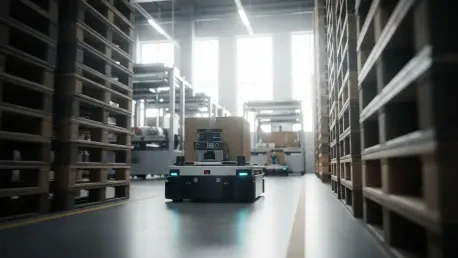
As an immediately viable and more effective alternative, the industry is increasingly turning its focus toward multifunctional robots. These machines are engineered for flexibility and peak performance without being constrained by the inherent limitations of a human-like form factor. A prime example is a wheeled robotic platform equipped with a telescopic arm and advanced sensors. Such a unit can efficiently move boxes between locations, perform cycle counts by scanning inventory on high shelves, and conduct facility inspections with greater speed, precision, and energy efficiency than a humanoid robot attempting to replicate the same set of tasks. By forgoing the bipedal design, these robots achieve higher uptime, benefit from longer-lasting battery systems, and can be specialized with tools perfectly suited for the industrial environment, representing a more mature and economically sound approach to automation in the current landscape.
In the end, the compelling promise of a versatile, do-it-all humanoid robot proved to be a premature vision for the intricate and demanding world of supply chain logistics. The industry’s exploration revealed that pursuing a human-like form introduced more constraints than benefits for most warehouse applications. Consequently, the strategic focus shifted toward multifunctional systems that delivered tangible efficiency gains and a clearer return on investment without the steep costs and operational hurdles associated with nascent humanoid technology. This pragmatic pivot underscored a crucial lesson: effective automation is not about replicating human appearance, but about designing intelligent, specialized tools that excel at the specific tasks required to drive productivity and resilience in an increasingly complex global marketplace.