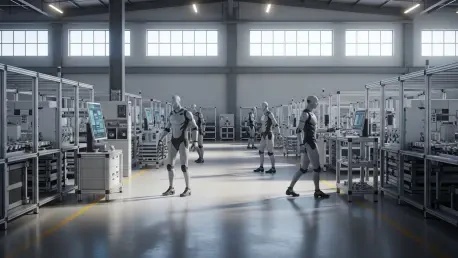

The rapid evolution of industrial automation has reached a pivotal juncture where the distinction between traditional machinery and autonomous humanoid entities is beginning to blur within the modern manufacturing landscape. Under the strategic direction of Chairman Chung Eui-sun, Hyundai Motor Group is actively preparing to integrate the sophisticated Atlas humanoid robot, developed by its subsidiary Boston Dynamics, into its United States production facilities. This initiative, slated for implementation by 2028, is not merely a technical upgrade but a manifestation of a human-centered philosophy that prioritizes safety and collaborative efficiency over total labor replacement. By focusing on physical artificial intelligence, the group aims to create a workplace where advanced robotics handle the most strenuous and dangerous tasks, allowing human employees to focus on high-level quality control and complex problem-solving. This shift marks a transition from heavy reliance on static robotic arms to a more dynamic, versatile ecosystem where bipedal machines navigate the factory floor with human-like agility.
Scaling Operations: The Path Toward Mass Robotic Integration
Expansion plans for this robotic fleet are remarkably ambitious, with the group targeting an annual production capacity of approximately 30,000 Atlas units by the year 2030. This massive scaling effort reflects a deep-seated belief that physical AI will serve as the primary engine for future manufacturing innovation across the global automotive industry. During recent discussions regarding the trajectory of the company, leadership emphasized that this volume is necessary to achieve the economies of scale required for widespread industrial application. By 2030, these robots will likely be ubiquitous features in assembly lines, performing roles that require precise movement and adaptability to changing production needs. The transition signals Hyundai’s broader transformation from a conventional vehicle manufacturer into a comprehensive mobility solutions provider. This evolution is driven by the need to maintain a competitive edge in a market that increasingly demands flexibility, as consumer preferences shift rapidly toward customized electric and software-defined vehicles.
Strategic Investment: Bolstering the North American Infrastructure
Supporting this technological leap was a massive capital commitment to the North American market, involving a planned injection of $26 billion from 2026 to 2028 to solidify long-term resilience. This funding allowed for the deep localization of supply chains, which proved essential for navigating the complex geopolitical landscape and segmenting markets effectively. To remain viable, the organization adopted a dual strategy that balanced global reach with specific regional requirements, ensuring that production ecosystems remained adaptable. Forward-thinking manufacturers should prioritize the integration of modular robotics and physical AI to mitigate labor shortages and enhance workplace safety protocols. Looking ahead, the focus must remain on harmonizing human intuition with robotic precision to foster a sustainable production model. The successful deployment of these systems demonstrated that technological leadership depends on merging heavy financial investment with ethical design. This approach established a new standard for industrial resilience.