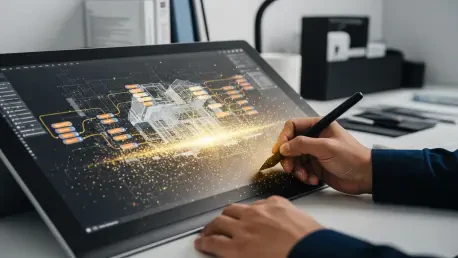

The rapid integration of generative artificial intelligence into professional creative workflows has forced a profound reevaluation of how digital art and design are produced in the modern era. While marketing campaigns frequently position these systems as universal productivity enhancers capable of replacing human effort, recent research conducted by the University of Houston reveals a much more complex and fragmented reality. The study suggests that generative AI functions less as a simple plug-and-play tool and more as a nuanced, often temperamental collaborator whose actual value fluctuates significantly depending on the user’s specific level of experience and the particular stage of the creative process. By analyzing how different users interact with these advanced systems, researchers have identified a clear performance divide between the initial “spark” of a new idea and the disciplined, technical work required to bring that vision to professional fruition.
The Cognitive Impact of AI in the Ideation Phase
During the ideation stage, generative AI acts as a powerful catalyst for mental stimulation, helping users break through the psychological barriers often associated with the blank canvas. The study found that using AI to generate initial concepts led to dramatic improvements in the quality of the raw output, with significant measurable increases in novelty, relevance, and complexity. Interestingly, these gains occurred without triggering the “choice paralysis” that typically plagues creatives when they are presented with an overwhelming number of options. Instead of feeling burdened by the sheer volume of data, professionals reported feeling more mentally stimulated and inspired during this exploratory phase. This suggests that AI is most effective when the primary goal is to expand the horizon of possibility and explore unconventional visual directions rather than trying to finalize a specific, polished product.
However, the research highlights a distinct and often frustrating shift in momentum when the creative work moves from high-level brainstorming to practical implementation. This execution phase—the period where a selected idea is meticulously refined, edited, and formatted to meet strict professional standards—is where significant technical friction often begins to surface for the user. For many practitioners, the transition from open-ended exploration to detailed production reveals that the AI’s internal mathematical logic does not always align with human aesthetic goals or project requirements. By isolating these two distinct stages of production, the researchers were able to pinpoint exactly where the technology provides a genuine competitive boost and where it introduces unexpected obstacles that can derail a professional’s established workflow.
The Expertise Paradox and the Speed of Production
The most striking revelation found within the study is the “expert slowdown,” a phenomenon where seasoned professionals actually perform their tasks more slowly when using AI during the execution phase. This counterintuitive delay is closely linked to “expertise fixation,” a state where veteran designers find that the highly detailed but often imprecise AI-generated output clashes with their own efficient, specialized routines. Instead of saving time by using a pre-generated template, these experts often find themselves spending a disproportionate amount of time “cleaning” the AI’s work or rebuilding specific elements from scratch to ensure the final product meets their rigorous quality standards. In several documented cases, the attempt to use AI actually added nearly fifteen minutes to a professional’s workflow, effectively turning the sophisticated tool into a bottleneck.
In sharp contrast to the struggles of veterans, less experienced designers and “ordinary people” appear to reap significant, consistent benefits from AI throughout the entirety of the creative process. Because beginners lack the rigid, hardened routines and specific technical expectations of experts, they are far more willing to accept and adapt to the AI’s structural suggestions and stylistic quirks. For these users, the AI fills a critical gap in their personal technical production skills, allowing them to reach a high-quality result much faster and more easily than they could ever achieve on their own. This suggests that AI currently acts as a powerful democratizing force within the industry, lowering the traditional barriers to entry for complex creative work and allowing those without years of formal training to produce visually impressive results.
Strategic Adaptations for Future Creative Workflows
The evidence for these findings was gathered through a series of rigorous tests involving hundreds of students and professional designers using modern text-to-image systems, such as Midjourney. These experiments demonstrate that the fundamental conflict between machine-generated logic and human-centered expertise is a consistent trend that transcends individual skill levels. The logic presented in the study extends well beyond the narrow realm of graphic design; creative fields such as technical writing, architecture, and filmmaking follow a remarkably similar path from open-ended exploration to disciplined, precision-based execution. In any high-level professional field where practiced routines and specific standards are essential for success, the introduction of AI at the final stage of work is likely to create significant operational tension.
Moving forward, the research suggests that the evolution of generative technology should prioritize the development of more intuitive user interfaces and granular control mechanisms rather than simply increasing the raw power of the underlying image generator. To mitigate the expert slowdown, future systems need to be significantly more adaptable, allowing professionals to maintain their specific, hard-won workflows without having to constantly undo or “fix” the AI’s autonomous choices. Currently, the most effective strategy for utilizing generative AI in a professional environment involves embracing it as a superlative tool for the “first spark” of creativity. This approach allowed teams to maximize the benefits of AI-driven novelty while maintaining strict human control and caution during the final, disciplined stages of production where precision remained the ultimate priority.