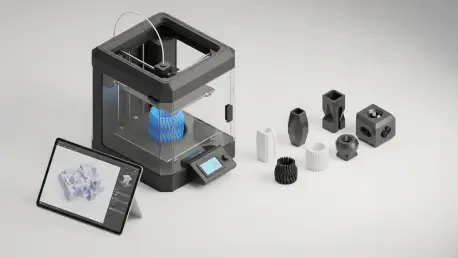

The rapid evolution of additive manufacturing has reached a point where industrial-grade velocity is no longer reserved for high-budget laboratories or massive industrial facilities, fundamentally shifting the market dynamics for desktop users. For a significant period, enthusiasts had to choose between the reliability of slow, stable machines or the expensive complexity of high-speed industrial alternatives. However, the recent market adjustment of the Creality K1, dropping from its initial premium positioning to a highly aggressive price point of nearly three hundred dollars, has disrupted this dichotomy by offering professional-grade performance to a much broader audience. This transition indicates a maturing industry where the barrier to entry for high-speed production is rapidly dissolving. Educators and small-scale manufacturers now have the opportunity to implement rapid prototyping workflows that were previously cost-prohibitive. The machine represents a balance of accessibility and power, providing a single-extrusion solution that does not sacrifice accuracy for the sake of speed. By lowering financial hurdles, it enables a new wave of innovation within the maker community.
Advanced Motion Systems and Structural Integrity
Achieving a maximum speed of 600 millimeters per second requires more than just high-torque motors; it demands a fundamental redesign of the motion system to handle extreme inertial forces. The K1 utilizes a Core XY architecture paired with an exceptionally lightweight 190-gram printhead, allowing the device to reach peak velocity in a staggering 0.03 seconds. This rapid acceleration of 20,000 millimeters per second squared significantly compresses the time required for complex geometries, yet speed alone can often lead to “ringing” or ghosting artifacts on the surface of a print. To counteract these mechanical echoes, the printer incorporates a rigid die-cast aluminum frame that provides a stable foundation for high-velocity movements. Furthermore, an integrated G-sensor monitors and mitigates resonance frequencies, ensuring that the fine details of a model remain sharp and consistent even when the machine is operating at its mechanical limits. This structural rigidity is crucial for maintaining the precision required in engineering applications where dimensional accuracy is paramount.
Thermal Management and Operational Intelligence
Operational efficiency extends beyond physical motion and into the realm of thermal management and user-centric automation. The machine features a ceramic heater capable of reaching 200 degrees Celsius in just 40 seconds, while the aluminum heatbed stabilizes at 60 degrees Celsius within three minutes, minimizing the downtime between a concept and the physical print. With a maximum nozzle temperature of 300 degrees Celsius and a dual-gear direct extruder, the system supports a diverse range of filaments, from standard plastics to high-performance composites. Automated routines such as bed leveling and self-checking diagnostics further reduce the technical friction often associated with 3D printing. As the industry progresses from 2026 to 2028, the integration of cloud-based platforms and mobile connectivity will likely become the standard for managing distributed manufacturing fleets. For those looking to optimize their production, the K1 served as a pivotal entry point into this high-speed era, proving that high-end features could be democratized effectively. Adopting such hardware provided a clear path for scaling creative and professional projects.