
The traditional image of a software engineer hunched over a keyboard, manually typing out thousands of lines of syntax, is rapidly becoming a relic of a previous technological era. As of 2026, the industry has crossed a definitive threshold where the primary output of a developer is no longer the code itself, but the strategic guidance of autonomous entities that generate it. Leading figures in artificial intelligence, including Andrej Karpathy, have noted that the fundamental bottleneck in production has shifted from the speed of human typing to the cognitive overhead required to monitor dozens of concurrent AI processes. Recent milestones from companies like Anthropic have demonstrated that AI systems are now capable of maintaining their own repositories with near-total autonomy, forcing a radical reconsideration of the tools professionals use to build digital products. The current generation of Integrated Development Environments (IDEs) is struggling to keep pace with this reality, as they were originally designed for a single human writer rather than a high-level orchestrator of machine intelligence.
Redefining the Workspace for Autonomous Agencies
From Manual Text Entry to High-Level Supervision
The shift from manual coding to agentic orchestration represents the most significant change in developer workflow since the invention of high-level programming languages. In this new paradigm, the IDE must transition from a glorified text editor into a sophisticated mission control center. Instead of focusing on syntax highlighting and local file trees, the modern interface must prioritize the visualization of agent states, task queues, and real-time decision-making logs. When an AI agent identifies a bug, initiates a web search for a solution, and then applies a patch, the human supervisor needs a high-fidelity view of that logic chain. The current reliance on makeshift solutions, such as complex terminal multiplexer grids or fragmented browser tabs, fails to provide the necessary cohesion for professional engineering. This gap in the market is driving the development of a new class of software that treats agents as first-class citizens, allowing users to toggle between active, idle, and background tasks with the same fluid precision once reserved for switching between lines of code.
Managing the Cognitive Load of Parallel Workflows
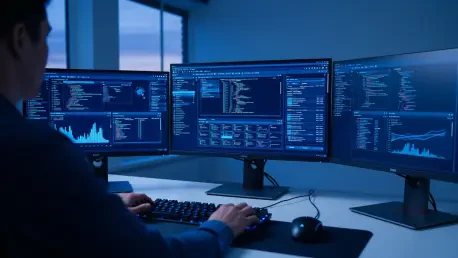
As the velocity of software production increases, the primary challenge for the modern engineer is the management of massive parallelization. In 2026, it is not uncommon for a single senior developer to oversee a fleet of twenty or more specialized agents, each handling distinct aspects of a project such as security auditing, documentation, or frontend optimization. This volume of activity creates a significant monitoring challenge that traditional IDEs are simply not equipped to handle. A purpose-built command center must offer expansive visibility, potentially utilizing multi-monitor setups to track usage statistics, API costs, and performance metrics in real time. The goal is to reduce the friction of context switching, enabling a single person to govern a digital workforce that can complete a year’s worth of traditional engineering tasks in a fraction of the time. This transition necessitates a UI that emphasizes architectural flow and system health over individual character input, ensuring that the human remains the effective “pilot” of an increasingly automated and high-speed production engine.
The Architecture of Digital Organizations
Encoding Corporate Hierarchy Into Agentic Teams
A revolutionary concept emerging in this new landscape is the idea of “org code,” which suggests that the very structure of a human organization can be captured and replicated through software. Industry visionaries argue that the operational philosophies of major tech giants, such as the siloed efficiency of Microsoft or the centralized design ethos of Apple, can now be modeled as templates for agentic teams. By defining how agents interact, report, and peer-review one another, developers are essentially writing the DNA of a digital company. This approach turns organizational design into an architectural decision that is both versionable and scalable. Unlike human hierarchies, which are often messy and resistant to change, these agentic structures can be fine-tuned with mathematical precision. This allows for a level of operational consistency that was previously impossible, as the communication protocols and responsibility matrices are hard-coded into the environment, ensuring that every agent operates within a strictly defined yet highly collaborative framework.
Forkable Cultures and Collaborative Evolution
The digitization of organizational structures introduces the possibility of “forking” an entire team’s workflow in the same way a developer might fork a GitHub repository. If a specific configuration of agents proves exceptionally effective at rapid prototyping or complex system migration, that entire organizational model can be shared, modified, and redeployed by other teams. This creates a marketplace of organizational logic, where the value lies not just in the software produced, but in the efficiency of the “digital firm” that produced it. As of 2026, companies are beginning to realize that their competitive advantage stems from the quality of their agentic orchestration layer. By treating team dynamics as a modular component of the development stack, businesses can experiment with different management styles and hierarchical structures without the overhead of hiring or restructuring human staff. This evolution signifies a move toward a world where the most valuable intellectual property is the blueprint of the automated organization itself, capable of being tuned and optimized through continuous integration and deployment.
Navigating the Future of Industrialized Development
Infrastructure Requirements for High-Velocity Systems
The rapid acceleration of engineering output, where AI agents can accomplish in an hour what previously took months, places an immense strain on existing corporate infrastructure. The primary hurdle for modern enterprises is no longer finding individuals who can write code, but rather building the robust governance and observation systems required to control these high-speed entities. Without a centralized command center, the risk of “shadow AI” and uncoordinated agent activity grows, leading to security vulnerabilities and redundant resource expenditure. Companies must invest in specialized environments that provide granular control over agent permissions, data access, and financial limits. This industrialization of software development demands a shift in focus toward site reliability engineering and system observability. The role of the tech lead is transforming into that of a systems administrator who ensures that the automated workforce remains aligned with the broader business objectives while maintaining the highest standards of code quality and security across the entire digital supply chain.
Strategic Transition Toward Agentic Governance
To remain competitive in this landscape, organizations must move beyond the experimental phase of AI integration and begin implementing a centralized governance model for their digital workforces. The first step involves auditing current development workflows to identify where human intervention is strictly necessary and where autonomous agents can be granted greater agency. This is followed by the deployment of specialized command centers that unify the diverse tools agents use, from cloud-native compilers to real-time search engines. Teams should focus on developing “playbooks” for agentic interaction, establishing clear protocols for when an agent should escalate an issue to a human supervisor. Furthermore, the adoption of version-controlled organizational structures will allow firms to iterate on their internal processes with the same speed they iterate on their software. The objective is to create a seamless loop where human insight guides machine execution, resulting in a production environment that is not only faster but more resilient and adaptable to the volatile demands of the modern technology market.
The transition from traditional coding to agentic orchestration was completed when the industry accepted that human syntax entry is a suboptimal use of professional talent. Moving forward, the most successful engineering teams will be those that master the art of organizational design within their development environments. This requires a departure from the “single-file” mentality of the past toward a multi-threaded management approach. Leaders should prioritize the implementation of observability tools that can track agent logic in real time, ensuring that transparency is maintained even as production speeds reach unprecedented levels. Ultimately, the focus of the software professional has shifted from the “how” of writing code to the “why” and “what” of system architecture and organizational intent. By embracing the role of the orchestrator, developers can leverage the full potential of these autonomous systems to solve problems that were previously deemed too complex or time-consuming for human teams alone.