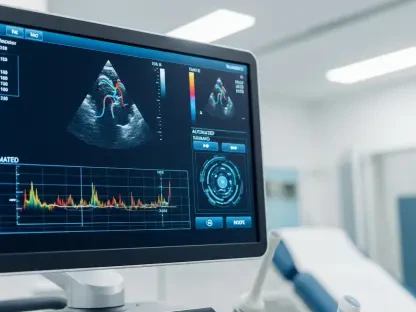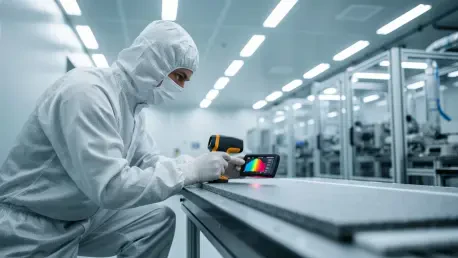

The silent workhorses of scientific discovery, spectroscopy instruments, are now at the center of a seismic shift that is fundamentally reshaping the landscape of analytical science. Once considered a mature discipline, spectroscopy is being propelled into a new era by the powerful currents of artificial intelligence, automation, and portability. This wave of innovation promises to unlock unprecedented levels of analytical intelligence, moving powerful measurement capabilities from the centralized laboratory directly to the point of need. However, this forward momentum is being met with significant resistance from entrenched challenges, including persistent budget limitations, a critical shortage of skilled professionals, and a surprisingly cautious pace of technology adoption. This growing chasm between the industry’s ambitious aspirations and its current capabilities places it at a pivotal crossroads, forcing organizations and professionals alike to confront whether they are truly prepared for the transformation that lies ahead.
A Shifting Professional Landscape
The traditional career trajectories within spectroscopy are undergoing a profound realignment as demand shifts away from established sectors toward industries driven by high-precision, data-rich applications. Historically strong fields such as petrochemicals and forensics have been overshadowed by the explosive growth in pharmaceuticals and biotechnology, which now represent the most robust areas for career momentum. This trend is a direct consequence of spectroscopy’s increasingly indispensable role in modern life sciences. It has become a cornerstone technology for applications like Process Analytical Technology (PAT) in continuous drug manufacturing, where real-time molecular monitoring and process control are paramount for efficiency and quality. Furthermore, its application in biopharmaceutical characterization, which involves the complex fingerprinting of large molecules, is essential for developing next-generation biologics and satisfying stringent regulatory demands for data integrity and reproducibility.
Beyond the life sciences, the materials science sector has emerged as another powerhouse of opportunity, driven by the global race to develop next-generation technologies. The creation of advanced batteries, high-performance semiconductors, and novel composite materials relies heavily on the precise molecular and elemental characterization that various spectroscopic techniques provide. This demand for deep analytical insight is also creating significant traction in adjacent fields aligned with pressing global priorities. For instance, environmental monitoring is a rapidly growing area, fueled by sustainability initiatives and the need for climate resilience. Similarly, medical diagnostics is expanding as spectroscopy’s non-destructive and data-rich nature proves ideal for innovations in early disease detection and personalized medicine. The overarching message for professionals is unmistakable: the new currency for career advancement lies at the intersection of deep analytical expertise, data fluency, and a practical understanding of application within complex, high-throughput, and regulated environments.
The Widening Chasm Between Opportunity and Expertise
While career opportunities are expanding into exciting new domains, the spectroscopy industry is grappling with a significant impediment that threatens to stall its progress: a pronounced shortage of skilled personnel. This talent bottleneck was identified as the single greatest challenge by a plurality of industry professionals, ranking even slightly ahead of concerns over cuts to research funding and capital budgets. This dual pressure of insufficient human capital and inadequate financial investment creates a widening chasm between what spectroscopy teams can envision and what they can realistically execute. The most urgent training needs identified by the industry paint a clear picture of the modern spectroscopist’s required skill set. A majority pinpointed advanced data analysis and chemometrics as the most pressing need, signaling a fundamental shift where interpreting large, complex datasets is now as important as operating the instrument itself. Following closely was the need for expertise in method development and validation, a critical competency in regulated industries where robust, compliant methods are non-negotiable.
This pronounced skills gap presents both a formidable challenge for organizations seeking to innovate and a distinct opportunity for individuals willing to adapt. Professionals who can successfully bridge the traditional domain of analytical chemistry with computing, advanced data analytics, and a firm grasp of regulatory requirements are becoming exceptionally valuable assets. The ability to do more than simply generate spectra is now the key differentiator in a landscape where data fluency is paramount. Moving forward, success will be defined by the capacity to translate raw, high-volume spectral data into actionable, decision-driving insights that can optimize a manufacturing process, accelerate a research breakthrough, or improve a clinical diagnosis. This evolution marks a definitive pivot in the field, where the value is increasingly derived not just from the hardware that collects the data, but from the sophisticated interpretation that unlocks its meaning and transforms it into knowledge.
Innovation at the Edge Meets Resistance at the Core
A palpable sense of excitement and optimism surrounds the potential of next-generation technologies to fundamentally reshape the field of spectroscopy. When asked about the developments poised to redefine data interpretation in the near future, nearly half of all professionals pointed directly to artificial intelligence and advanced analytics. This focus on intelligent systems was followed by a strong interest in miniaturized, field-deployable devices, suggesting a future where sophisticated analytical power converges with on-demand portability. This enthusiasm is clearly mirrored in emerging instrumentation trends. Portable and handheld analyzers are capturing the most attention from professionals, indicating a powerful industry-wide push to move analytical capabilities out of the centralized laboratory and into real-world environments like manufacturing floors, remote field sites, and point-of-care clinics. This is complemented by a high demand for AI-driven data analysis tools designed to automate interpretation, identify subtle patterns, and reduce the analytical burden on human experts.
However, a significant disconnect exists between the industry’s forward-looking vision and the current reality of its day-to-day operations. The survey data reveals a substantial lag in the adoption of these advanced tools, with a mere fraction of organizations reporting that AI or advanced analytics are fully integrated into their workflows. A much larger portion remains in the preliminary exploratory phase, cautiously evaluating the potential benefits and implementation challenges. Alarmingly, nearly a quarter of organizations have no current plans to implement AI at all. This data confirms that while the digital transformation in spectroscopy is indeed underway, it remains in its nascent stages, with widespread adoption still a distant goal rather than an imminent reality. The industry appears to be caught in a state of cautious hesitation, intrigued by the promise of innovation but constrained by practical barriers that temper its ability to fully embrace and deploy these transformative technologies across the board.
Navigating Pragmatic Realities and Economic Headwinds
Despite the intense focus on future technologies, the pragmatic realities of budgets and foundational needs continue to ground purchasing decisions in the present. When acquiring new instruments, an overwhelming majority of scientists prioritize analytical performance—defined by core metrics like resolution, sensitivity, and speed—above all other considerations. Secondary factors, such as the total cost of ownership and the quality of vendor support, trail by a significant margin. The primary obstacle hindering the modernization of laboratory equipment is not a lack of desire but the prohibitive upfront capital cost, which was cited as the biggest roadblock by most respondents. A secondary, yet important, barrier is the lack of internal expertise or staff training required to operate new, more complex systems. These financial and human resource constraints have a tangible impact on the industry’s capacity to innovate, with a substantial number of organizations reporting no immediate plans for major instrument purchases.
Looking ahead, the overall economic outlook for the spectroscopy industry is one of guarded optimism, shaped by a complex mix of opportunities and uncertainties. The strongest demand for spectroscopy services is anticipated to come from sectors at the forefront of global research and development, including battery technology, semiconductor manufacturing, and advanced materials R&D, as well as clinical diagnostics and pharmaceutical manufacturing. Yet, this optimism is tempered by ongoing concerns related to global supply chain disruptions, inflationary pressures, and uneven R&D funding across different sectors. This cautious sentiment is reflected in professional confidence levels, with a large group remaining neutral or unsure about the economic forecast. To accelerate innovation and break through these headwinds, industry professionals identified increased funding for capital equipment as the single most critical driver, followed by the need for enhanced collaboration between academic and industrial partners to share knowledge, risk, and resources.
Charting a Course Through Transformation
The landscape of the spectroscopy community was captured at a truly pivotal moment, revealing a field that remained an essential tool for scientific discovery while being fundamentally reshaped by the forces of automation, artificial intelligence, and data-driven science. To thrive in this new environment, the industry needed to address the critical disconnect that existed between its immense technological potential and its concurrent resource constraints. This required a clear, targeted investment in both modern, intelligent equipment and, perhaps more importantly, in its people. The development of robust training programs designed to foster the interdisciplinary skills necessary to bridge chemistry, data science, and engineering was deemed essential for future progress. For professionals, the path forward had become clear: success was ultimately defined by the ability to combine deep technical expertise with data fluency, regulatory awareness, and the adaptability required to navigate an exciting and rapidly evolving analytical landscape.