
The traditional silence of Japanese temples is increasingly punctuated by the mechanical whirring of humanoid limbs as religious institutions turn to advanced robotics to bridge the gap between ancient spiritual practices and a rapidly shrinking population of human clergy. This shift represents a profound cultural pivot where the intersection of digital worship and practical necessity has become a standard path for the future of faith within the region. As the younger generation seeks more accessible forms of engagement, the traditional temple visit has transformed into an experience that merges the metaphysical with the algorithmic. This development is not merely about novelty but stems from a critical shortage of human practitioners capable of maintaining thousands of temples across the country. Consequently, the introduction of high-tech alternatives has provided a sanctuary for those seeking guidance without the constraints of traditional human availability. The result is a unique synthesis where the sanctity of the altar is now shared with machines that never tire and never waiver in their spiritual devotion.
The Technological Evolution: From Software to Physical Presence
The journey toward a fully functional robotic monk began with sophisticated text and voice-based software launched in early 2026, which allowed practitioners to interact with digital scripture through simple interfaces. This initial phase focused on accessibility, providing a medium for those in remote areas to receive spiritual instruction without a physical presence. By late 2026, researchers at institutions like Kyoto University expanded this vision by integrating augmented reality interfaces that allowed believers to visualize spiritual figures within their own living spaces. These early iterations laid the groundwork for the physical manifestation seen today, moving beyond the screen into the three-dimensional world. The transition was driven by the realization that physical presence and gesture are vital components of the Buddhist tradition, necessitating a form that could occupy space and perform rituals with the same gravity as a human. This evolution marked the beginning of a new era where spirituality is no longer confined to the biological, embracing the mechanical as a vessel.
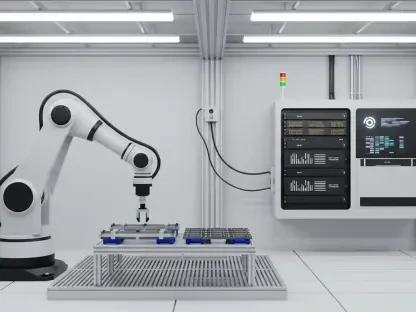
The physical manifestation of these spiritual guides relies heavily on hardware developed by Unitree Robotics, a partnership that highlights a significant shift in the global hierarchy of technological innovation and production. While Japan has long been recognized as the undisputed kingdom of robotics, the current deployment of these humanoid monks utilizes Chinese hardware to fulfill specific social and religious roles within the domestic landscape. This collaboration represents a pragmatic approach to problem-solving, combining Japanese spiritual programming and cultural expertise with advanced external mechanical platforms. The integration of such hardware allows the robots to navigate the complex environments of historic temples, which were never designed for automated occupants. By utilizing these agile platforms, religious institutions have managed to maintain the aesthetic and functional requirements of their daily routines. This synergy between diverse technological origins and local spiritual needs demonstrates how modern religion can adapt by leveraging the best available global resources to sustain local traditions.
Spiritual Functionality: Artificial Intelligence in Sacred Spaces
The core of the robotic monk’s utility lies in its sophisticated AI, which is powered by advanced large language models and trained on vast libraries of Buddhist scriptures and philosophical texts. This allows the robot to offer personalized counseling and spiritual guidance that is tailored to the specific concerns of the individual seeker. One of the most significant advantages of this digital clergy is its perceived detachment, offering a non-judgmental and confidential environment for practitioners to share their burdens. Unlike human monks, who may be subject to social biases or the constraints of community relationships, the robot provides an objective listening ear that ensures total privacy for the believer. This level of confidentiality has encouraged many younger individuals to seek help for personal issues that they might otherwise keep hidden. By providing a safe space for emotional and spiritual venting, the robot serves as a modern bridge to ancient wisdom, making the teachings of the Buddha relevant to the digital age.
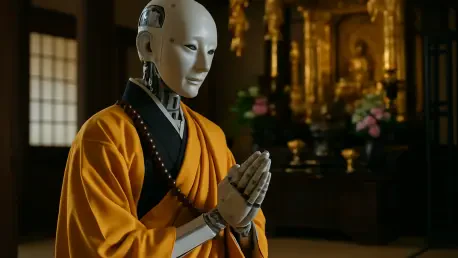
Beyond verbal communication, these humanoid robots are programmed to replicate the intricate ritualistic movements of the monastic life with exceptional precision and solemnity. They are capable of performing slow, ritualized walking through temple grounds, executing worship gestures, and joining their hands in prayer before traditional icons with perfect form. This physical mimicry is essential for maintaining the sense of ritualistic continuity that believers expect when they visit a sacred site. The visual of a machine performing a prostration or lighting incense creates a powerful atmosphere that blends the mechanical with the divine, reinforcing the idea that the vessel is secondary to the intention behind the act. These gestures are not merely programmed sequences but are designed to evoke the same sense of peace and mindfulness that a human monk provides. As these robots join their hands in prayer, they facilitate a meditative environment that allows the human observer to focus on their own spiritual journey, undistracted by the mechanical nature of the guide.
Addressing Social Realities: Future Implications for Religious Practice
The deployment of robotic monks serves as a direct response to the demographic crisis currently facing the country, where an aging population has led to a depletion of human clergy. Many rural temples have found themselves without leadership, leaving local communities without a focal point for their spiritual and social lives. The robotic monk acts as a targeted solution to this problem, ensuring that traditions are maintained and that the psychological needs of a lonely population are met. In many cases, these machines have become the primary caregivers for the spiritual well-being of the elderly, providing a constant presence in areas where younger humans have long since departed for urban centers. This use of technology is far from a gimmick; it is a vital tool for the preservation of cultural heritage in the face of inevitable social change. By stepping into roles that humans can no longer fill, these robots help to stabilize the social fabric of declining communities, offering a sense of permanence in a rapidly shifting world.
The customization options available for these robotic monks represented a significant leap toward a truly personalized religious experience for the modern practitioner. Users were granted the ability to adjust the age, gender, and voice of their spiritual guide, ensuring that the interaction felt as comfortable and resonant as possible. This flexibility addressed the diverse needs of a globalized society, allowing the machine to serve as a relatable mentor for people of all backgrounds. Developers integrated feedback loops that allowed the robots to learn from each interaction, refining their counseling techniques to better serve the emotional nuances of their human counterparts. This approach ensured that the technology remained a vessel for tradition rather than a replacement for it, fostering a new frontier in the application of artificial intelligence. By the end of the initial rollout, the project successfully demonstrated that technology could indeed carry the weight of the sacred, offering a cohesive and tireless medium for spiritual practice that looked toward a future of inclusive and accessible faith for everyone.