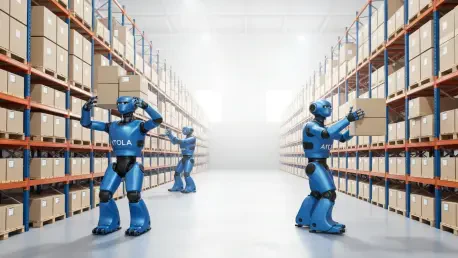

In a Las Vegas ballroom, where technological ambitions are often showcased but seldom realized with such tangible presence, the first public demonstration of Boston Dynamics’ Atlas robot offered a compelling and unusually grounded glimpse into the future of industrial automation. The debut at CES on January 5th was more than a spectacle; it was a deliberate statement in a field crowded with competitors like Tesla, moving the conversation from carefully edited videos to the unforgiving reality of a live stage. This review seeks to determine whether this landmark event signals a genuine leap toward practical, commercial-ready robotics or if it represents another impressive but ultimately distant promise. The core objective is to assess how Atlas, in its current form, addresses the persistent challenges of industrial automation and what its unveiling means for the future of manufacturing.
The growing excitement surrounding humanoid robotics, fueled by advancements in artificial intelligence and a surge in investment, has created an environment of intense competition and high expectations. For years, the industry has relied on controlled demonstrations and pre-recorded videos to showcase progress, a practice that highlights successes while conveniently omitting the frequent stumbles and failures inherent in development. Boston Dynamics’ decision to present Atlas in a live, unedited format therefore carries significant weight. It challenges the industry norm and invites a more critical evaluation of the technology’s maturity, pushing past the hype to examine the robot’s real-world viability and its potential to solve complex problems on the factory floor.
Unveiling Atlas From Stage to Factory Floor
At its core, Atlas is a bipedal humanoid robot designed for autonomous operation in industrial settings. During the demonstration, the life-sized prototype captivated the audience by seamlessly lifting itself from the floor, a maneuver that showcased both power and control. For several minutes, it navigated the stage with a fluid, confident gait, demonstrating a level of mobility and balance that has long been a key engineering hurdle. The robot also displayed a capacity for interaction by waving to the crowd and swiveling its head with an owl-like range of motion. Although an engineer piloted the machine remotely for this specific event, company officials emphasized that this was a temporary measure for the showcase; in its intended environment, Atlas is engineered to navigate and perform tasks on its own.
Beyond the impressive hardware, the true strength of the Atlas platform lies in the powerful corporate synergy driving its development. The project is backed by a formidable alliance between Hyundai, the South Korean automotive giant and majority owner of Boston Dynamics, and Google’s DeepMind, which will provide its world-class artificial intelligence. This partnership reunites Boston Dynamics’ unparalleled expertise in advanced robotics with the cutting-edge AI that powered their collaboration a decade ago under previous ownership. This strategic alignment is not merely a technical collaboration but a clear commercial strategy.
This strategy was made concrete with the announcement of a defined path to commercial deployment. Boston Dynamics revealed that a product version of Atlas, distinguished by a new blue color scheme, is already in production and slated for deployment by 2028 at Hyundai’s state-of-the-art electric vehicle plant near Savannah, Georgia. This specific, time-bound plan moves Atlas out of the realm of research and into the world of practical application. It provides the project with a clear initial use case—automotive manufacturing—a structured environment where its capabilities can be refined and proven, setting a precedent for its future expansion into other industries.
A Flawless Debut Assessing Atlas’s Live Performance
The live performance of Atlas was, by all accounts, flawless. The robot executed every command without a single stumble or hesitation, a rare achievement in the high-stakes world of public robotics demonstrations, where technical glitches can quickly become viral mishaps. In assessing its performance, key criteria such as stability, mobility, and reliability were on full display. The robot’s ability to maintain its balance while walking and gesturing demonstrated a sophisticated level of dynamic control, suggesting a platform that is both robust and finely tuned. This polished presentation stood in stark contrast to the industry’s typical reliance on carefully curated videos, which often mask the trial-and-error process of development.
Consequently, the decision to forego a pre-recorded video in favor of a live debut speaks volumes about the confidence Hyundai and Boston Dynamics have in the Atlas platform. It signals a belief that the robot has reached a stage of maturity where its core mechanics are dependable enough to withstand public scrutiny. However, this confidence must be viewed in the context of the demonstration’s primary limitation: the robot was remotely piloted by a human engineer. While its physical capabilities were undeniably impressive, its cognitive and autonomous decision-making abilities were not showcased. This distinction is critical; Atlas proved its body is ready, but its mind remains, for the public at least, an unproven element.
Strengths and Hurdles A Balanced Perspective
The primary advantages of the Atlas platform are threefold: robust engineering, powerful strategic backing, and a clear commercial application. The robot’s advanced mobility, honed over years of development, places it at the forefront of humanoid design. This physical prowess is amplified by the corporate alliance between Hyundai, which provides a real-world testing ground and a direct path to industrial integration, and Google DeepMind, which offers the AI brainpower necessary to unlock true autonomy. Furthermore, the focused plan to deploy Atlas in an automotive manufacturing plant gives the project a tangible goal and a defined metric for success, a clarity that many competitors currently lack.
Despite these significant strengths, Atlas faces several hurdles on its path to widespread adoption. The most immediate disadvantage is the lack of a demonstrated capacity for full autonomy in a live, unpredictable setting. While its potential is clear, its ability to perceive, decide, and act independently in a dynamic factory environment has yet to be publicly proven. Additionally, its dexterity for performing complex, fine-motor tasks remains in a nascent stage. Industry experts concur that while the technology is advancing rapidly, the dream of a versatile, general-purpose robot capable of performing a wide variety of human tasks in an average workplace is still a long-term aspiration, not an imminent reality.
Final Verdict A Confident Step into the Future
The unveiling of Atlas at CES was a pivotal moment for the field of humanoid robotics. Boston Dynamics delivered a performance that was not just technologically impressive but also strategically significant, marking a clear transition from experimental research toward tangible industrial application. The demonstration affirmed that the core engineering of a bipedal robot has reached a level of stability and reliability that makes commercialization a credible prospect. Atlas stands as a testament to a new phase of maturity in the industry, where the focus is shifting from what is possible in a lab to what is practical on a factory floor.
Ultimately, Atlas represented a significant and confident step forward. While its full autonomous capabilities and dexterity for intricate tasks remain in development, the platform’s robust mechanics, powerful corporate backing, and defined implementation roadmap established it as a leader in the race to commercialize humanoid robots. For industries like manufacturing and logistics, Atlas was not just a marvel of engineering but a clear signal of the coming wave of automation. It served as a leading platform for business leaders to watch as they began to formulate their long-term operational strategies.
The Road Ahead Implications and Considerations
The debut of Atlas carried broader implications that extend beyond its immediate application in automotive manufacturing. For leaders in logistics, warehousing, and other industrial sectors, the event served as a call to action. It is no longer a question of if humanoid robots will enter the workforce, but when and how. The practical advice for these leaders is to begin considering the role such technology could play in their future operations, from augmenting human labor in physically demanding roles to improving efficiency in structured environments. The convergence of advanced hardware, sophisticated AI, and high-speed communication systems is creating a foundation for a new generation of transformative applications.
At the same time, the road ahead is fraught with complex societal questions, most notably concerning job displacement. The planned deployment of Atlas at the Hyundai plant in Georgia brings this debate into sharp focus, especially given the site’s recent history of human labor issues, including a federal immigration raid that resulted in the arrest of hundreds of workers. This poignant juxtaposition of future automation and present-day labor realities underscores the urgent need for a nuanced conversation about the role of robots in the workforce. As Atlas and its counterparts become more capable, the dialogue surrounding their economic and social impact will only grow more pressing, shaping the future of work for generations to come.