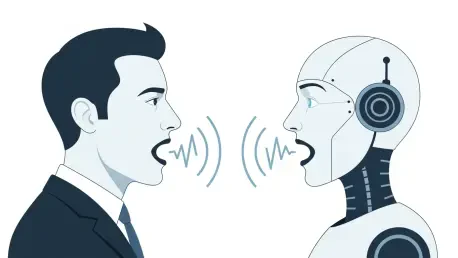

A new generation of humanoid robots is learning the subtle art of human speech not from pre-written lines of code, but by diligently watching and mimicking countless hours of human videos online. This breakthrough from a Columbia Engineering team introduces a humanoid capable of generating complex, realistic lip motions for both speaking and singing, tackling one of the most persistent obstacles in robotics. The central challenge addressed is the “Uncanny Valley”—that deeply unsettling feeling humans experience when a machine looks and acts almost, but not quite, human. By sidestepping traditional programming in favor of observational learning, this research mirrors the way humans naturally acquire social cues, representing a significant stride toward robots that feel less like machines and more like companions.
A Breakthrough in Human Robot Interaction
This pioneering research presents a humanoid robot that has acquired the ability to produce sophisticated and lifelike lip movements synchronized with speech and song. This achievement is not merely an incremental improvement but a fundamental leap in a field that has long struggled with creating believable artificial faces. The robot’s expressiveness moves beyond the simple, repetitive gestures of its predecessors, offering a more nuanced and convincing performance that is crucial for meaningful interaction. The development signals a new era where robots can begin to communicate with the subtlety that humans take for granted.
At the heart of this work lies a direct confrontation with the Uncanny Valley, a concept that has haunted roboticists for decades. This phenomenon describes the point at which a robot becomes so human-like that its small imperfections trigger a sense of unease or even revulsion in human observers. While we can easily forgive a robot for a clumsy gait, our brains are hardwired to be unforgiving of facial missteps. The slightest unnatural movement of the eyes or lips can break the illusion of life and turn a potentially helpful machine into an unsettling presence. This research aims to finally build a bridge across that valley.
What makes this achievement particularly remarkable is its complete departure from conventional, rule-based programming. Instead of being painstakingly coded with instructions for every sound, the robot learned its skills organically. It acquired its abilities through a process of pure observation, first of itself and then of humans. This methodology is grounded in the belief that for robots to truly connect with people, they must learn social behaviors in the same way humans do: by watching, listening, and imitating. This shift in approach from rigid instruction to fluid learning is a paradigm change for social robotics.
The Quest for Believable Robotics
The immense significance of realistic facial expressions cannot be overstated in the context of human-robot interaction. During a typical conversation, humans dedicate a substantial portion of their attention—nearly half—to the speaker’s mouth, subconsciously decoding lip movements to supplement auditory information. This intricate dance of sound and motion is a cornerstone of effective communication. When a robot fails to replicate this, the interaction feels hollow and incomplete. Therefore, mastering facial affect is not a cosmetic upgrade but a core requirement for any robot intended to operate in a social capacity.
Historically, this is an area where robotics has consistently fallen short. Traditional humanoids often feature rigid faces with limited mobility, capable of little more than “muppet mouth” gestures that appear comically simplistic or entirely static expressions that are just plain creepy. This mechanical stiffness is a primary reason why many robots remain firmly lodged in the Uncanny Valley. Their inability to produce the fluid, subtle, and rapid facial movements that characterize human speech makes them appear lifeless and alien, undermining any attempt at establishing trust or rapport.
Consequently, this research represents a critical milestone in the long-standing pursuit of making robots more intuitive, relatable, and emotionally resonant. The goal extends beyond mere functionality; it is about creating machines that can be accepted as partners in homes, schools, and healthcare settings. By endowing a robot with a believable face, the researchers are laying the groundwork for a future where interactions with machines are not only efficient but also empathetic and meaningful, fulfilling a vision that has driven the field of robotics for generations.
Research Methodology Findings and Implications
Methodology
The foundation of this research is a sophisticated physical platform. The robot is equipped with a highly flexible facial structure, featuring a soft, pliable skin that is actuated by a complex network of 26 silent, high-speed motors. This intricate design allows for the kind of nuanced and subtle deformations required to accurately mimic human expressions. Unlike the rigid plates and loud servos found in many other humanoids, this system can produce the silent, fluid, and rapid motions that are essential for creating a convincing illusion of life, providing the physical canvas upon which the AI could learn to paint expressions.
The robot’s education was conducted through an innovative two-stage learning process that completely abandons traditional programming. In the first stage, dubbed the “Mirror Phase,” the robot was placed in front of a mirror to engage in a period of self-exploration. For hours, it executed thousands of random facial contortions, observing the visual results of its motor commands in its own reflection. Through this process, its AI progressively built a comprehensive internal map of its own facial mechanics. This self-learned “vision-to-action” model became the robot’s fundamental understanding of how to connect a desired facial appearance with the precise motor actions needed to create it.
Building on this foundation of self-awareness, the robot entered the “YouTube Phase.” In this second stage, the AI was exposed to a massive dataset of videos showing humans talking and singing. The system meticulously analyzed the correlation between the audible sounds people made—the phonemes and cadences of speech—and the corresponding shapes and movements of their lips. By processing countless examples, the robot’s AI learned the complex, dynamic patterns that define human articulation. By synthesizing its internal knowledge of its own face with this external library of human expression, it gained the ability to translate any audio input directly into synchronized lip movements in real-time.
Findings
When put to the test, the robot demonstrated a remarkable ability to lip-sync in real-time to a diverse range of audio inputs. It successfully articulated speech in multiple languages and was even able to perform a song from an AI-generated album, showcasing a versatile and robust capability. The synchronization between the audio and the lip movements was consistent and convincing, proving the effectiveness of the observational learning approach. The robot’s performance stands as a powerful proof of concept for training social behaviors without a single line of pre-programmed rules.
A crucial finding of the study is that the system achieves this synchronization without any semantic understanding of the content being articulated. The robot does not know the meaning of the words it is “speaking” or the lyrics it is “singing.” Instead, it operates on a sophisticated level of pattern recognition, translating auditory signals directly into the appropriate facial motor commands. This indicates that the ability is highly generalizable; the system can be applied to any vocal audio without needing to be specifically trained on that language or style, making it a powerful and adaptable tool for human-robot communication.
Implications
This technology is being hailed as the potential “missing link” in modern robotics. For decades, the field has been heavily focused on perfecting physical capabilities such as locomotion and manipulation, often treating social interaction as a secondary concern. This research repositions facial affect and non-verbal communication as being equally important as a robot’s ability to walk or grasp objects. It argues that for any application involving human interaction, a robot’s social intelligence is not an accessory but a core component of its design and function.
The true transformative potential of this technology will likely be realized when it is integrated with advanced conversational AI systems like ChatGPT. Such a fusion would create a robot that not only communicates with human-level intelligence but also exhibits the corresponding facial gestures that convey nuance, emotion, and empathy. This combination could enable much deeper and more meaningful connections between humans and machines, as the robot would be able to participate in conversations with a new layer of non-verbal richness.
Looking forward, lifelike faces are expected to become an indispensable feature for humanoids across a wide array of sectors. In fields such as elder care, education, and entertainment, the ability to form a genuine connection is paramount. As some economists forecast the production of over a billion humanoid robots in the coming decades, solving the Uncanny Valley problem is transitioning from an academic challenge to a commercial and social imperative. Without believable lip and eye movement, these machines will forever remain uncanny, limiting their acceptance and effectiveness in society.
Reflection and Future Directions
Reflection
The research team candidly acknowledges that the system, while a significant advancement, is not yet perfect. The lip motion has considerable room for improvement before it can be considered indistinguishable from a human’s. This transparency is crucial, as it sets realistic expectations and highlights the ongoing nature of the research. The current performance represents a major step forward, but it is a point on a continuing journey toward perfectly naturalistic robotic expression.
During development, specific challenges were encountered in articulating certain sounds. The robot found it particularly difficult to master hard consonant sounds, such as “B,” which require a rapid, percussive lip closure. Similarly, sounds that demand significant lip puckering, like “W,” also proved to be challenging for the current system to replicate with complete accuracy. These specific limitations provide clear targets for future refinement of both the hardware and the learning algorithms.
Despite these hurdles, a key strength of the system is its foundation in machine learning. Unlike a rigidly programmed robot whose flaws are permanent unless recoded, this robot’s performance is expected to improve naturally over time. With more practice, greater exposure to human interaction, and a larger dataset of videos to learn from, the AI will continue to refine its understanding of lip dynamics. This capacity for continuous self-improvement is a hallmark of a truly intelligent system.
Future Directions
The team’s immediate focus for future work is the integration of this facial system with state-of-the-art conversational AI. The goal is to move beyond mere lip-syncing and produce facial gestures that are context-sensitive and emotionally aligned with the content of the conversation. This would allow the robot to smile when discussing a pleasant topic or adopt a more neutral expression for serious matters, adding a critical layer of emotional intelligence to the interaction.
Furthermore, the researchers plan to continue refining the robot’s articulation through ongoing, real-world learning. By engaging in actual conversations with people, the robot will gather new data that will help it improve its performance on difficult phonemes and develop more natural-looking transitions between expressions. This continuous learning loop is designed to ensure that the robot’s abilities evolve and adapt, becoming more sophisticated and lifelike with every interaction it has.
Finally, the team is keenly aware of the profound ethical implications of creating robots that can form powerful emotional connections with humans. The ability to use facial expressions unlocks an entire channel of non-verbal communication, giving these machines a greatly enhanced capacity to influence people. Recognizing this, the researchers advocate for a slow, careful, and deliberate approach to development to ensure that the benefits of this powerful technology can be reaped while minimizing the potential risks.
Redefining the Human Machine Relationship
This research marked a critical step toward creating robots that could finally cross the Uncanny Valley and interact with humans in a natural and believable manner. By demonstrating a method for learning complex social behaviors through observation, the work established a new pathway for developing more socially intelligent machines. It showed that the key to making robots relatable was not just in what they said, but in how they appeared to say it, paving the way for a future where human-robot conversation felt less stilted and more genuine.
By unlocking the non-verbal communication channel of facial expression, this technology had the potential to fundamentally change the nature of human-robot relationships. The project went beyond simple mechanics and delved into the subtleties of human connection, granting a machine the ability to use one of the most powerful tools of social engagement. This shift promised to transform robots from mere tools into more interactive and empathetic partners in a variety of social settings.
Ultimately, the study’s contribution was not only in its technical achievement but also in its profound exploration of communication and the future of empathetic machines. It challenged the conventional boundaries of robotics by prioritizing social affect and demonstrated that the journey to create truly intelligent machines required a deep understanding of the very things that make us human. The research was a testament to the idea that the future of technology was intertwined with the future of our own social evolution.