
The fundamental definition of a building as a static, passive shelter is being profoundly challenged by a new wave of innovation that fuses robotics, biology, and architectural design into a single, cohesive system. Robotic Swarm Architecture represents a significant advancement in the architecture and construction sectors. This review will explore the evolution of the technology, its key features, performance metrics, and the impact it has had on various applications. The purpose of this review is to provide a thorough understanding of the technology, its current capabilities, and its potential future development.
An Introduction to Bio-Inspired Adaptive Architecture
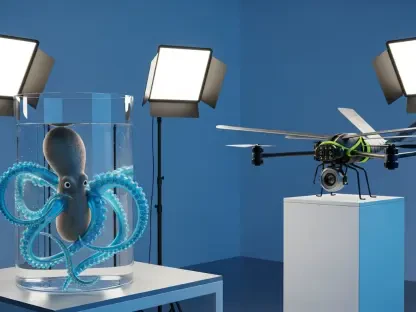
At its heart, robotic swarm architecture is a concept derived directly from nature. It draws inspiration from the collective intelligence observed in biological systems like ant colonies, which can form living bridges, or schools of fish that move as one fluid entity. This approach seeks to translate the principles of emergent behavior and decentralized organization into the built environment, fundamentally shifting the paradigm from inert structures to dynamic, responsive architectural organisms. The goal is to create buildings that can intelligently adapt to their surroundings and occupants in real time.
This technology situates itself at the intersection of several critical fields, including smart buildings, sustainable design, and human-computer interaction. By imbuing architectural surfaces with the ability to sense, communicate, and act, this approach promises more than just automation. It envisions “living-like” buildings that can regulate their own energy consumption, alter their physical form to optimize comfort, and even engage with inhabitants in expressive, interactive ways. This represents a move toward a more symbiotic relationship between humans and the spaces they inhabit.
Core Technological Principles and Components
Decentralized Control and Swarm Intelligence
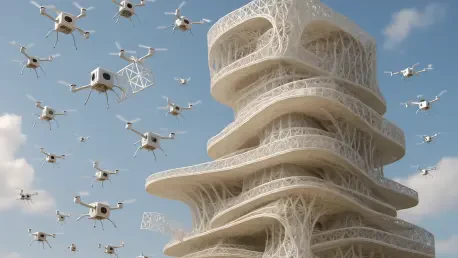
The foundational principle of this architectural approach is the rejection of a single, central control unit. Instead, it relies on swarm intelligence, where complex, coordinated group behavior emerges from simple, local interactions between individual robotic units. Each robot operates based on a limited set of rules and information gathered from its immediate neighbors. This decentralized model provides remarkable robustness and scalability. If one or even several units fail, the rest of the swarm can adapt and continue to function by observing and mimicking the actions of their operational neighbors, ensuring the system’s integrity without a single point of failure.
This method allows for an organic and highly adaptive form of collective decision-making. The swarm doesn’t execute a pre-programmed, top-down command; rather, it collectively “decides” on a response to environmental stimuli. For instance, a change in sunlight on one side of a facade will trigger a localized response that propagates through the network of robots as they communicate the change. This creates a fluid, cohesive reaction that is far more nuanced and resilient than a centrally controlled system could achieve.
Inter-Robot Communication and Coordination
Effective coordination within the swarm is enabled by sophisticated wireless communication protocols that allow individual robots to share data seamlessly. This constant, low-level chatter of information among adjacent units is what transforms a collection of independent machines into a unified, intelligent system. The protocols are designed for local, neighbor-to-neighbor transmission, which is efficient and avoids the bandwidth and latency issues associated with a centralized network.
Through this localized data exchange, the swarm can respond cohesively to both environmental changes and direct human interaction. Information about light levels, temperature, or proximity to a person can spread through the system like a ripple, enabling a coordinated, large-scale action, such as creating a wave of shadow across a facade. This network of communication forms the digital nervous system of the architectural surface, allowing it to perceive and react as a single entity.
Sensing and Bio-Inspired Actuation
The physical hardware of each robotic unit is a testament to the bio-inspired design philosophy. Integrated sensors are the swarm’s eyes and ears, allowing each robot to perceive its local environment. These sensors can detect a range of conditions, such as the intensity and angle of sunlight, temperature fluctuations, or the presence of occupants, providing the raw data needed for the swarm to make its adaptive decisions.
The actuation mechanisms—the components responsible for movement—are equally unique. Moving away from traditional, rigid mechanics like gears and motors, this technology often employs soft, flexible actuators. A notable example is a mechanism that pulls a pliant sheet through a ring, causing it to expand in a gentle, “blooming” motion reminiscent of a flower opening its petals. This soft actuation enables quiet, organic movement that is not only functional but also aesthetically pleasing, allowing the architectural surface to transform with a natural and unobtrusive grace.
Latest Developments and Experimental Findings
Recent breakthroughs in the field have been powerfully demonstrated through proof-of-concept prototypes that bridge the gap between theory and application. Key experimental findings from these projects have validated the core principles of robotic swarm architecture, showcasing its potential in both functional and creative contexts. One of the most significant tests involved deploying a robotic array on an office window to serve as an automated shading system. This experiment successfully confirmed the system’s capacity to intelligently modulate light and heat in response to changing sun conditions, autonomously adjusting to optimize occupant comfort and energy efficiency.
Further experiments have rigorously tested the system’s resilience and its capacity for interactive expression. In simulations of hardware failure, where individual robots suffered from broken sensors or communication faults, the swarm demonstrated exceptional robustness. The decentralized network allowed faulty units to observe their neighbors and mimic their behavior, thereby compensating for the failure and maintaining overall system function. Additionally, interactive installations in public galleries have explored the technology’s creative potential. In these settings, the architectural “skin” responded in real-time to the movements of a human performer, creating a dynamic and engaging partnership between person and place.
Applications in Modern Architecture and Design
Dynamic Facades for Energy Efficiency
The most immediate and practical application of robotic swarm architecture lies in the creation of adaptive building facades. These intelligent “skins” can dramatically improve a building’s energy performance. One primary example is an automated shading system composed of a swarm of robotic units that collectively respond to the position and intensity of the sun. By extending to block direct sunlight during peak hours, the facade reduces solar heat gain, significantly lowering the energy required for air conditioning.
Conversely, the system can retract to maximize the penetration of natural daylight when desired, reducing the need for artificial lighting. This dynamic modulation of light and heat not only leads to substantial energy savings but also enhances the comfort and well-being of the building’s occupants. By continuously optimizing the building envelope, swarm architecture offers a powerful tool for achieving higher standards of sustainability in modern construction.
Interactive and Expressive Interior Environments
Beyond its functional benefits, this technology opens up a new frontier for creative and expressive architectural design. Its ability to respond to human presence and movement makes it ideal for creating interactive installations in public spaces, such as galleries, museums, and performance venues. The building’s interior surfaces can be transformed into dynamic canvases that ripple, shift, or bloom in response to the people within the space, creating a deeply engaging and memorable experience.
This unlocks novel possibilities for dynamic interior design, where a room’s ambiance and even its physical configuration could change based on its use or the mood of its occupants. In performance art, the architecture itself can become an active participant, a responsive partner in a creative dialogue with performers. This expressive capability moves architecture beyond its traditional role as a static backdrop and toward a future where buildings are active, participatory agents in our cultural and social lives.
Current Challenges and Technical Hurdles
Scalability Cost and Manufacturing
Despite promising prototypes, a significant challenge lies in scaling the technology from small-scale experiments to full-building implementations. The mass production of thousands, or even tens of thousands, of sophisticated robotic units presents a considerable manufacturing hurdle. Achieving cost-effectiveness at this scale is crucial for the technology to move from niche applications to widespread adoption in the commercial construction industry. The overall cost of installation, including the complex integration of these systems into building structures, remains a primary obstacle to economic feasibility.
Furthermore, the transition to large-scale deployment requires a complete rethinking of supply chains and construction methodologies. Architects, engineers, and manufacturers will need to collaborate to develop standardized components and streamlined installation processes. Until the economics of production and implementation are resolved, robotic swarm architecture may remain confined to high-budget, landmark projects rather than becoming a staple of mainstream architectural practice.
Durability Maintenance and Long-Term Viability
The practical challenges of real-world deployment extend to the long-term durability and maintenance of these complex systems. Robotic units installed on a building’s exterior must be incredibly robust, capable of withstanding years of exposure to harsh weather conditions, including rain, wind, UV radiation, and extreme temperatures. Ensuring that each of the hundreds or thousands of components can operate reliably over the typical lifespan of a building facade is a major engineering problem that has yet to be fully solved.
Maintenance presents another layer of complexity. In a distributed system composed of countless individual parts, diagnosing and repairing failures can be a daunting task. Developing efficient strategies for identifying faulty units, accessing them for repair or replacement, and minimizing system downtime is essential for long-term viability. Without clear and practical solutions for durability and upkeep, the perceived risk and lifetime cost of these systems could deter potential adopters.
Future Trajectory and Long-Term Vision
The future of robotic swarm architecture is being shaped by ongoing research and growing collaborations between technologists, architects, and designers. The immediate goal is to refine existing prototypes and begin integrating these systems into larger, real-world construction projects. These pilot programs, anticipated to launch between 2026 and 2028, will be crucial for gathering data on performance, durability, and cost in a live environment, providing the insights needed to overcome current technical and economic hurdles.
The long-term vision for this technology is even more ambitious, aiming for buildings that are not just adaptive but truly “alive.” Future research will explore capabilities beyond simple movement, such as structural self-reconfiguration, where a building could alter its form to respond to changing functional needs, and even material self-healing, where the swarm could identify and repair structural damage. Ultimately, the goal is to create a new class of architecture that exists in a symbiotic relationship with its environment and its occupants, a built world that is intelligent, responsive, and seamlessly integrated with the natural one.
Concluding Assessment
The development of robotic swarm architecture represented a pivotal step away from conventional, static construction toward a future of dynamic and intelligent buildings. This review analyzed how the technology leveraged bio-inspired principles like decentralized control and collective behavior to create adaptive architectural systems. Its core innovations, including localized inter-robot communication and unique soft actuation mechanisms, were successfully validated in functional prototypes that demonstrated tangible benefits in energy efficiency and interactive design. The potential to revolutionize architectural expression and sustainability was made clear. However, its future success was contingent on overcoming the significant challenges of scalability, long-term durability, and economic viability, which remained formidable barriers to widespread adoption.