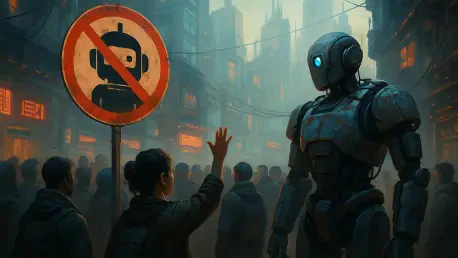

A profound ideological schism is deepening within the science fiction world, where the very tools imagined in futuristic tales are now being rejected by the creators who bring those stories to life. The escalating debate over generative artificial intelligence has moved beyond theoretical discussions, prompting influential organizations to implement increasingly rigid prohibitions against AI-assisted creative works. This decisive shift, fueled by intense community pressure and mounting ethical concerns, signals a significant cultural moment as creators grapple with the implications of automated artistry. The trend is not one of subtle policy tweaks but of definitive, hardline stances, reflecting a growing consensus that the integrity of human-authored creation must be protected from the encroachment of large language models and other generative systems. This movement away from partial restrictions toward complete bans illustrates a community actively defining its boundaries in the face of transformative technology.
From Partial Rules to Prohibitive Stances
The evolution of policies within key science fiction institutions highlights a clear trajectory toward total exclusion of generative AI. A prominent case is the Science Fiction and Fantasy Writers of America (SFWA), which initially attempted a nuanced approach for its prestigious Nebula Awards. The first iteration of its rules disqualified works created entirely by large language models (LLMs) but permitted partial AI use, provided it was disclosed by the author. This middle-ground stance, however, was met with sharp criticism from members who felt it failed to address the core ethical issues. In response to the backlash and after issuing an apology for the mistrust it caused, SFWA enacted a much stricter policy. The revised regulations now unequivocally disqualify any submission that was written, in whole or in part, with generative AI, or if an LLM was utilized at any stage of the creative process. This pivot toward a zero-tolerance policy was mirrored by other major cultural events, such as San Diego Comic-Con, which faced a similar outcry after permitting the display, but not the sale, of AI-assisted art, and subsequently instituted a complete ban on such material.
Navigating the Challenges of Definition
The move toward stricter regulations has been championed by prominent voices within the community, yet it also introduces complex challenges regarding enforcement and definition. Author Jason Sanford has been a vocal supporter of these hardline measures, arguing that the use of generative tools constitutes a form of “theft” that threatens to “destroy the meaning of storytelling.” While he has committed to forgoing their use in his own work, Sanford also pointed to a critical ambiguity that organizations must now address: the need for a precise definition of “LLM usage.” This issue has become particularly salient as large technology corporations increasingly integrate generative AI capabilities into common digital tools, from search engines to word processors. This broad integration could inadvertently place creators in violation of the new rules, making it difficult to draw a clear line between a prohibited tool and a standard piece of software. The creative community’s principled stand, therefore, set a precedent that prioritized human authorship, but it also opened a new chapter of debate focused on the practicalities of maintaining a purely human-driven creative ecosystem in an increasingly automated world.