
A sleek user interface shimmering on a boardroom projector screen often creates a dangerous illusion that hours of generative AI prompting have replaced years of disciplined software engineering. This is the era of “vibe coding,” where the sheer aesthetic of a functional prototype convinces stakeholders that a product is ready for the world. In this high-stakes environment, the line between a brilliant weekend hack and a stable enterprise system has become dangerously blurred. The seductive speed of Artificial Intelligence creates a false sense of security, leading many to believe that the traditional rigors of the software development life cycle are relics of a slower, less efficient past.
The phenomenon of vibe coding presents a paradox that threatens the very stability of modern digital infrastructure. While AI significantly lowers the barrier to creating functional code, it simultaneously obscures the deep technical debt and architectural fragility that often lie beneath a polished demo. Understanding this gap is essential for leaders who risk trading long-term resilience for short-term speed. As corporate structures begin to pivot toward AI-native workflows, the challenge shifts from mere creation to the sustained maintenance of integrity. Without a foundational shift in how these tools are utilized, the industry faces a future of spectacular demos followed by catastrophic operational failures.
The Illusion of the Perfect Demo
The “Aha!” moment in a boardroom often happens when a functional, sleek-looking application is built in hours using nothing but generative AI prompts. This phenomenon, increasingly known as vibe coding, creates a seductive logic: if it looks like a finished product and works like a finished product during a five-minute presentation, it must be ready for the market. The visual feedback loop provided by modern AI tools is incredibly powerful, allowing non-technical stakeholders to see tangible results faster than ever before. However, this aesthetic success masks a burgeoning crisis in software integrity, where the “vibe” of progress is mistaken for the rigor of engineering.
The danger lies in the psychological impact of the “functional-looking” prototype. When a chatbot or a web portal responds perfectly to a pre-defined set of prompts, it triggers a premature sense of completion. This deceptive polish often leads to the bypassing of critical architectural reviews, as the perceived distance to “done” appears negligible. The reality is that a prototype built on vibes is often a house of cards, optimized for visibility rather than viability. It lacks the internal scaffolding necessary to handle the messy, unpredictable nature of real-world data and user behavior.
Furthermore, the culture of vibe coding encourages a shallow engagement with code quality. Because the AI generates the logic, the person “coding” might not fully grasp the edge cases or the potential for logic loops that could drain resources. This disconnect between the creator and the underlying mechanics of the software creates a transparency gap. When a system is built purely through iterative prompting, the resulting codebase often resembles a patchwork quilt rather than a cohesive architecture. This lack of structural cohesion is rarely visible during a demo, but it becomes a primary point of failure the moment the application is subjected to stress or change.
Why the Vibe Coding Paradox Threatens Enterprise Stability
The disconnect between rapid prototyping and production-ready engineering has never been wider or more dangerous. As Artificial Intelligence lowers the barrier to entry for creating code, corporate leadership is increasingly tempted to view technical teams as overhead rather than a necessity. This shift in perspective often leads to the premature dismantling of engineering foundations in favor of AI-driven speed. Understanding the gravity of this trend is essential because a system that lacks a disciplined architectural backbone will inevitably crumble when exposed to the unpredictable pressures of the real-world operational environment.
This paradox creates a situation where the faster an organization can build, the more fragile its overall ecosystem becomes. The rush to deploy AI-generated solutions frequently results in the accumulation of technical debt at an exponential rate. When a company chooses speed over stability, they are essentially taking out a high-interest loan on their future operations. The initial gains in market timing are quickly offset by the costs of emergency patches, system downtime, and the inevitable total rewrite required when the “vibe-coded” system fails to scale or integrate with legacy infrastructure.
Moreover, the erosion of engineering discipline affects the collective institutional knowledge of an organization. When systems are “vibed” into existence, the deep understanding of why certain technical decisions were made is lost. Human engineers do not just write code; they provide context, manage constraints, and anticipate future growth. By treating engineering as a commodity that AI has replaced, enterprises lose their ability to troubleshoot complex issues that go beyond the pattern-matching capabilities of a Large Language Model. The result is an enterprise that is agile in appearance but paralyzed when faced with a true technical crisis.
Decoding the Anatomy of Production-Readiness
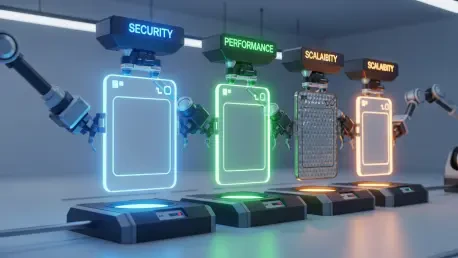
While a prototype focuses on “what” a system does, production-ready engineering focuses on “how” it survives in the wild. A truly finished product must meet a comprehensive set of technical standards that go far beyond a functional user interface. Hardened security and compliance are paramount, involving the implementation of robust data protection measures, such as GDPR compliance and threat-mitigation protocols, that AI prompts often overlook. Security is not an afterthought to be layered onto a prototype; it must be woven into the code from the very first line to ensure that vulnerabilities are not baked into the architecture.
Operational observability is another critical component of a production-ready system. This involves integrating deep telemetry and logging to ensure the system’s internal state can be monitored and managed from the outside. Without these hooks, a system is a black box; when it fails, there is no data to explain why. Resilience and disaster recovery are equally vital, demanding the architectural redundancy required to recover from failures without data loss or prolonged downtime. These are the invisible features that separate a hobbyist project from an enterprise-grade service.
Scalability and performance ensure the underlying infrastructure can handle a transition from ten users to ten thousand without performance degradation. This requires a deep understanding of database indexing, caching strategies, and load balancing—elements that AI-generated code often ignores in favor of the path of least resistance. Finally, accessibility and long-term maintainability rely on writing clean, documented code that remains readable for human engineers. A system that works today but cannot be updated tomorrow is a liability, not an asset.
The Human Element: AI as a Force Multiplier, Not a Replacement
Technical leaders argue that while AI is fundamentally reshaping the software development life cycle, the need for human expertise has actually intensified. AI acts as a powerful accelerant, but it requires a “pilot” to ensure the output adheres to established principles like SOLID and DRY. The role of the engineer is evolving from a solo builder to a sophisticated reviewer and architect. In this new landscape, the ability to discern high-quality code from “hallucinated” or inefficient logic is a primary skill set that separates successful teams from those drowning in AI-generated errors.
Quality engineering has emerged as a top-tier specialty, with experts building “Evals” and performing risk-based testing to validate accuracy and safety. As AI generation becomes a standard part of the workflow, the focus shifts toward the verification of outputs. Organizations that firing their core engineering teams in favor of AI-only workflows are accruing technical debt that will eventually result in catastrophic system failures. Expert opinions suggest that the human element is the only safeguard against the “black box” risks associated with automated code generation.
The narrative of disposability presents a grave risk, especially as projects moving directly from “vibe” to “live” frequently suffer from the “Route-to-Live” bottleneck. In these cases, traditional testing and operations simply cannot keep pace with unvetted code, leading to a massive backlog of unverified features. Human engineers act as the necessary friction that ensures speed does not come at the expense of safety. They provide the ethical oversight and the creative problem-solving that AI tools, which are essentially sophisticated pattern matchers, cannot replicate.
The Three-Lane Playbook for Responsible AI Delivery
To bridge the gap between a weekend demo and a dependable product, organizations must adopt a structured framework that categorizes development into distinct phases of maturity. The experimentation phase, which typically lasts only a few days, is used to rapidly validate technical feasibility and “vibes” without any intention of deploying this code to a live environment. This is where AI shines, allowing teams to fail fast and explore diverse ideas without the overhead of production standards. It serves as a laboratory for innovation, distinct from the actual factory floor of production development.
The pilot phase follows, lasting several weeks, where the focus shifts to hardening the architecture and establishing Service Level Objectives. This is the stage where security scans are integrated, observability is established, and the code is scrutinized for long-term viability. It is a transitional period where the “vibe” is replaced by verified engineering metrics. Finally, the production phase occurs over multiple sprints, where enterprise standards are verified and automated evidence is collected. Only after passing these rigorous gates is a product officially “earned” and released to the wider market.
Measuring success via DORA metrics is essential for maintaining this discipline. Organizations must shift their focus from “how fast it looks” to data-driven signals such as Lead Time for Changes, Deployment Frequency, and Mean Time to Recover. By investing in specialized infrastructure and roles in Site Reliability Engineering and DevSecOps, companies can manage the high-velocity flow of AI-accelerated work without sacrificing stability. This structured approach ensures that the energy of a weekend demo eventually translates into the dependability of a market-ready product.
The transition from aesthetic prototyping to resilient engineering became the ultimate test for organizations attempting to navigate the AI revolution. Success required a move away from the superficial lure of the “vibe” toward a culture where reliability was automated into the very fabric of the development pipeline. Businesses that thrived were those that treated AI as a partner in precision rather than a shortcut to completion. By the time these strategies were fully implemented, the distinction between a demo and a product was no longer a matter of opinion, but a matter of verified technical evidence. Moving forward, the focus shifted toward the continuous refinement of these automated guardrails to keep pace with evolving threats. The path to production AI was paved with the lessons of the past, ensuring that the next generation of software remained as stable as it was innovative. Leaders eventually realized that while AI could start the race, only disciplined engineering could finish it.