
When 1,571 young innovators from 91 countries gather to build robots that think for themselves the future of autonomy looks less distant and more doable, and the setting in Singapore turns that momentum into a living lab where prototypes meet practical constraints. The scene signals a shift: youth robotics is no longer a sideline to STEM—it has become a proving ground for autonomous systems expected to reason, adapt, and operate safely in messy conditions. The trend is not simply more kits and code; it is a curriculum-to-industry pipeline that treats perception, planning, and safety as core competencies rather than extracurricular flair.
The scale and velocity of youth autonomy in robotics
Data signals, growth curves, and adoption
A snapshot of this season’s field makes the trajectory hard to ignore: 594 teams, ages 8–22, advanced through local and national qualifiers to compete under a shared theme, “The Future of Robots,” which centers on autonomy and system-level thinking. That framing moves beyond point-scoring to emphasize integrated design—sensors, control loops, and explainable logic—aligned with real-world use (World Robot Olympiad press materials; OECD and UNESCO STEM pipeline research).
Momentum has also widened since the event’s 2004 launch in Singapore, with host rotation—Turkey last year—underscoring continuity and reach. Schools and national leagues now mainstream adaptive behavior in curricula, pushing projects that blend perception stacks and closed-loop control in age-tiered formats; comparative competitions like FIRST and VEX provide useful benchmarks, while industry skills reports on autonomy and mechatronics confirm rising employer demand (host-country briefs; industry skills studies).
Real-world application pathways and case examples
Challenge tracks task steering-drive robots to navigate unpredictable courses without human intervention, forcing teams to harden perception and planning under time pressure. Dynamic field events then vary layouts and constraints mid-run, making robustness and on-the-fly decision-making as valuable as raw speed (competition manuals; judging rubrics).
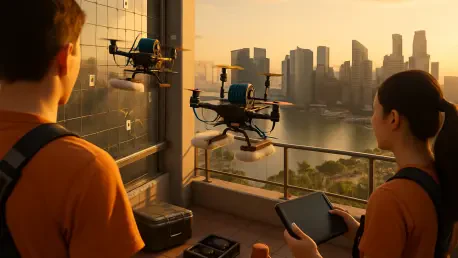
RoboSports “double tennis” ups the ante with strategy, reliability, and multi-robot coordination, while project-based entries address civic and industry needs through integrated hardware, software, and human-context design. Singapore adds a bridge to deployment, highlighting autonomous vehicles in controlled zones, drones for high-rise facade cleaning, and healthcare support robots as credible steps from student prototypes to pilots, with power management, safety interlocks, and modularity treated as first-class learning outcomes (agency statements; local pilot reports).
What experts say: educators, industry leaders, and policymakers
Educators argue that early autonomy work builds durable habits: model-based thinking, safety-first design, and traceable decisions that can be audited. Researchers emphasize the hard problems still in play—reliable perception in unstructured settings, efficient sim-to-real transfer, and data efficiency that reduces reliance on brittle, labor-intensive labeling (academic commentary; conference proceedings).
Industry leaders point to expanding operations beyond labs, elevating validation, test coverage, and failure analysis as onboarding essentials. Policymakers, in turn, see standards, sandbox pilots, and public–private partnerships as tools to de-risk deployments while keeping equity and safety in view; shared cautions include ethics, inclusion, and creating clear paths from school projects to apprenticeships, startups, and careers (standards bodies; government pilot frameworks).
The road ahead: trajectories, risks, and cross-industry impact
In the near term, expect autonomy-focused challenges to deepen, with broader access to sensors and onboard compute, formal modules on safety cases and testing, and city pilots in logistics, cleaning, and assistive tasks. Mid-term progress hinges on stronger sim-to-real pipelines, interoperability norms across youth leagues, credentialing for autonomy competencies, and a rise in student-founded ventures and civic tech.
Longer-range outcomes point toward everyday service robots in shared spaces and embedded autonomy in infrastructure, reshaping work with human–robot teaming norms and reskilling. Benefits to watch include faster innovation cycles, safer deployments, wider participation, and community value; challenges remain in safety and liability, privacy and data governance, equitable access to tools and mentorship, and guarding against over-automation, tracked by indicators such as retention, diversity, pilot-to-production transitions, standards uptake, and measured safety performance.
Conclusion and call to action
The Olympiad functioned as both showcase and testbed, demonstrating that adaptability, robustness, and utility were not slogans but measurable qualities under competitive stress. The clearest signal came from the synthesis: young teams translated perception, planning, and safety into systems that held up when conditions shifted, while stakeholders aligned education, standards, and pilots to move prototypes into real service.
Actionable steps followed logically: schools embedded autonomy, safety, and system design into core STEM; industry sponsored open datasets, testbeds, and mentorships that linked prototypes to pilots; policymakers funded equitable access, built regulatory sandboxes, and backed standards and credentials; students foregrounded reliability, ethics, and end-user value. Taken together, these moves framed a practical route from classroom ingenuity to trustworthy autonomy operating in daily life.