
In a world generating countless hours of valuable spoken content daily through meetings, lectures, and interviews, the traditional method of converting this audio into text has long been a significant bottleneck for productivity. For decades, professionals were bound to the laborious cycle of pausing, typing, and rewinding recordings, a process where a single hour of audio could easily demand four or more hours of manual labor, often resulting in fatigue and human error. However, the technological landscape has undergone a profound transformation. The standard has shifted decisively toward instant, AI-driven solutions that process audio data with the same speed and flexibility as text documents. Advanced Automatic Speech Recognition (ASR) engines now rival human listening capabilities, adeptly navigating complex accents, rapid speech patterns, and specialized jargon. The central question is no longer about the possibility of instant transcription but about selecting the tool that provides the greatest leverage over this newly accessible data.
1. The End of Manual Transcription and the Dawn of AI
For most business and creative applications, the era of manual transcription has effectively concluded. The painstaking process that once consumed the time of journalists, researchers, and administrative staff is now largely obsolete, replaced by a new standard of efficiency. Modern AI-powered platforms treat audio not as a linear recording but as a rich source of data to be parsed and structured instantaneously. This evolution is about more than just convenience; it represents a fundamental change in how spoken information is managed and utilized. By automating the listening process, organizations can generate highly accurate transcripts, summaries, and action items in mere seconds, completely eliminating the need for manual typing. This allows teams to focus on the content of their conversations rather than the mechanics of documenting them, turning what was once a tedious chore into a seamless and value-added component of their workflow.
The transition to AI-based transcription solutions is primarily driven by the need to unlock the immense, often untapped, value hidden within spoken conversations. The most striking advantage is the sheer velocity of these systems; a robust AI engine can process a 60-minute high-fidelity audio file in under three minutes, providing a near-instant turnaround that allows meeting attendees to review a full transcript before they have even returned to their desks. Furthermore, AI transforms audio from a historically “dark” data format—one that is difficult to search or analyze—into an accessible and queryable asset. Professionals can now use a simple text search to find the exact moment a client mentioned a budget figure or a professor defined a critical concept, rather than wasting time blindly scrubbing through a recording’s timeline. This newfound searchability makes every recorded conversation a valuable, structured database of information, ready for immediate analysis and reference.
2. How Modern AI Transcription Engines Function
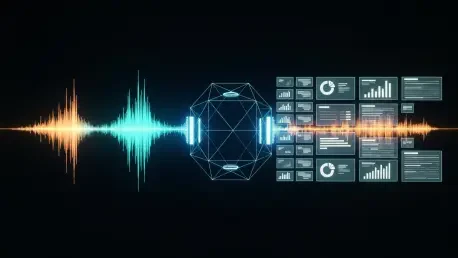
To fully appreciate the capabilities of leading AI platforms, it is essential to look beyond the surface of simple word-for-word dictation. These sophisticated systems employ a complex pipeline that integrates advanced acoustic modeling with powerful Large Language Models (LLMs) to achieve remarkable accuracy and contextual understanding. When an audio file is processed, the system first generates a spectrogram of the sound, analyzing unique vocal characteristics such as pitch, tone, and cadence. This technique, known as “speaker diarization,” allows the AI to perform acoustic fingerprinting, accurately distinguishing “who spoke when.” This process can separate Speaker A from Speaker B with high precision, even when their vocal ranges are similar, ensuring the final transcript is clearly structured and easy to follow. This is a critical feature that sets professional-grade tools apart from basic dictation software, which often produces an undifferentiated wall of text.
Beyond identifying speakers, advanced ASR engines utilize context-aware decoding to interpret language with a level of nuance previously unattainable. Basic transcription tools frequently stumble on homophones, confusing words like “their,” “there,” and “they’re.” In contrast, a sophisticated engine analyzes the surrounding sentence structure and semantic context in real time to predict the most probable word, ensuring that technical terminology and specific brand names are rendered correctly. Once the text is generated, the integration with LLMs allows users to interact with the transcript in a conversational manner. Instead of a static document, the output becomes a dynamic information source that can be queried. Users can ask the AI to summarize key decisions, list all assigned action items, or even draft a follow-up email based on the conversation, transforming a simple transcript into a powerful productivity tool.
3. A Step by Step Guide to Using Instant Transcription
The user experience for modern transcription platforms is intentionally designed to be frictionless, removing the technical hurdles often associated with professional transcription software. The first step involves capturing or uploading the audio source. In a live setting, such as a meeting or lecture, a user can simply open the corresponding mobile application on an iOS or Android device and press the record button. These apps are engineered to optimize the device’s microphone sensitivity, focusing specifically on human voice frequencies to ensure a clear recording. For pre-existing audio files, like voice memos from another device or a Zoom recording saved to a computer, users can import them directly through the platform’s interface. Many systems also support batch importing, which provides a significant time-saving advantage for professionals who need to process multiple interviews or lectures simultaneously.
Once the audio has been ingested by the system, the intelligent processing engine takes over. This entire operation occurs in the cloud, leveraging parallel processing to handle even large files with incredible speed. During this phase, the system meticulously maps phonemes to words, automatically inserts appropriate punctuation, and assigns speaker labels based on the earlier diarization analysis. However, the true power of these platforms is realized in the final step, which moves beyond simple transcription to intelligent synthesis. Instead of manually reading through the entire document, users are encouraged to utilize integrated “Ask AI” features. With simple commands, one can request a bulleted summary of the key decisions made, a list of all tasks assigned to a specific individual, or a draft of a follow-up email based on the conversation’s content. This transforms the raw text into actionable intelligence, streamlining post-meeting workflows.
4. An Overview of Alternative Transcription Methods
While advanced AI platforms represent the cutting edge of transcription technology, it is useful to understand the landscape of other available methods. Browser-based dictation tools, such as the voice typing feature in Google Docs, are one common alternative. Their primary advantages are that they are free and instantly accessible to almost anyone with an internet connection. However, these tools are designed for real-time dictation, not for transcribing pre-recorded audio files. To use them for transcription, one would have to play the audio file into a microphone, a workaround that severely degrades quality and accuracy. Furthermore, these tools lack essential features like speaker identification and advanced punctuation, making them unsuitable for professional contexts involving multiple participants. They serve a purpose for quick, personal note-taking but fall short for complex transcription needs.
Another category includes the built-in recording tools found on modern smartphones, such as Apple’s Voice Memos or the Pixel Recorder app. These are incredibly convenient for capturing thoughts on the go and often include basic, on-device transcription capabilities. The main drawback of these built-in functions is that the transcribed text is often siloed within the device’s ecosystem, with limited options for exporting or editing. Compared to dedicated AI platforms, their features are minimal, making them a poor choice for transcribing long-form meetings, interviews, or academic lectures where formatting and analysis are key. Finally, manual human transcription services still exist and remain the gold standard for situations where 100% nuanced accuracy is a legal or regulatory necessity, such as in official court proceedings. However, this method is prohibitively slow and expensive for daily business use, with costs often exceeding a dollar per minute of audio.
5. Best Practices for High Fidelity Transcription Results
Even the most sophisticated AI is only as effective as the quality of the audio it is given. To consistently achieve accuracy rates of 99% or higher, it is crucial to follow several simple best practices for recording. The quality of the microphone is paramount. While a professional studio setup is not necessary, relying on a laptop’s built-in microphone, especially in a large or echoey room, is often a recipe for poor results. A simple, inexpensive headset with a dedicated microphone or even just placing a smartphone closer to the primary speaker can make a massive difference in the clarity of the audio capture. This small adjustment significantly improves the signal-to-noise ratio, which directly translates to a more accurate transcript and reduces the amount of time needed for manual corrections after the fact. High-quality input is the first and most important step toward a high-quality output.
Beyond the hardware, the recording environment and the speaking habits of the participants play a significant role in the final accuracy of the transcript. AI models are trained to filter out a certain amount of ambient sound, but heavy background noise, such as the chatter in a busy coffee shop, can still lead to errors or “hallucinations” in the text. Whenever possible, it is best to conduct recordings in a quiet, controlled environment to ensure the AI can clearly distinguish the spoken words. Additionally, while advanced diarization engines are adept at handling interruptions and overlapping speech, the cleanest and most readable transcripts are produced when a “one speaker at a time” rule is encouraged. This simple etiquette helps the AI accurately assign dialogue to the correct individual, resulting in a well-structured and professional final document that is easy to read and analyze.
Automating the Future of Information Capture
The era defined by frantically scribbling notes while attempting to simultaneously listen and comprehend has drawn to a close. The widespread adoption of AI-driven transcription tools fundamentally reshaped professional and academic workflows, allowing individuals to reclaim the mental bandwidth required for active participation rather than passive documentation. For students seeking to master complex subjects, journalists racing to break a story, or project managers meticulously tracking deliverables, these automated systems provided the speed and precision that modern work demanded. The decision to embrace this technology was not merely about saving time on typing; it was about transforming how spoken information was valued and utilized. By turning static audio files into dynamic, searchable assets, this technological shift unlocked a new dimension of insight and efficiency, forever changing the landscape of information management.