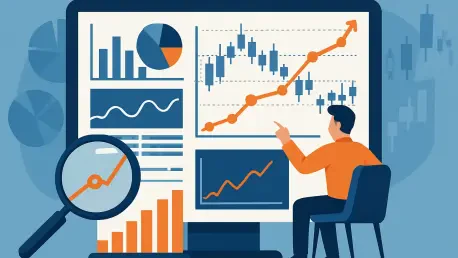

In the relentless and often chaotic world of financial markets, where countless variables influence asset prices every second, the line between a profitable decision and a costly mistake can be razor-thin. For generations, traders relied on a combination of experience, intuition, and a “feel” for the market, but this traditional approach is rapidly being supplanted by a far more rigorous and systematic methodology. The modern trading landscape is undergoing a fundamental transformation, shifting its foundation from instinct-driven speculation to a structured, data-centric discipline. This evolution is predicated on the ability to harness and interpret massive volumes of information—from historical price movements and volume shifts to complex economic indicators—to uncover patterns and opportunities that are invisible to the unassisted human eye. This data-driven paradigm is no longer an esoteric advantage for a select few but is quickly becoming the new standard for survival and success.
The New Competitive Landscape in Finance
The integration of data analytics into finance represents a seismic industry-wide pivot, fundamentally altering the very definition of a competitive advantage. The global financial analytics market, currently valued at a staggering $9.68 billion, is a testament to the immense capital being invested in these capabilities. Projections indicating that an overwhelming 93% of businesses will have integrated data analytics into their core operations within the next four years underscore a clear consensus: data-driven decision-making is no longer optional. This widespread adoption signals that access to raw information is not enough; the true differentiator lies in the ability to process, analyze, and translate vast datasets into actionable intelligence. For trading firms and financial institutions, this means that strategies are increasingly built on a foundation of statistical evidence and quantitative models rather than on speculative forecasts, establishing a new baseline where analytical prowess is synonymous with market viability.
Beyond identifying potential opportunities, data analytics serves a crucial role in constructing sophisticated and resilient risk management frameworks. In an environment prone to sudden and unpredictable volatility, data models provide an essential buffer against emotionally driven errors. These analytical systems are designed to continuously monitor markets for unusual price swings, detect subtle shifts in correlations between assets, and flag potential black swan events before they fully materialize. By providing objective, data-backed signals, these tools help traders adhere to their strategies during turbulent periods, preventing the kind of panic-selling or over-leveraging that can lead to catastrophic losses. This systematic approach to risk mitigation transforms trading from a reactive guessing game into a proactive discipline, where potential threats are quantified and managed with precision, thereby preserving capital and ensuring long-term sustainability.
Democratizing Data and the Rise of AI
While large financial institutions have spearheaded the data revolution, the tools and principles of analytics are becoming increasingly accessible to individual traders. The democratization of data and analytical software allows retail market participants to apply the same fundamental methodologies once reserved for trading floors with immense resources. By studying historical price charts, back-testing strategies against past performance, and utilizing a wide array of technical indicators, individual traders can elevate their decision-making from pure speculation to an evidence-based practice. This approach enables them to develop a structured set of rules for entering and exiting trades, managing risk, and sizing positions. As a result, it fosters a more disciplined and objective mindset, reducing the influence of fear and greed and allowing individuals to compete more effectively in an increasingly complex and quantitative marketplace.
The next frontier in data-driven trading is being shaped by the transformative power of artificial intelligence. AI-powered algorithms are capable of analyzing market data at a speed and scale that is simply unattainable by human traders. These sophisticated systems can scan thousands of assets simultaneously, identifying intricate, non-linear patterns and correlations that would remain hidden from even the most experienced analyst. One striking example from the industry showed an AI-powered fund manager outperforming 93% of its human counterparts, a clear demonstration of the technology’s potential to generate superior returns. As machine learning models become more advanced, they are not only executing trades but also continuously learning and adapting their strategies in response to evolving market conditions, pushing the boundaries of what is possible in quantitative finance and setting a new benchmark for performance.
Navigating the Future with a Data-Informed Compass
The widespread adoption of data analytics ultimately provided a disciplined and structured framework that reshaped the practice of trading. It allowed traders to rigorously back-test their hypotheses against historical data, review past performance with objective clarity, and systematically refine their rules without risking a single dollar of actual capital. This analytical process significantly enhanced discipline across the board and moved the industry away from reliance on guesswork. Rather than offering an infallible guarantee of success, these tools served as a powerful guide, informing critical decisions on market entries, strategic exits, and appropriate position sizing. This balanced approach acknowledged the inherent uncertainty of financial markets while equipping traders with a versatile and essential toolkit, enabling them to remain prepared, consistent, and resilient in the face of constantly evolving economic environments.