
The sheer volume of clinical data generated today is so vast that a human physician would need to read for approximately twenty-nine hours every single day just to stay current with the latest peer-reviewed literature. This impossible cognitive demand has transformed medical reference applications from optional digital handbooks into critical infrastructure for modern healthcare delivery. As the industry advances through 2026 and moves toward the next decade, the market for these tools is projected to swell to $10.2 billion by 2036. This growth represents more than just a financial milestone; it signifies a fundamental shift in how medical knowledge is curated, verified, and delivered at the point of care. These applications are no longer static repositories of text but are becoming dynamic, AI-integrated partners that synthesize complex drug interactions, diagnostic protocols, and treatment guidelines into actionable insights in real time. The transition from general search engines to specialized, high-fidelity clinical platforms is fueled by the need for accuracy in an environment where the margin for error is non-existent.
Market Drivers and Knowledge Expansion
The Challenge: Managing Information Overload
The acceleration of pharmaceutical innovation has created a landscape where hundreds of new drugs and biological therapies are approved annually, each with its own specific indications, contraindications, and complex dosing schedules. For a healthcare professional, the task of memorizing these details is no longer feasible, especially when considering the intricate ways these new substances interact with established treatments. Medical reference apps have stepped in to fill this gap, acting as a cognitive externalization tool that allows doctors to offload the burden of rote memorization. By providing a centralized, searchable database of pharmacological data, these tools ensure that even the most obscure drug interaction is identified before a prescription is written. This necessity is particularly acute in specialized fields like oncology or neurology, where treatment protocols change rapidly based on the latest clinical trial results, requiring a tool that updates in real time rather than waiting for the next edition of a textbook.
Beyond the sheer number of medications, the complexity of modern patient profiles adds another layer of difficulty to clinical practice. Many patients now present with multiple chronic conditions, necessitating a “polypharmacy” approach that requires delicate balance and constant monitoring. Reference applications provide the sophisticated calculators and cross-referencing capabilities needed to manage these patients safely and effectively. When a clinician can instantly access a tool that calculates renal adjustments or geriatric dosing, the risk of adverse drug events drops significantly. This reliance on digital assistance is not a sign of a lack of expertise, but rather a professional commitment to utilizing every available resource to ensure patient safety. As these tools become more integrated into the standard medical workflow, their role as a primary source of clinical truth continues to expand, driving the market toward its projected multi-billion-dollar valuation over the next ten years.
Knowledge Management: Reducing Clinical Burnout
The psychological toll of healthcare is often exacerbated by the constant fear of making a mistake due to outdated information or simple human forgetfulness. Reference apps serve as a vital safety net, providing clinicians with the confidence that the data they are using is the most current available. This reduction in cognitive load is a key factor in addressing the widespread issue of provider burnout, as it streamlines the decision-making process and reduces the time spent on administrative research. Instead of sifting through dozens of disparate sources, a physician can find a verified answer within seconds, allowing more time for direct patient interaction and complex clinical reasoning. The market growth is, in many ways, a reflection of the industry’s investment in the mental well-being and efficiency of its workforce, recognizing that a supported clinician is a more effective one.
The demand for these tools is also being driven by a shift toward evidence-based medicine as a global standard. Healthcare systems are increasingly being held accountable for outcomes, and the use of standardized, high-quality reference material is a primary way to ensure that care is consistent across different providers and facilities. Investors and developers are focusing on creating platforms that not only provide facts but also offer clinical pathways that guide a provider through a diagnostic or treatment process based on the latest consensus guidelines. This structural approach to knowledge delivery helps bridge the gap between academic research and bedside practice, ensuring that the benefits of medical advancements reach patients as quickly as possible. As the healthcare sector continues to prioritize quality and safety, the adoption of specialized reference apps is becoming a permanent fixture of the institutional landscape.
Regulatory Standards and Clinical Trust
Regulatory Guidance: A Path for Innovation
A significant catalyst for market expansion has been the increased clarity provided by international health regulators regarding the oversight of clinical software. Previously, developers operated in a grey area, unsure if a reference tool would be classified as a simple educational resource or a high-risk medical device. Recent frameworks have helped distinguish between applications that provide general medical information and those that perform active diagnostic functions. This differentiation has allowed companies to innovate more freely, focusing on providing high-quality content without the prohibitive costs associated with the highest levels of medical device certification. By establishing clear boundaries, regulators have paved the way for a more competitive and diverse market, where both established publishers and new tech startups can find a foothold and scale their operations effectively.
This regulatory environment also places a high premium on the methodology used to curate and verify the information within an app. Developers are now required to demonstrate rigorous editorial processes, involving peer review by recognized subject matter experts and frequent updates to reflect new findings. This commitment to quality has helped overcome initial skepticism from the medical community, who were wary of relying on digital tools for life-altering decisions. Now that these apps are seen as highly regulated and reliable sources of information, their use has become normalized in even the most conservative clinical settings. The alignment between technological capability and regulatory oversight is a cornerstone of the market’s long-term stability, providing the legal and professional framework necessary for continued investment through 2036.
The Evidence Trail: Building Professional Credibility
Trust is the most critical asset in the medical reference market, and modern developers are building that trust through extreme transparency. Unlike generic search engines or consumer-grade AI, professional medical apps provide a clear and verifiable “evidence trail” for every recommendation or piece of data presented. Clinicians can see the specific clinical trials, consensus statements, or meta-analyses that support a particular treatment protocol, allowing them to exercise their own professional judgment with the best possible data at hand. This “open-book” approach to clinical decision support is essential for high-stakes environments, where a “black box” algorithm that provides answers without explanations would never be accepted. By prioritizing transparency, app developers are ensuring that their products are seen as partners in care rather than replacements for human expertise.
This focus on verified sources has forced a shift in how medical content is produced and maintained. Leading market players are investing heavily in editorial boards composed of specialized physicians who manually review and synthesize the literature. This human-in-the-loop approach ensures that the nuances of clinical practice—such as the difference between a statistically significant result and a clinically meaningful one—are accurately reflected in the app. This editorial rigor is what separates high-end professional tools from free, crowdsourced resources, and it is the primary reason why health systems are willing to pay significant subscription fees. As we move deeper into the current decade, the ability to prove the accuracy and origin of data will be the ultimate competitive advantage in a market saturated with information but starving for verified truth.
The Shift to Institutional Licensing
Standardizing Protocols: Enterprise-Level Adoption
One of the most notable trends in the current market is the migration from individual user subscriptions to large-scale enterprise licensing agreements. In the past, a doctor might have purchased an app individually, leading to a fragmented environment where different members of the same care team were using different data sources. Today, hospitals and health networks are increasingly purchasing site-wide licenses to ensure that every clinician, from the chief of surgery to the first-year resident, has access to the exact same set of clinical protocols. This standardization is vital for reducing medical errors and ensuring that care pathways are consistent regardless of who is on shift. By centralizing the choice of reference material, institutions can enforce best practices and ensure that their staff is always aligned with the latest institutional and national guidelines.
Enterprise licensing also offers significant logistical benefits for the institutions themselves, including more favorable pricing structures and simplified account management. For a hospital system with thousands of employees, managing individual reimbursements for software is an administrative nightmare. A single enterprise contract solves this problem while providing IT departments with the tools they need to monitor usage and ensure compliance with security protocols. This shift to the B2B (business-to-business) model has provided developers with more stable and predictable revenue streams, allowing them to invest in long-term product roadmaps rather than focusing on the volatility of individual app store sales. The trend toward institutionalization is a clear indicator that medical reference apps have moved from being a “nice-to-have” accessory to a mission-critical utility for the modern health system.
Data Analytics: Leveraging Usage Insights
The move to institutional licensing has also opened the door for advanced data analytics, providing hospital leadership with unprecedented insights into how clinical information is consumed. By tracking which drugs are being looked up most frequently or which diagnostic calculators are used in specific departments, administrators can identify gaps in knowledge or emerging trends within their patient population. For example, a sudden spike in searches for a specific infectious disease protocol might serve as an early warning sign of a local outbreak. This data-driven approach allows for more proactive management of clinical resources and targeted educational interventions for staff. Instead of guessing where the clinical needs are, institutions can use the anonymized data from reference apps to make informed decisions about training and resource allocation.
Furthermore, these analytics help institutions justify the significant financial investment required for high-end reference platforms. By correlating app usage with patient outcomes—such as a decrease in medication errors or a reduction in the average length of stay for certain conditions—hospitals can see a clear return on investment. This evidence of clinical utility is essential for maintaining budget approvals in a cost-conscious healthcare environment. As software becomes more integrated with hospital operations, the ability to turn search data into actionable management insights will become a key differentiator for top-tier app developers. This evolution from a passive information source to an active operational intelligence tool is a major driver of the market’s projected growth as we head toward 2036.
Technological Evolution and AI
Advanced Search: From Keywords to Clinical Synthesis
The integration of Artificial Intelligence represents the most significant technological leap in the medical reference space since the transition from paper to digital. Current market leaders are moving away from traditional keyword-based search systems and toward advanced, context-aware AI models that can understand complex clinical questions. Instead of just returning a list of articles, these systems can synthesize the relevant information into a concise, evidence-based answer that addresses the specific needs of the clinician. This shift is designed to save time during high-pressure situations, such as in the emergency department, where every second spent searching for data is a second taken away from patient care. These AI tools are built on “closed-loop” datasets, ensuring they only reference verified medical literature to prevent the “hallucinations” often seen in more general AI models.
These conversational interfaces are also becoming more specialized, allowing for a more natural interaction between the doctor and the digital assistant. A clinician can ask, “What is the recommended dosage for this medication in a patient with a creatinine clearance of 30?” and receive a direct, verified answer immediately. This level of specificity is a major improvement over traditional search methods, which would require the clinician to find the drug entry, locate the renal dosing section, and then manually calculate the correct dose based on the patient’s lab values. By automating these intermediate steps, AI-driven reference apps are significantly reducing the risk of calculation errors and improving the overall speed of clinical workflows. The focus is no longer just on providing information, but on providing the specific answer required for a specific patient at a specific moment.
Atomic Evidence: Precision Information Delivery
A key concept emerging in the 2026 market is the idea of “atomic evidence,” which refers to the delivery of small, highly specific pieces of verified information exactly when they are needed. Instead of presenting a five-page monograph on a particular disease, the application identifies the exact piece of data the clinician is looking for—such as a specific diagnostic criterion or a second-line therapy option—and highlights it. This precision is made possible by sophisticated natural language processing and data tagging, which allows the software to understand the structure of medical knowledge at a granular level. By minimizing the amount of irrelevant information a doctor has to process, these apps are effectively increasing the “signal-to-noise” ratio in clinical communication, leading to faster and more accurate decision-making at the bedside.
AI is also proving invaluable in identifying subtle patterns within a patient’s clinical presentation that might be missed by a human observer. By analyzing the symptoms, lab results, and medical history entered by the clinician, the app can suggest a list of differential diagnoses sorted by probability, based on the latest epidemiological data. This support is particularly helpful for identifying rare diseases that a generalist might only see once in their career. The goal of these AI-enhanced tools is not to replace the physician’s diagnostic intuition, but to augment it with a vast, always-updated library of medical possibilities. As these systems become more accurate and easier to use, they are setting a new standard for what a medical reference tool should be, driving higher adoption rates and increasing the overall value of the market through the next decade.
Interoperability and Workflow Integration
Workflow Synergy: The End of the Toggle Tax
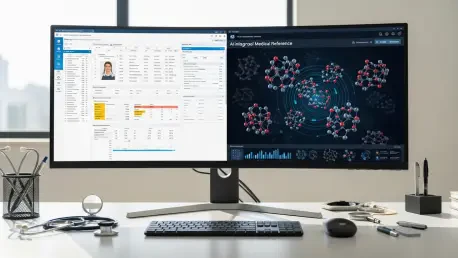
The utility of a medical reference app is heavily dependent on how easily it can be accessed without disrupting the physician’s established routine. Developers are increasingly focusing on deep integration with Electronic Health Records (EHRs), such as Epic or Cerner, to eliminate what is often called the “toggle tax.” This refers to the time and mental effort wasted when a clinician has to switch between the patient’s digital chart and a separate reference application. Through the use of standardized APIs and frameworks like HL7 FHIR, reference tools can now live directly within the patient record, automatically pulling relevant data to provide context-specific advice. For example, when a doctor views a patient’s medication list, the integrated reference app can automatically highlight potential drug interactions or suggest necessary lab monitoring based on the current treatment plan.
This seamless flow of information is essential for modern high-volume practices, where even small delays can accumulate into significant inefficiencies over the course of a day. By embedding the reference tool into the primary clinical workspace, developers are ensuring that their products are used more frequently and more effectively. This integration also helps bridge the gap between “knowing” and “doing,” as the recommendations from the reference app can often be imported directly back into the patient’s chart or order set. This bidirectional communication between software systems is a major selling point for hospitals looking to modernize their technology stack and improve clinician satisfaction. As interoperability becomes the expected standard, the companies that can offer the most fluid and intuitive integrations will capture the largest share of the institutional market.
Ambient Reference: Proactive Clinical Support
The next frontier in the evolution of these tools is the move toward “ambient reference,” where the software proactively provides information without the clinician having to ask for it. These systems are designed to listen to clinical conversations or monitor real-time data entry, providing subtle “nudges” or relevant pieces of information as the situation develops. For instance, if a physician is discussing a potential diagnosis of sepsis, the system might quietly display the latest surviving sepsis campaign guidelines on a nearby screen or within the EHR interface. This proactive approach ensures that critical information is never overlooked, even in the most chaotic clinical environments. It shifts the role of the reference app from a reactive encyclopedia to an active, always-on clinical partner that anticipates the needs of the care team.
Implementing ambient reference requires a high degree of technological sophistication, including advanced voice recognition and highly accurate predictive algorithms. However, the potential benefits for patient safety are immense, particularly in high-stakes areas like the intensive care unit or the emergency room. By providing the right information at the right time without requiring a manual search, these systems can help prevent errors before they occur and ensure that the most current protocols are followed every time. This trend toward proactive, context-aware information delivery is a key component of the market’s long-term growth strategy, as it offers a level of value that traditional static reference tools simply cannot match. As we move toward 2036, the integration of reference material into the very fabric of the clinical environment will be the hallmark of the most successful platforms.
Segment Performance and User Trends
Market Dominance: The Essential Role of Drug References
Within the broader medical reference market, drug information applications remain the largest and most consistently used segment. The frequency with which healthcare professionals need to verify dosages, check for interactions, or confirm contraindications is significantly higher than the need for disease-specific diagnostic guides. Because medication errors are among the most common and costly mistakes in healthcare, the ROI for high-quality pharmacological databases is easily demonstrated. These tools have become an indispensable part of the daily workflow for almost every type of clinician, from pharmacists and nurses to specialist surgeons. The high “stickiness” of these apps—meaning how often users return to them—makes this segment a highly attractive target for investors and a stable core for the overall market’s valuation.
At the same time, the clinical decision support (CDS) segment is experiencing the most rapid growth as healthcare becomes increasingly specialized and data-intensive. These tools go beyond simple lists of facts to offer complex algorithms and diagnostic pathways that help clinicians navigate complicated cases. As health systems move toward more personalized medicine, the demand for software that can incorporate genetic data, patient history, and local epidemiological trends is surging. The ability of CDS tools to provide tailored recommendations for individual patients is a significant step forward from the “one-size-fits-all” approach of traditional reference materials. This shift toward high-value, specialized decision support is expected to be a major contributor to the market’s overall revenue growth as we progress through the next decade.
Mobile Accessibility: Meeting the Needs of the Modern Clinician
The physical reality of clinical work—which involves constant movement between patient rooms, offices, and operating theaters—has made mobile platforms the dominant method for accessing medical reference data. A physician who is rounding on patients needs to have information literally at their fingertips, and the smartphone has become the primary clinical tool for this purpose. App developers are prioritizing “mobile-first” designs, ensuring that complex data sets are easy to navigate on small screens and that critical information can be accessed with just a few taps. The continued evolution of mobile hardware, including larger screens and faster processing, is allowing these apps to handle more sophisticated tasks, such as rendering high-resolution diagnostic images or running complex AI models locally on the device.
While individual medical students and residents remain a large and enthusiastic user base, the real buying power in the market has shifted toward the institutional level. However, developers must still cater to the individual preferences of the end-user to ensure that the tools bought by the hospital are actually used by the staff. This has led to a focus on the “consumerization” of professional software, where medical apps are expected to be as intuitive and user-friendly as the best consumer-grade applications. If a tool is too difficult to navigate, clinicians will simply revert to faster, though perhaps less reliable, methods of finding information. The most successful products in the 2026 market are those that combine institutional-grade data with a seamless, mobile-optimized user experience that feels natural to a digitally native workforce.
Regional Growth and Global Variations
Established Markets: Innovation Under Regulation
The United States continues to lead the global market in terms of both revenue and technological innovation, driven by a highly digitized healthcare system and a strong emphasis on evidence-based practice. However, the U.S. market is also characterized by intense competition, with a wide variety of both paid and free resources available to clinicians. To succeed here, a paid application must offer more than just basic information; it must provide superior speed, deeper EHR integration, or unique specialized content that cannot be found elsewhere. This competitive pressure is a major driver of the constant feature updates and AI integrations that define the top tier of the market. Furthermore, the high cost of medical malpractice in the U.S. serves as a powerful motivator for both individuals and institutions to invest in the most reliable reference tools available to mitigate risk.
In the European market, growth is heavily influenced by strict data privacy laws, such as the GDPR, and national health systems that demand rigorous evidence of clinical utility. Countries like the United Kingdom, Germany, and France have established national standards for digital health tools, often requiring apps to be formally “prescribed” or approved by national health bodies before they can be widely adopted. This regulatory hurdle means that developers must invest significantly in clinical validation and data security to enter the European market. Once approved, however, these apps benefit from the stability of national-level contracts and a high degree of trust among clinicians. The European market is a prime example of how regulatory compliance can be turned into a competitive advantage by providing a “stamp of approval” that is recognized across borders.
Emerging Markets: Localization as a Growth Strategy
Brazil has recently emerged as a global leader in the adoption of medical reference apps, fueled by a large and rapidly modernizing public health system. The key to success in the Brazilian market has been the localization of content to match national pharmaceutical registries and domestic treatment protocols. A reference tool that only includes U.S.-based drug names or European clinical guidelines is of limited use to a Brazilian physician working within the SUS (Sistema Único de Saúde). Developers who have taken the time to translate their content into Portuguese and adapt their algorithms to local medical realities have seen explosive growth. This localized approach is becoming the blueprint for expansion into other large emerging markets where the demand for high-quality clinical information is growing alongside the broader healthcare infrastructure.
The Asia-Pacific region, led by Australia, Japan, and India, is also seeing a significant increase in the use of digital reference tools. In these markets, localization often involves navigating complex regulatory environments and a wide variety of local languages and medical traditions. In Japan, for example, there is a strong emphasis on integrating traditional medical knowledge with modern pharmacological data, requiring a unique approach to content curation. In India, the sheer size of the medical workforce and the increasing availability of low-cost smartphones provide a massive potential user base. The challenge for developers in this region is to balance the need for high-quality, verified data with a pricing model that is accessible to a wide range of providers. As these regional markets continue to mature, they will play an increasingly important role in the global market’s trajectory toward the $10.2 billion mark by 2036.
Competitive Landscape and Industry Players
Consolidation: The Rise of All-in-One Platforms
The competitive landscape of 2026 is increasingly defined by a wave of consolidation, as major industry players acquire smaller, specialized firms to build comprehensive, all-in-one clinical platforms. These larger companies are looking to create “ecosystems” where a clinician can find everything from drug dosing and disease guides to patient education materials and continuing medical education (CME) credits within a single application. This strategy is highly attractive to hospital IT departments, who prefer to manage one or two large vendor relationships rather than dozens of small ones. By integrating multiple functions into a single interface, these platforms offer a level of convenience and workflow continuity that is difficult for smaller, standalone apps to match. This trend toward consolidation is expected to continue, leading to a market dominated by a few highly integrated and influential global brands.
Despite this trend toward bigness, there is still significant room for agile, specialized players who focus on doing one thing exceptionally well. For example, apps that specialize in high-resolution diagnostic imaging for dermatology or complex clinical scoring systems for neonatology have built incredibly loyal user bases. These specialists often survive and thrive by becoming indispensable to a specific niche of the medical community. In many cases, these smaller firms form strategic partnerships with the larger platform providers, allowing their specialized content to be accessed through a more general interface. This “best-of-breed” approach allows for both the stability of a large platform and the innovation of a specialized developer, creating a more vibrant and diverse technological environment for the clinician.
The Editorial Moat: Content as the Ultimate Advantage
In a world where AI can generate text on almost any topic, the most valuable asset a medical reference company can possess is its “editorial moat.” This refers to the proprietary, human-verified, and peer-reviewed content that forms the core of a professional app. Being able to prove that a specific recommendation was reviewed by a board of world-renowned specialists is a massive advantage that generic AI models simply cannot replicate. This high-fidelity content is what justifies the premium pricing models of the top-tier apps and provides the necessary legal and clinical protection for the hospitals that use them. As we move deeper into the age of AI, the importance of “knowing where the data comes from” will only increase, making editorial ownership the primary driver of market power.
Furthermore, many successful apps are blurring the lines between clinical reference and professional education. By allowing doctors to earn CME credits while they are looking up information for a patient, these apps provide a dual-purpose value proposition that is highly efficient. A clinician can resolve a specific diagnostic question at the bedside and simultaneously fulfill their professional requirements for ongoing learning. This integration of education into the clinical workflow is a major trend in 2026, as it respects the time constraints of the modern physician. The companies that can seamlessly combine high-quality reference data with professional development opportunities will be well-positioned to capture a larger share of the market as we head toward the next decade.
Future Challenges and Market Risks
Implementation Fatigue: The Barrier to Adoption
One of the primary challenges facing the market today is “implementation fatigue” within hospital IT departments. As the number of digital health tools continues to proliferate, many institutions are becoming overwhelmed by the technical and administrative burden of integrating new software. Even a high-quality reference app can face rejection if it is too difficult to set up, requires significant training for staff, or creates new security vulnerabilities. Developers must prioritize ease of implementation and offer robust technical support to ensure their products are successfully adopted. The focus is shifting from simply selling a product to providing a comprehensive “customer success” experience that ensures the tool is actually utilized and provides the expected clinical value over the long term.
Price ceilings also remain a concern, particularly as health systems face tightening budgets and increased pressure to reduce costs. While the value of high-quality reference data is clear, there is a limit to how much an institution is willing to pay, especially when free or lower-cost alternatives are available. Developers are under constant pressure to justify their subscription fees by proving a direct link between app usage and improved patient outcomes or operational efficiencies. This requires a shift in marketing strategy, moving away from a focus on features and toward a focus on measurable clinical and financial impact. The companies that can clearly demonstrate their “value story” will be the ones that survive in an increasingly cost-conscious and evidence-driven healthcare market.
Security Mandates: Protecting the Clinical Foundation
As medical reference apps become more deeply integrated with patient data and hospital systems, security and privacy have become existential concerns. A single data breach or a significant system outage could destroy the trust that a company has spent years building and lead to massive legal and financial liabilities. Institutions are now demanding the highest levels of encryption, data sovereignty, and disaster recovery capabilities from their software vendors. Developers must view security not as a secondary feature but as a fundamental requirement for doing business in the healthcare space. This requires ongoing investment in cybersecurity infrastructure and a proactive approach to identifying and mitigating potential threats in an increasingly complex digital landscape.
The transition of medical reference tools from passive libraries to active, AI-driven decision support partners was largely completed by 2026. These platforms have become as essential to the practice of medicine as the stethoscope or the diagnostic lab, providing the reliable knowledge base required for safe and effective care. As we look toward 2036, the market is poised for continued growth, driven by technological innovation, regulatory stability, and an ever-increasing need for specialized clinical information. The successful players in this space will be those who can maintain the highest standards of accuracy and trust while delivering a seamless, integrated, and highly valuable experience to the clinicians on the front lines of healthcare.
The implementation of these advanced tools required a shift in how medical organizations managed their internal digital resources. To capitalize on the growth of the medical reference market, health systems had to establish dedicated clinical informatics teams to oversee the selection and integration of these applications. They prioritized platforms that offered native support for modern API standards, ensuring that data could flow securely between the reference tool and the patient record. Looking forward, clinicians should focus on mastering these digital assistants to maximize their clinical efficiency, while developers must remain committed to editorial transparency and data security to maintain professional trust. The move toward integrated, AI-enhanced systems proved to be the final step in making medical knowledge truly accessible at the point of care.