
The single most dangerous day inside a warehouse is not defined by the chaos of a sudden emergency but by the quiet, creeping complacency of an entirely ordinary, routine workday. Leading companies are now combatting this hidden threat by leveraging a powerful new approach: warehouse safety analytics. This analysis explores the data-driven trends that are transforming safety from a reactive compliance task into a proactive, strategic advantage that protects both people and profits. It will examine the growth of this movement, its real-world applications, the underlying risks it uncovers, and what the future holds for a more data-informed approach to operational safety.
The Rise of Data-Driven Safety
By the Numbers The Business Case for Analytics
The adoption of data analytics as a core business function has become a defining trend among executive leaders. An increasing number of organizations are embracing data not only to drive innovation but also to mitigate operational risk, with current figures showing that 59.5% of executives are already using analytics for these purposes. This shift is propelled by a powerful financial incentive; research demonstrates that every dollar invested in analytics technology yields an average return of $13.01, establishing a clear and compelling business case for its implementation in historically underserved areas like workplace safety.
This financial argument is magnified by the urgent human imperative within the logistics sector. The warehouse industry continues to report a high injury and illness rate, standing at 5.5 cases for every 100 full-time employees, a testament to the inherent dangers of environments dominated by heavy equipment and fast-paced manual labor. In this context, analytics provides a direct and measurable pathway to address this persistent challenge. It bridges the gap between protecting a company’s most valuable asset—its people—and delivering a significant, quantifiable return on investment.
From Theory to the Warehouse Floor
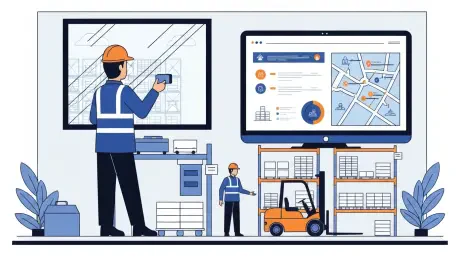
The practical application of analytics on the warehouse floor begins with the ability to visualize risk in ways that were previously impossible. Modern analytics dashboards aggregate data from scattered incident reports, sensor feeds, and employee observations, transforming disorganized information into coherent visual patterns. This allows safety managers to move beyond anecdotal evidence and pinpoint true “hotspots”—specific loading docks, times of day, or job functions where accidents and near-misses consistently cluster. By identifying these high-risk zones, managers can focus resources and interventions where they will have the greatest impact.
Beyond identifying existing problems, analytics is evolving to prevent them from happening in the first place. By embedding sensors on forklifts, conveyors, and other machinery, companies can monitor for subtle indicators of mechanical stress, such as abnormal vibrations or temperature fluctuations. This data allows for preemptive maintenance before a critical failure can cause a catastrophic injury. Similarly, predictive models can be applied to staffing, helping supervisors avoid assigning inexperienced workers to the most hazardous tasks during peak hours, thereby optimizing both safety and operational efficiency without compromising either.
Furthermore, data provides an objective tool for evaluating and communicating safety policies. Historical analysis allows teams to measure the true effectiveness of past initiatives, determining whether a new protocol actually reduced injuries or simply shifted the risk to another part of the operation. When it comes time to communicate these policies, simple data visualizations become far more persuasive than written rules alone. A single chart illustrating a sharp increase in accidents during overtime shifts can convey the importance of fatigue management more effectively than a lengthy memo, fostering greater buy-in and adherence from the workforce.
Uncovering the Hidden Risks in Routine Operations
Data analytics is uniquely equipped to expose how routine itself becomes a significant hazard. When workers perform the same tasks day after day without incident, they naturally begin to rely on muscle memory rather than conscious attention. In this state of complacency, formal safety protocols can start to feel optional or inefficient. This phenomenon is amplified by “training decay,” where the critical details from initial safety onboarding are forgotten over time. Analytics can counteract this by tracking adherence to safety procedures, identifying when refresher training is most needed before a lapse in judgment leads to a preventable accident.
The analysis of operational data also reveals the critical importance of often-ignored leading indicators. Near-misses, for instance, are powerful predictors of future incidents, yet they frequently go unreported by workers who may fear disciplinary action or wish to avoid administrative paperwork. By creating systems to capture and analyze this vital data, organizations gain a clearer picture of underlying hazards before they result in injury. Likewise, data can correlate fatigue—a contributing factor in over 13% of all workplace injuries—with specific shifts or tasks. With evidence that exhausted employees are 70% more likely to be involved in an accident, managers can use these insights to implement proactive interventions like mandatory breaks or shift rotation.
This data-driven scrutiny also challenges casual attitudes toward equipment maintenance. A high degree of familiarity with a malfunctioning forklift or a noisy conveyor belt can lead operators to underestimate the danger, creating a culture of acceptance around known issues. Analytics brings these risks into sharp focus by tracking equipment performance, flagging recurring faults, and linking even minor issues to their potential for severe outcomes. By reinforcing the connection between seemingly small maintenance oversights and the stark reality of the 85 fatalities and thousands of serious injuries caused by forklifts each year, data helps instill a more rigorous and responsible approach to equipment care.
The Future Trajectory Predictive and Prescriptive Safety
The future of warehouse safety lies in a continued evolution beyond descriptive analytics, which explains what happened, toward more sophisticated predictive and prescriptive models. The predictive layer will use integrated data streams to forecast what is likely to happen next, while the prescriptive layer will recommend what to do about it. This progression hinges on the integration of artificial intelligence and machine learning algorithms capable of processing vast amounts of real-time data from sensors, cameras, and wearable devices to provide immediate risk alerts to both workers and supervisors on the floor.
This technological leap presents both immense opportunities and significant challenges. In the near future, safety systems will not only predict a potential collision in a busy aisle but also prescribe a specific intervention, such as automatically rerouting a forklift or signaling a wearable device to alert a pedestrian. However, realizing this vision will require navigating key hurdles, including managing employee data privacy, overcoming the high costs of implementation, and fostering a data-literate workforce capable of trusting and acting on these advanced recommendations.
The broader implication of this trend is a fundamental shift toward a warehouse where safety is not just managed but systematically engineered out of high-risk processes. Instead of relying solely on training and policy to mitigate danger, the operational environment itself will become an active participant in ensuring safety. This data-driven approach promises to create a more resilient, efficient, and fundamentally safer ecosystem that will set a new standard for the entire logistics and supply chain industry.
Conclusion Fostering a Culture of Evidence-Based Safety
The analysis revealed that warehouse safety was fundamentally about maintaining awareness through constant measurement. The greatest threats arose not from chaotic, unpredictable events but from the quiet complacency of routine, and data analytics proved to be the essential tool for piercing this veil of normalcy to reveal the hidden risks lurking within everyday operations.
By leveraging objective data, organizations were able to move beyond a culture of blame and abstract safety slogans. Analytics provided the undeniable evidence needed to justify tangible investments in new equipment guards, redesigned workflows, and targeted training programs. This demonstrated to the workforce that safety policies were not arbitrary rules but were instead based on a clear-eyed understanding of real-world conditions, fostering greater trust and engagement.
Ultimately, the integration of analytics transformed safety from a poster on the wall into a lived, evidence-based practice. Business leaders who championed this trend discovered that they not only protected their most valuable asset—their people—but also built a more resilient, efficient, and competitive operation grounded in a robust and sustainable culture of safety.