
The current uproar surrounding artificial intelligence in the music industry prompts a crucial question that echoes historical anxieties: is this just another chapter in the long saga of artists resisting new technology, akin to the efforts to ban synthesizers in the 80s, or does generative AI represent a uniquely existential threat? While past technological innovations, from the Mellotron to Autotune, were eventually assimilated as tools to serve and expand human creativity, the unprecedented scale, speed, and autonomous nature of modern AI platforms suggest that this time, the fears of musicians are not just justified but may be an understatement of the crisis at hand. The very definitions of artistry, copyright, and economic viability are being challenged in ways that previous technological shifts never contemplated, forcing a confrontation that could permanently alter the musical landscape.
The Two Faces of AI in Music
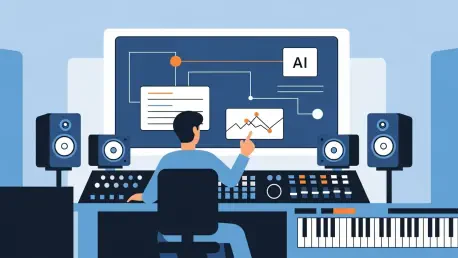
A clear consensus has emerged that artificial intelligence, when harnessed as an instrument under direct human control, can be a tremendously powerful creative asset for artists. Musicians across genres are already integrating a new generation of AI-powered “musical helpers” into their workflows to handle complex or tedious tasks such as audio mastering, separating individual instrument tracks from a finished mix, and automatically detecting chord progressions. Furthermore, innovative platforms are positioning themselves not as replacements but as “musical co-producers,” designed to assist in the creation of specific song parts while laudably claiming to use ethically sourced training data. In this capacity, AI functions much like the synthesizer or the digital audio workstation did for previous generations—as a revolutionary tool that empowers artists and opens up new, previously unimaginable creative possibilities, augmenting rather than supplanting human ingenuity and expression.
However, the genuine danger to the music ecosystem stems from a fundamentally different application of this technology: its use as an autonomous, mass-production engine for content that actively displaces human artists. This has fueled the alarming rise of what is now termed “AI slop”—a relentless deluge of low-effort, machine-generated songs often engineered to mimic the styles of popular artists or even create direct vocal impersonations. This content functions less like genuine music and more like a form of digital spam, capable of being created and uploaded to streaming platforms at a volume and velocity that far outpaces any moderation systems or the productive capacity of human creators. This is not AI as a collaborative tool but as an industrial replacement, flooding the digital marketplace with synthetic products that devalue the very concept of original musical creation and threaten to make it obsolete.
The Economic Annihilation of the Artist
This unending flood of machine-generated content creates what can be described as an “AI grey goo scenario,” where the digital landscape becomes so profoundly saturated with synthetic tracks that human artists are effectively drowned out and rendered invisible. The entire system of music discovery, which relies heavily on curated playlists and sophisticated recommendation algorithms, is vulnerable to being co-opted. Every position on a popular playlist or algorithmic suggestion that is occupied by an AI-generated song represents a critical lost opportunity for a real musician to be discovered, cultivate an audience, and ultimately earn a living from their craft. This systematic displacement directly attacks the visibility and, consequently, the financial viability of both emerging talents and established artists, eroding their ability to build and sustain a career in an already challenging industry.
Generative AI strikes at the foundational pillar of the music industry’s financial model: copyright. For decades, the system has relied on the principle that musicians or their labels own the rights to their work, and platforms like Spotify must pay royalties for the privilege of streaming that music—a system that resulted in over $11 billion in payments from that service alone in 2025. This entire structure is now being undermined. Leading AI music platforms have reportedly trained their sophisticated models on vast, unauthorized libraries of copyrighted music scraped from the internet without seeking permission from or providing any compensation to the original artists. While the technology firms involved often argue this activity falls under the legal doctrine of fair use, musicians and rights holders across the globe view it as nothing less than mass-scale copyright infringement—the systemic theft of their creative labor to build a competing product designed to replace them.
A Legal and Cultural Nightmare
This precarious situation is dangerously compounded by a critical vulnerability within the current legal framework. As the law stands in the United States and many other territories, music that is fully generated by an AI cannot be copyrighted because it fundamentally lacks a human author; the act of writing a text prompt is not legally recognized as equivalent to the creative act of composing a melody or lyric. When this legal reality is combined with the unlicensed use of training data, it creates a true nightmare for musicians. An AI platform can allegedly train its model on an artist’s entire catalog without payment, generate new music that perfectly mimics that artist’s unique style, and then monetize this new music without any legal or financial obligation to the human creator whose life’s work made it all possible. For streaming services and other music licensees, this presents an irresistible financial incentive—a “magic musical money tree” that could drastically reduce or even eliminate their largest single expense: royalty payments to artists.
Beyond the catastrophic economic devastation, this technological shift posed a profound and perhaps irreversible threat to the art form itself. As many musicians expressed, AI-generated music, while often impressive on a technical level, felt emotionally hollow and left them “completely cold.” This output was fundamentally imitative, engineered with precision to sound like something else but lacking the essential, unquantifiable human elements of passion, soul, and lived experience that give music its meaning and cultural impact. The overarching trend identified was a rapid move away from authentic expression toward sterile replication. The greatest fear was the potential for a negative feedback loop: if algorithms on streaming and social media platforms began to prioritize the sonic characteristics of AI-generated “slop,” human artists would have been forced to mimic these soulless styles simply to remain visible. Such a future pointed toward a bleak reality where creativity was stifled, musical diversity diminished, and art was devalued until music became muzak and pop became slop, ultimately harming creators and listeners alike.