
Oscar Vail is a seasoned technology expert at the forefront of emerging fields like quantum computing, robotics, and open-source projects. With a deep interest in how rapidly advancing technologies reshape traditional business frameworks, he provides a unique perspective on the intersection of cybersecurity and enterprise resource planning. In this conversation, we explore the shifting landscape of ERP security, moving away from a total reliance on vendor patches toward a more independent, defense-in-depth strategy.
We discuss the growing “gap” between AI-driven attack speeds and the slow, cautious nature of financial systems, the operational risks of rushed updates, and the necessity of reframing patching as a change-management decision. Oscar also sheds light on how organizations can reclaim control from vendor roadmaps by focusing on configuration hardening, identity governance, and independent support models.
Attackers now use AI to exploit vulnerabilities within hours, yet core ERP systems require slow, cautious updates to protect financial logic. How can organizations bridge this widening gap, and what specific operational risks arise when businesses prioritize patching speed over system stability?
The reality is that attackers are now using AI-driven discovery techniques to validate vulnerabilities against software estates in a matter of days or even hours. This creates a terrifying compression of time for any IT team, especially when you consider that ERP platforms are the heart of financial and supply-chain logic and simply cannot be changed on a whim. To bridge this gap, organizations must stop viewing the vendor patch as the only line of defense and instead focus on what they can control, such as network segmentation and identity locks. When a business prioritizes patching speed over stability, they risk catastrophic “self-inflicted” outages where minor updates break critical integrations, reporting logic, or custom extensions built over decades. It is a high-stakes trade-off where the “cure” of a rushed patch can often be more damaging to the business than the original vulnerability.
Treating a patch as a simple security fix ignores the complex financial and operational consequences if integrations fail. How should CIOs reframe patching as a change-management decision, and what metrics should they use to balance vendor-driven timelines against internal stability?
CIOs need to move away from the idea that a patch is just a technical checkbox and instead treat it as a high-stakes liability decision. The first step in this reframing is to map out every custom workflow and third-party extension that could be touched by an update, ensuring the business understands the blast radius of a potential failure. Instead of just tracking “time to patch,” leadership should look at metrics like “integration stability scores” and “business process downtime risk” to decide if a fix is worth the immediate disruption. By evaluating the actual reachability of a flaw within their specific environment, they can determine if they have the luxury of waiting for a planned maintenance window or if the risk warrants an emergency intervention. This transition shifts the power back to the organization, allowing them to sequence changes based on business priorities rather than a vendor’s arbitrary release calendar.
Standard patches only fix specific vendor code flaws, often leaving architectural weaknesses and identity governance untouched. What are the dangers of relying on patches as a “silver bullet,” and how can a layered defense-in-depth strategy better address the underlying paths attackers actually exploit?
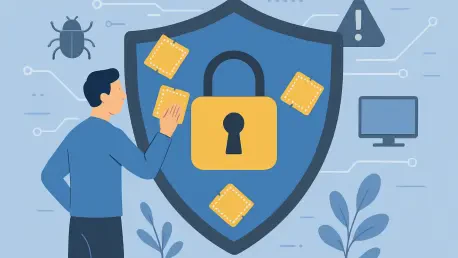
Relying on patches as a silver bullet is dangerous because a patch only addresses yesterday’s identified flaw, leaving today’s unknown zero-day or architectural weakness wide open. Attackers don’t just look for a single bug; they exploit an entire path that often includes poor identity governance, over-privileged accounts, and unmonitored lateral movements. For example, a patched vulnerability does nothing to stop an attacker who has already gained access through a dormant, highly-privileged service account. A layered defense-in-depth strategy addresses this by adding compensating controls like privilege reduction and continuous monitoring that protect the system regardless of whether the vendor code is perfect. It’s about building a fortress where the walls are strong, but the internal checkpoints and alarms are even stronger, ensuring that a single failure doesn’t lead to a total breach.
Many security risks stem from dormant interfaces or legacy configurations rather than actual software bugs. What step-by-step approach should a team take to harden these internal settings, and how does visibility into custom workflows change the way you prioritize vulnerabilities?
The most effective first step is to perform a rigorous audit of the current configuration baseline to identify and deactivate interfaces that are left active out of habit rather than necessity. Teams should then move to a model of privilege reduction, ensuring that no user or system process has more access than is strictly required for its daily function. Having deep visibility into custom workflows is a game-changer because it allows you to see if a high-severity vulnerability is even “reachable” or addressable within your specific setup. If a vulnerability exists in a module your company doesn’t actually use or has isolated, you can deprioritize that patch and focus your energy on the actual structural weaknesses in your operations. This proactive hardening provides immediate risk reduction and, unlike patching, it doesn’t depend on a vendor’s development roadmap.
Reliance on a single vendor’s roadmap often forces organizations into disruptive upgrade cycles for legacy or heavily customized systems. How can partnering with independent support experts provide more control over security timelines, and what does a transition to a more independent operating model look like?
Partnering with independent support experts breaks the cycle of forced upgrades by providing platform-specific expertise that isn’t tied to the vendor’s desire to sell the next version. These partners help organizations maintain legacy or heavily customized systems by offering tailored security advice and virtual patching that allows the business to stay secure without the upheaval of a full system overhaul. The transition to this independent model begins with a thorough assessment of the existing estate to identify which systems are “stable but vulnerable” and where external expertise can provide a protective layer. This shift gives CIOs the freedom to decide when an upgrade makes sense for the business, rather than being pushed into disruptive timelines by an expiring support contract. Ultimately, it results in a more cost-balanced and confident operating model where security aligns with operational reality.
International standards like ISO27001 treat patching as just one small element of a broader protection and governance framework. How can leadership demonstrate ongoing oversight to auditors when vendor patches are unavailable or delayed, and what role does lateral movement control play in this process?
To satisfy auditors under frameworks like ISO27001, leadership must move beyond the “we are up to date” narrative and instead provide evidence of a comprehensive risk management strategy. This involves documenting the compensating controls—such as hardened configurations and enhanced monitoring—that are in place during periods when patches are delayed or unavailable. Lateral movement control is a critical piece of this puzzle because it demonstrates to auditors that even if an initial entry point is exploited, the damage is contained and cannot spread to core financial data. By showing a clear map of how data moves and where isolation can occur, the organization proves it has active oversight and a resilient architecture. It’s about demonstrating that you have a “Protect and Govern” mindset that functions independently of whether a specific vendor fix has been released.
What is your forecast for enterprise security independence?
I believe we are entering an era where the most resilient companies will be those that view themselves as the ultimate owners of their security posture, rather than just consumers of vendor updates. We will see a significant shift toward “security independence,” where organizations invest heavily in internal hardening, zero-trust architectures, and third-party support to decouple their stability from the vendor’s release cycle. As AI continues to accelerate the threat landscape, the “patch-first” mentality will become increasingly unsustainable for complex ERP environments. The future belongs to those who build multi-layered defenses that provide protection and compliance on their own terms, ensuring that their critical business logic remains safe regardless of the speed of external attacks or the delays of software manufacturers.