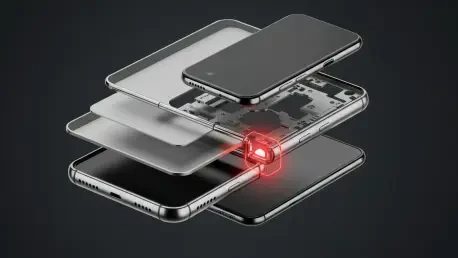

The sound of innovation unfolding took a grim turn when Samsung’s ambitious Galaxy Z TriFold was subjected to a standardized durability test, culminating not in a satisfying click but in a catastrophic snap. This event marks a sobering moment for the foldable phone market. For a device heralding the next leap in mobile technology, its dramatic failure under pressure raises a critical question: has the pursuit of multi-panel screens outpaced the physical limits of materials science?
When Innovation Bends Until It Breaks
The drive for expansive screens in pocketable forms has defined modern smartphone design. The Galaxy Z TriFold, with its three-panel construction, is Samsung’s most ambitious effort yet, pushing mechanical boundaries in a consumer device. Its durability was put to the ultimate test by JerryRigEverything, a channel whose rigorous evaluations serve as an unofficial industry benchmark for gadget resilience.
More Folds More Problems
The TriFold’s design hinted at fragility even before force was applied. The device displays a warning if closed incorrectly, and despite an IP48 dust-resistance rating, particles easily penetrated the hinges, causing an audible crunch. This failure to repel common environmental elements cast serious doubt on its durability for daily use, revealing how more complex mechanics can introduce more points of failure.
A Step by Step Dissection of a Technological Failure
The culmination of the test was swift and historic. During the signature bend test, the device failed catastrophically, becoming the first Samsung smartphone ever to snap on the channel. The break occurred directly at a hinge, where a thin 4.2 mm panel gave way completely. The screen fractured and the device died permanently, revealing a critical structural weakness inherent in its advanced design.
What a Broken Phone Reveals About Its Design
The expert verdict was clear: the TriFold lacks expected structural integrity. The nature of the failure pointed to fundamental design limitations rather than a simple lack of reinforcement. The wreckage confirmed a complex, triple-battery system was required to power the elaborate screen. Unlike other foldables that have survived similar tests, the TriFold’s total failure highlighted its multi-hinge design as a critical weak point.
Is the TriFold Worth the Risk for Early Adopters
This outcome presents a classic dilemma of innovation versus practicality. The device’s vulnerability to dust and pressure has direct implications for daily life, from pocket strain to environmental exposure. Paired with a high price, this fragility makes the TriFold a significant financial risk. With the device currently limited to South Korea before a planned 2026 global launch, patience is a prudent strategy for interested consumers.
The destruction of the Galaxy Z TriFold was a stark lesson in the mechanics of innovation. It revealed the point where ambitious design outpaced material resilience. The incident showed that while the future of mobile technology may be foldable, the path to creating a device that is both revolutionary and reliable was still under construction. The lessons learned from its shattered frame were invaluable for future designs.