
As a technology expert at the forefront of emerging fields, Oscar Vail has a unique perspective on the intersection of innovation and society. His work on open-source projects and robotics gives him deep insight into the automated systems now shaping our world. We spoke with him about a recent, startling report from Israel suggesting half of all politically active social media accounts might be bots, and what this means for the future of digital democracy.
Recent findings suggest half of Israel’s politically active social media accounts could be automated bots. What key metrics or behavioral patterns allow researchers to identify this activity, and how do these actions differ from those of real, passionate supporters online? Please share some specific examples.
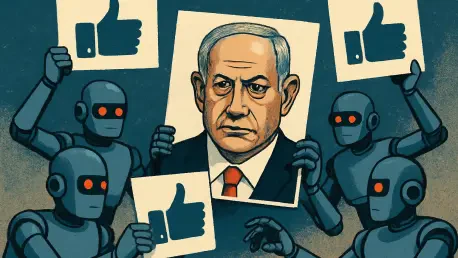
The tell-tale signs are all about speed and geography, which defy basic human logic. A real person, even the most passionate supporter, needs time to consume content. But what researchers are seeing is something else entirely. Imagine a five-minute video, in Hebrew, being posted. Within sixty seconds, a staggering 70% of its shares come from accounts located outside the country. A real supporter isn’t watching a five-minute video in under a minute and then sharing it. That’s a machine. The key metric is this impossibly rapid engagement, often within seconds of a post going live, which points directly to a coordinated, automated network designed for immediate amplification.
When a politician’s five-minute video is shared almost instantly by a majority of foreign-based accounts, what specific algorithm vulnerabilities are being exploited? Could you walk us through the step-by-step process of how this tactic boosts visibility and creates a false sense of popular consensus?
It’s a brute-force attack on the platform’s engagement algorithm. These platforms are designed to promote content that appears to be going viral. The process is deceptively simple. First, the bot network is activated the instant the content is posted, flooding it with likes, shares, and reposts. This sudden, massive spike in engagement sends a powerful signal to the algorithm that this post is incredibly popular and important. In response, the platform’s algorithm begins pushing the content into the feeds of real, organic users, assuming it’s a trending topic. This creates an artificial perception of widespread support, tricking genuine users into believing a manufactured consensus is real.
Studies show coordinated amplification for figures in the ruling coalition but not for opposition leaders. Based on your experience, what are the primary reasons—be they strategic, financial, or technical—for this disparity? How does this imbalance impact the overall health of the political discourse?
This kind of lopsided activity is unfortunately common in these situations. The primary reasons are a mix of all three. Strategically, the party in power has a message to control and a status quo to defend, making amplification a powerful tool. Financially, running sophisticated bot networks requires significant resources, which ruling parties often have greater access to. Technically, it points to a centralized, organized effort that the opposition may lack the means or the will to replicate. The impact on political discourse is devastating. It creates an echo chamber where one side’s messaging is artificially amplified, drowning out legitimate debate and making opposition voices seem marginal or nonexistent, which is a grave concern for any healthy democracy.
Allegations of politically motivated bot networks surfaced as early as 2019. From a technical standpoint, how have these influence operations evolved since then? Can you describe the key advancements in their methods for avoiding detection and appearing more human-like to both platforms and users?
The evolution has been significant. Back in 2019, reports mentioned hundreds of coordinated accounts, which sounds almost quaint now when we’re discussing the possibility of 50% of all politically active accounts being automated. The early bots were crude and easy to spot. Today’s operations are far more sophisticated. They’ve learned to mimic human behavior more convincingly—varying their posting times, engaging with different types of content, and using more nuanced language. They are designed not just to evade the platforms’ detection algorithms but also to fool the human eye, making it increasingly difficult for the average user to distinguish between a real person and a political machine.
When political leaders are faced with accusations of using bot networks, they sometimes remain silent, as we’ve seen in this case. What are the strategic calculations behind not responding to such reports, and why do these stories sometimes struggle to capture significant international media attention?
The silence is a calculated strategy. Responding, even with a denial, gives the story oxygen and elevates its importance. By staying silent, they bet on the story fading away in a fast-moving news cycle. For the international media, there can be a few hurdles. Firstly, these stories can seem like internal political squabbles. Secondly, the source matters. In this case, Channel 12 has been criticized by the ruling party before, which can be used to cast doubt on the report’s objectivity. Without a “smoking gun” directly linking the network to the government, many international outlets may hesitate to give it major coverage, leaving the story contained within the local media ecosystem.
What is your forecast for the role of automated accounts and AI in shaping political campaigns and public opinion over the next five years?
I believe we are on the cusp of an even more challenging era. The current bot networks, which focus on amplification, will seem primitive. In the next five years, we’ll see the rise of generative AI in these operations, creating hyper-realistic text, images, and video content that can be tailored to individual voters. The battle will shift from identifying fake accounts to discerning AI-driven narratives designed to subtly manipulate our perceptions and beliefs on a massive scale. This isn’t just a trend seen in one country; it’s a global phenomenon that will pose a profound threat to the integrity of digital democracy and our shared sense of reality.