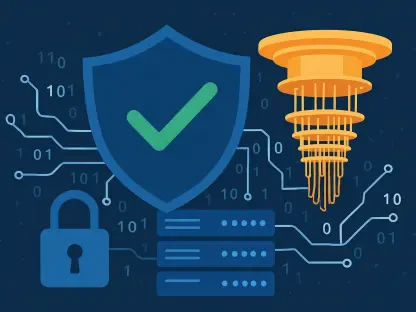

The inherent transparency of blockchain technology, while a cornerstone of its trustless nature, has simultaneously presented a formidable barrier to handling sensitive information, forcing developers to choose between public exposure and cumbersome, often insecure, off-chain workarounds. This fundamental paradox has long constrained the scope of decentralized applications, particularly in domains like finance, governance, and personal data management, where confidentiality is not a luxury but a requirement. The challenge has been to create a system where data can live on a public ledger, be governed by its rules, and yet remain accessible only to authorized parties under specific, verifiable conditions. A truly native solution has remained elusive, pushing critical secrets to centralized custodians or complex, multi-layered systems that reintroduce the very points of failure blockchain was designed to eliminate.
A New Paradigm for On-Chain Data Encryption
Mysten Labs has introduced a groundbreaking solution on the Sui Network called Seal, a decentralized secrets management system designed to natively integrate encryption and dynamic access control directly into the blockchain’s core logic. The system’s primary innovation lies in its policy-driven architecture, which fundamentally decouples the process of user authentication from the act of data decryption. Instead of the traditional method of encrypting information against a static public key belonging to a specific individual, developers can now encrypt it against a set of rules defined within a Sui smart contract. These on-chain policies are not static; they can be as dynamic as the applications they serve. For example, a policy could dictate that access is granted to a specific wallet address only after a designated timestamp has passed, or it could permit decryption for any user who holds a particular NFT, effectively creating token-gated access to confidential information directly on-chain without exposing the underlying data. This shift moves access control from a peripheral, off-chain concern to an integral, programmable feature of the blockchain itself.
The architectural sophistication of Seal is rooted in its clever combination of identity-based encryption (IBE) and threshold cryptography, creating a robust and decentralized framework for enforcement. When a user wishes to access encrypted data, their request triggers a carefully orchestrated verification process. A network of independent, off-chain key servers queries the live state of the Sui blockchain to determine if the conditions stipulated in the on-chain smart contract policy have been met. These servers act as distributed oracles for access control. Only when a sufficient number of these servers independently verify that the policy’s conditions are satisfied do they release their respective partial decryption keys. The user can then aggregate these shares to reconstruct the complete key and decrypt the information. This design offers a high degree of customization, allowing developers to select their own set of key servers and define the required threshold—for instance, requiring three out of five servers to approve access—thereby tailoring the level of decentralization, redundancy, and security to the specific needs of their application.
Unlocking Advanced Applications and Enhancing User Security
A critical security advancement offered by this architecture is the deliberate separation of a user’s signing keys from their decryption capabilities, which fortifies the entire ecosystem against common attack vectors. In conventional systems, a compromised signing key often leads to a catastrophic loss of all associated assets and data. Seal mitigates this risk by ensuring that the ability to authorize transactions is distinct from the ability to access historical encrypted information. This separation provides users with newfound flexibility and resilience. For example, a user can rotate their primary signing keys for enhanced security or adopt modern authentication methods like passkeys and zkLogin without the fear of losing access to data encrypted under their old credentials. This forward-looking functionality is essential for building applications that can evolve with security standards while preserving the integrity and accessibility of user data over the long term, making the platform more robust and user-friendly.
This foundational primitive unlocks a host of sophisticated, real-world applications that were previously impractical or impossible to build securely on a public blockchain. In the realm of decentralized finance (DeFi), it enables the creation of private protocols where transaction details or lending terms remain confidential, preventing issues like front-running and protecting user privacy. For confidential trading platforms, it allows orders to be encrypted on-chain, visible only to the matching engine at the moment of execution. This same technology can revolutionize decentralized governance and voting systems, allowing votes to be cast and immutably recorded on the blockchain while keeping the individual choices of voters secret until the polling period concludes and results are tallied. Ultimately, Mysten Labs’ initiative represents a core infrastructural enhancement, reflecting a broader strategy to equip the Sui blockchain with the fundamental tools needed for the ecosystem to mature and support a new generation of complex and privacy-preserving decentralized applications.
A Foundational Shift in Blockchain Privacy
The introduction of a native, policy-driven secrets management system marked a significant turning point in the evolution of blockchain infrastructure. This development directly addressed the long-standing industry challenge of managing who could decrypt specific on-chain data and under what precise conditions. By integrating access control directly into smart contracts, the system elegantly moved beyond the insecure off-chain workarounds and centralized custodians that had previously limited the scope of decentralized applications. It established a new standard where confidentiality was not an afterthought but a programmable, core feature of the network. This advancement represented a maturation of the ecosystem, providing developers with the foundational tools necessary to build sophisticated applications that could finally handle sensitive information with the same level of security and decentralization as the assets they managed.