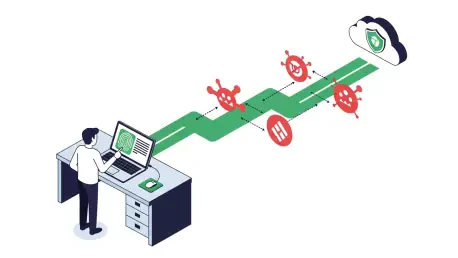

In the relentless cat-and-mouse game of cybersecurity, the ground beneath our feet is shifting. For years, Multi-Factor Authentication (MFA) has been the bedrock of digital defense, a trusted shield against a barrage of credential-based attacks. But as attackers evolve, powered by sophisticated social engineering and AI, that shield is beginning to show cracks. The modern threat is no longer just about cracking passwords; it’s about manipulating people. This article explores the critical transition from foundational MFA to phishing-resistant authentication, a paradigm shift that is becoming less of a security upgrade and more of a core business imperative. We will examine why traditional methods are failing, what makes new technologies fundamentally more secure, and how organizations can strategically navigate this evolution to protect their assets, empower their users, and build a more resilient future.
From Brute Force to Human Hacking: The Authentication Story
The journey of digital authentication reflects the evolution of cyber threats themselves. The era of simple, static passwords gave way to a landscape riddled with brute-force attacks and credential stuffing, prompting the rise of MFA as a security baseline. Its adoption has been a resounding success, neutralizing entire classes of automated attacks and raising the bar for security across industries, with an adoption rate now reaching an all-time high of 70%. However, this success has inadvertently forced attackers to innovate. Realizing that breaking through digital walls is increasingly difficult, they have pivoted to a more vulnerable target: the human user. The current landscape is now defined by attacks that bypass technology by exploiting trust, urgency, and process weaknesses, rendering foundational MFA insufficient on its own.
The Cracks in the Armor: Exposing Modern Vulnerabilities
The Help Desk Gambit: Why Traditional MFA Is Failing
The most glaring weakness in modern security isn’t a software vulnerability but a human one, cleverly exploited through social engineering. Attackers are increasingly targeting IT support and help desks, impersonating legitimate employees to trigger account recovery or credential reset processes. In these scenarios, standard MFA protocols are often bypassed, as the process is designed to help a user who has lost their authentication factors. An attacker with enough convincing personal information can manipulate a well-intentioned support agent into granting them a backdoor. This “help desk gambit” effectively circumvents the digital defenses organizations have spent years building, proving that security is only as strong as its most vulnerable human-led process. The fight has moved from combating malicious code to combating the psychological manipulation of people.
The Phishing-Resistant Paradigm: A Technical and Strategic Imperative
Phishing-resistant authentication represents a fundamental leap forward because it is designed to be immune to user error. Technologies built on WebAuthn and FIDO2 standards—such as biometrics, hardware security keys like Yubikeys, and smart cards—do not rely on a user discerning a real website from a fake one. Instead, they use cryptographic proof of origin, where the authenticator directly and securely verifies its connection to the legitimate service. A user can be tricked into entering a password or a one-time code on a malicious site, but they cannot be tricked into providing a biometric or hardware-based signature to a fraudulent domain. The market is responding to this technical superiority with urgency. With a remarkable 63% growth in the adoption of phishing-resistant authenticators over the past year and over 84% of business breaches linked to phishing, the move toward these methods is no longer a niche trend but a mainstream, business-critical response to a clear and present danger.
Beyond the Security Myth: Marrying Protection with User Experience
A persistent myth in cybersecurity is that stronger security inevitably comes at the cost of user convenience. Phishing-resistant authentication shatters this misconception. Instead of asking users to juggle complex passwords or wait for SMS codes, these modern methods offer a faster, more intuitive experience. A simple fingerprint scan, facial recognition, or the tap of a hardware key provides access in seconds, reducing friction and enhancing productivity. This improved user experience translates into tangible operational benefits, including a measurable decrease in IT support tickets related to password lockouts and resets. While legacy passwords remain entrenched, the data signals a definitive shift: as of early 2025, 7% of enterprise users were already signing in without any passwords, proving that a scalable, passwordless, and highly secure future is not a distant concept but an achievable reality.
The Road to 2026: Authentication as a Board-Level Imperative
Looking ahead, the trajectory is clear. The conversation around authentication is rapidly moving from the IT department to the boardroom. As organizations increasingly recognize the link between advanced threats and business continuity, security leaders are successfully reframing phishing-resistant MFA as a core risk metric. The World Economic Forum’s Global Security Outlook for 2026 reflects this heightened awareness, noting that the share of organizations assessing the security of their AI tools has nearly doubled in a year. This indicates a broader understanding that as threats become more sophisticated, so too must our defenses. In the near future, adopting phishing-resistant authentication will be a key differentiator, signaling digital trust and operational maturity to customers, partners, and regulators alike.
A Practical Blueprint for Phased Implementation
Adopting phishing-resistant authentication across an entire enterprise is a significant undertaking, with challenges ranging from managing legacy systems to navigating the cost and logistics of a hardware rollout. However, the cost of inaction—continued exposure to prevalent and damaging attacks—is far greater. The most effective strategy is not a “big bang” overhaul but a phased, risk-based approach. Organizations should begin by reframing the initiative as a business continuity problem, not just a security upgrade. The first step is to identify and prioritize the highest-risk assets, such as administrative accounts, financial systems, and critical data repositories, and secure them with phishing-resistant methods. By starting with the crown jewels, businesses can make an immediate impact on their security posture, quantify the operational benefits, and build the momentum needed for a broader, enterprise-wide deployment.
Conclusion: The Inevitable Future of Digital Trust
The evolution of cyber threats rendered our foundational security models necessary but no longer sufficient. The modern attacker targeted people, not just systems, and our defenses had to adapt accordingly. Phishing-resistant authentication proved to be the definitive answer to this new era of attacks, offering a technically superior solution that also enhanced user experience and streamlined operations. It effectively dismantled the old paradigm that security and convenience were mutually exclusive. For business leaders, the path forward became clear. The technology was proven, the business case was compelling, and the risk of delay was escalating daily. The critical question was no longer whether to embrace this future, but how quickly you could make it your reality.