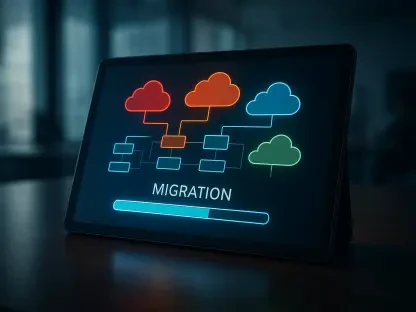

The Chainlink Runtime Environment acts as a coordination layer for complex financial logic, including the routing and sequencing of global payments. This development marks a pivotal shift for institutions that have historically relied on siloed databases and manual reconciliation processes. Bottomline, a heavyweight in the SWIFT service provider space, manages the financial flows for over ten thousand corporate entities and six hundred banks, processing sixteen trillion dollars annually. By incorporating decentralized oracle technology, these organizations gain the ability to interact with distributed ledgers without scrapping their existing infrastructures. This strategic integration serves as a high-speed digital bridge, allowing traditional finance to harness the transparency of blockchain while maintaining the rigorous standards required by global regulators. The focus remains on providing a friction-free transition that preserves operational continuity for the world’s most critical financial systems.
Bridging the Gap Between Legacy Systems and Blockchain
Universal Connectivity: The Role of Cross-Chain Protocols
The core of this integration relies heavily on the Cross-Chain Interoperability Protocol, known as CCIP, which serves as a universal bridge for institutional assets. In the current landscape of 2026, banks are no longer limited to a single proprietary network but can instead securely interact with dozens of different public and private blockchains through a single entry point. This eliminates the need for expensive custom integrations for every new chain that enters the market. CCIP provides the necessary security layer to ensure that messages and value transfers are tamper-proof as they move between disparate systems. By leveraging this protocol, Bottomline enables its clients to reach across the entire digital asset ecosystem with the same confidence they have in traditional wire transfers. This interoperability is the linchpin for a modern financial system where assets are not trapped in isolated environments but can move fluidly to wherever liquidity is most needed by the participating parties.
Standardized Logic: Workflow Coordination through the CRE
Complementing the cross-chain connectivity is the Chainlink Runtime Environment, which handles the complex logic required for multi-step financial workflows. One of the most significant hurdles in merging legacy banking with blockchain technology has been the mismatch in data formats and communication protocols. The CRE solves this by allowing banks to continue using ISO 20022 standards, which are the bedrock of modern electronic data interchange between financial institutions. It essentially translates familiar SWIFT messages into onchain actions, enabling seamless settlement without requiring bank staff to learn entirely new programming languages or operational procedures. This coordination layer ensures that the sequencing of payments, conditional triggers, and compliance checks occur automatically and accurately across different networks. By bridging the gap between old and new standards, the system allows for the gradual modernization of the global financial core, ensuring that the legacy systems of today can coexist with the decentralized innovations.
Global Transformation: Efficiency, Scaling, and Future Implications
Friction Removal: Transitioning to Same-Day Settlement
Current international transfers are often hindered by the traditional correspondent banking model, which relies on a series of intermediary banks to facilitate a single transaction. This outdated process frequently leads to high fees, a lack of transparency, and delays that can last for several days before funds reach their final destination. The collaboration between Bottomline and Chainlink directly addresses these inefficiencies by moving toward a “T+0” or same-day settlement standard. By utilizing digital rails that operate around the clock, financial institutions can bypass the bottlenecks inherent in manual verification and reconciliation. This shift is not just about speed; it is about reducing the counterparty risk that accumulates when funds are stuck in transit for extended periods. As these technologies become more deeply embedded in the payment flow, the cost of moving money across borders is expected to drop significantly. This creates a more inclusive and efficient global market where capital can be deployed with far greater agility.
Scaling Networks: The Momentum of Tokenized Assets
This partnership is a key component of a larger movement toward the institutional adoption of blockchain technology, exemplified by large-scale initiatives like Project Pangea. Major financial entities, including JPMorgan Chase and UBS, are already actively utilizing Chainlink’s infrastructure to manage regulated activities such as tokenized fund management and automated clearing. These are not merely pilot programs but functional integrations that handle significant volumes of capital every day. The economic potential for this shift is vast, with industry projections suggesting that the total market for tokenized assets could hit sixteen trillion dollars by 2030. For a service provider like Bottomline, staying at the forefront of this digital transformation is essential for maintaining a competitive edge in an increasingly digital economy. As more banks see the tangible benefits of reduced operational costs, the pressure to adopt these modern standards will only intensify, leading to a network effect that benefits all participants in the ecosystem.
Strategic Integration: The Path Toward Invisible Banking Standards
The transition toward a unified financial infrastructure was characterized by a focus on practical utility and seamless user experiences. Financial leaders prioritized the implementation of interoperable protocols to ensure that capital remained mobile across different jurisdictions without the creation of new digital silos. It became clear that the most effective strategy involved adopting a hybrid approach, where existing SWIFT messaging coexisted with automated onchain settlements. Decision-makers invested in these digital rails early and gained a significant advantage, as they were able to offer near-instant settlement and lower fees. This evolution set a new baseline for what clients expected from a modern service provider. The successful alignment of legacy standards with decentralized logic ensured that the global economy became more resilient and transparent. By moving beyond the initial discovery phase, the industry established a robust foundation for the future of value, where the underlying complexity remained hidden from the end-user.