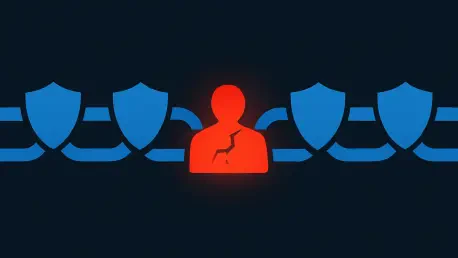

While the rapid digitalization of healthcare promises unprecedented efficiency and improved patient outcomes through connected devices and electronic records, it simultaneously exposes the sector to catastrophic cyber threats that can jeopardize both personal data and human lives. A growing body of research suggests that the most formidable of these threats is not a sophisticated new virus or a technical glitch, but rather the person sitting at the keyboard. This summary explores the compelling argument that human error, amplified by organizational and systemic weaknesses, has become the central vulnerability in modern healthcare, demanding a fundamental shift in how cybersecurity is approached. The findings reveal that focusing on technology alone is a failing strategy, as the true risk lies in the complex interplay between people, processes, and the platforms they use every day.
The Central Argument Shifting Focus from Technology to Socio Technical Systems
The core thesis emerging from recent research is that the greatest cybersecurity threat in healthcare is not a singular point of failure but a systemic issue rooted in the socio-technical environment. This perspective challenges the conventional wisdom that stronger firewalls, more advanced encryption, or better antivirus software can solve the problem. Instead, it posits that security is an emergent property of the entire system—a complex web of human behaviors, established organizational routines, and technological infrastructure. When these elements are not in alignment, vulnerabilities are created that no purely technical defense can adequately address.
This argument reframes the cybersecurity challenge from a purely technical one to a human-centric and organizational one. The implications are profound, suggesting that protecting sensitive patient data and maintaining the trust essential for effective care requires a holistic strategy. It is insufficient to simply deploy new security software; organizations must also cultivate a resilient security culture, design processes that make secure practices intuitive, and recognize that employees are not the problem but a critical part of the solution. Neglecting the human and procedural aspects of security is akin to building a fortress with unlocked doors, leaving the system vulnerable to the most common and predictable forms of attack.
The Modern Healthcare Dilemma Increased Connectivity and Amplified Risk
The healthcare industry is undergoing a period of unprecedented digital transformation. The widespread adoption of electronic health records (EHRs), the proliferation of Internet of Medical Things (IoMT) devices, and the rise of telehealth have created a hyper-connected ecosystem. While these innovations deliver significant benefits for patient care and operational efficiency, they have also dramatically expanded the digital “attack surface.” Every connected device, from a patient’s smart insulin pump to a hospital’s MRI machine, represents a potential entry point for malicious actors.
Within this expanded landscape of risk, the human element has become the most critical vulnerability. A consensus among IT and healthcare professionals identifies people, not technology, as the weakest link in the security chain. A single, unintentional mistake—such as a clinician clicking on a phishing link in a convincing-looking email or using a weak, easily guessed password for a critical system—can have cascading consequences. In a high-stress, fast-paced clinical environment, the risk of such errors is magnified, making it clear that the modern healthcare dilemma is not just about managing technology but about managing the human interaction with that technology.
Research Methodology Findings and Implications
Methodology
The research was grounded in a comprehensive analysis of the Finnish healthcare system, a model recognized for its advanced technological integration and mature cybersecurity posture. The methodology was designed to move beyond theoretical vulnerabilities by synthesizing the consensus viewpoints of professionals working on the front lines. By engaging with both healthcare providers and IT experts across Finland, the study captured a nuanced, real-world understanding of the systemic weaknesses that persist even in a highly developed digital health infrastructure.
This approach offers a powerful case study for the global healthcare community. By examining a system that is, by many measures, ahead of the curve, the research provides a critical insight: if these fundamental human and organizational challenges exist in Finland, they are likely universal and potentially more severe in less technologically mature systems. The methodology thus ensures that the findings are not just specific to one country but are broadly applicable to healthcare organizations worldwide grappling with the same socio-technical security challenges.
Findings
The study overwhelmingly found that human-related vulnerabilities are the primary entry points for cyberattacks in healthcare. These vulnerabilities manifest in several predictable ways, including a pervasive susceptibility to phishing attacks, a general lack of security awareness among staff, and the widespread use of unapproved third-party applications and devices, often referred to as “shadow IT.” These individual actions, however, do not occur in a vacuum. They are significantly magnified by systemic weaknesses that create an environment ripe for exploitation.
Chief among these systemic issues are the reliance on outdated legacy systems and the presence of ambiguous or poorly communicated organizational policies. Legacy software, which is often no longer supported by its manufacturer, ceases to receive critical security updates, leaving known vulnerabilities unpatched. Simultaneously, when policies regarding data handling or the use of personal devices are unclear, employees are left to make their own judgments, often prioritizing convenience over security. This combination of individual human error and systemic organizational flaws creates a dangerous multiplier effect, dramatically increasing the overall risk of a major security breach.
Implications
The clear implication of these findings is that healthcare organizations must enact a fundamental shift in their cybersecurity strategy. Achieving true cyber resilience requires moving beyond a reactive, technology-only approach and adopting a proactive, holistic model centered on people and processes. This means treating cybersecurity not as an IT department problem but as an organization-wide responsibility that is integral to patient safety and quality of care.
To operationalize this shift, the research points to several critical imperatives. Healthcare institutions must prioritize frequent and comprehensive security audits to identify and remediate both technical and procedural weaknesses. They need to develop and enforce clear, practical, and accessible data-handling policies that are understood by all employees, from the C-suite to the clinical floor. Finally, fostering a culture of transparent communication across all departments is essential to ensure that security concerns are reported and addressed promptly. Only by embedding these practices can organizations build a robust security culture capable of withstanding modern cyber threats.
Reflection and Future Directions
Reflection
The study’s focus on Finland, a nation with a sophisticated and mature cybersecurity posture, yielded a particularly crucial insight. The discovery that even technologically advanced systems are profoundly vulnerable to human and organizational factors underscores the universal nature of this challenge. It effectively demonstrates that technological progress does not automatically solve fundamental, human-centric security problems. In fact, increasing technological complexity can sometimes exacerbate them by creating new avenues for error.
This reflection serves as a critical reality check for the global healthcare industry. It dismantles the common misconception that purchasing the latest security technology is a sufficient defense. The research powerfully illustrates that without addressing the underlying behavioral patterns, organizational routines, and cultural norms that shape how technology is used, even the most advanced systems will remain fragile. The core security challenges are not in the code but in the culture.
Future Directions
Looking ahead, future research should concentrate on the practical implementation and validation of the proposed socio-technical framework in a variety of healthcare settings. There is a significant opportunity to conduct longitudinal studies that measure the framework’s effectiveness in reducing security incidents, improving staff awareness, and strengthening overall organizational resilience. Such research would provide the empirical evidence needed to drive widespread adoption.
Furthermore, future work could adapt and tailor the framework for different national and regulatory contexts, such as those governed by HIPAA in the United States or other data protection laws globally. Another promising avenue of inquiry lies in exploring the behavioral psychology behind cybersecurity errors in high-pressure clinical environments. Understanding the cognitive and situational factors that lead to mistakes could inform the design of more effective, context-aware training programs and support systems that help healthcare professionals make secure choices without impeding patient care.
Conclusion The Imperative for a Human Centered Cybersecurity Strategy
The research concluded that human error, situated within a complex socio-technical ecosystem, was indeed the biggest and most pervasive risk in healthcare cybersecurity. The evidence demonstrated that technological defenses alone were insufficient to protect against threats that exploit predictable human behaviors and systemic organizational weaknesses. This work made a vital contribution by not only diagnosing the problem but also by providing a proactive framework and a suite of tangible tools to address it. Adopting this holistic, human-centered approach was presented as an essential step for healthcare organizations to effectively safeguard patient data, ensure the continuity of care, and maintain public trust in an increasingly digital world.