
We’re joined today by Oscar Vail, a technology expert who has dedicated his career to navigating the cutting edge of the digital world, from quantum computing to open-source security projects. As online threats grow more sophisticated, especially during peak shopping seasons, his insights are more valuable than ever. We’ll be exploring the psychology behind modern scams, discussing practical, step-by-step strategies anyone can use to protect themselves, and looking ahead at how artificial intelligence is shaping the future of digital security for both attackers and defenders.
You’ve emphasized that if a deal looks “too good to be true, it probably is.” With scams getting more sophisticated, could you give an example of a recent, convincing scam that illustrates this point and explain what subtle red flags people should have noticed?
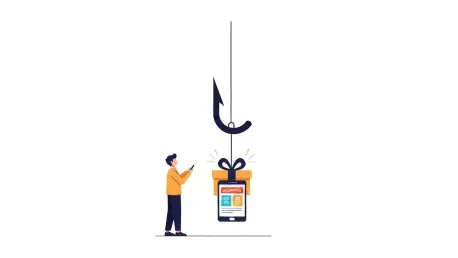
Absolutely. Think about the holiday rush. You get a text message, seemingly from a major household brand, offering a brand-new, top-of-the-line gadget at 80% off. The message creates a sense of immense urgency with a countdown timer: “Only 10 left! Offer expires in 5 minutes!” The link looks plausible at a quick glance. The red flag isn’t just the unbelievable price; it’s the manufactured panic. Scammers know that when you’re rushed, you don’t think clearly. The subtle flags are in the details: a slightly altered URL, the pressure tactic itself, and the simple fact that a legitimate company would advertise such a massive deal on its main website, not just through a random text message. That feeling of suspicion you get when someone offers you a million dollars for free? You have to apply that same level of critical thinking to your online shopping.
The article cites a 250% increase in malicious websites, with Amazon being the most impersonated brand. What specific, step-by-step checks can a less tech-savvy shopper perform to verify a website’s legitimacy, especially when it looks identical to the real thing?
This is a huge risk, especially for people who don’t shop online often. The most important thing to do is to break the chain of reaction. First, never, ever click on a link from an unsolicited email or text message, no matter how legitimate it looks. Second, open a completely new browser window and manually type the address you know to be correct, like “Amazon.com.” This takes a few extra seconds, but it guarantees you’re going to the real site. Third, once you’re on the site you typed in yourself, search for that incredible deal you were just offered. If you can’t find it on the official site, it was never real. Finally, always look for the little padlock icon in your browser’s address bar, and if you’re on a familiar site, take a moment to see if the branding, colors, or fonts look even slightly off. Scammers are good, but they often miss small details.
You recommended taking 15 minutes when feeling pressured by a “limited-time” offer. Besides typing the URL manually, what are the most effective checks someone can perform in that short window of time to avoid falling for this panic-inducing tactic?
That 15-minute pause is your best weapon against the panic tactic. The first thing that happens is the adrenaline subsides, and you can think more rationally. In that time, after you’ve manually typed in the official URL to check the deal, do a quick web search. Type the name of the website or company from the suspicious message, followed by words like “scam,” “review,” or “complaint.” You’d be amazed how quickly you can find out if others have been targeted by the same fraudulent offer. You can also use that time to scrutinize the original message. Look at the sender’s email address or phone number. Examine the link itself for any misspellings or extra characters. That short break gives your logical brain the time it needs to catch up and spot the inconsistencies that your panicked brain might have missed.
Given that AI is making fake websites more convincing and no single tool is perfect, can you explain why combining a VPN’s security features with your own common sense is so crucial? What happens when a user relies too heavily on just one of these?
This is a critical point. Relying on just one method is like trying to guard a fortress with only a high wall or only a clever guard—you need both. A VPN is your high wall. It can encrypt your connection, making it safer to use public Wi-Fi, and many now have threat protection features that act like a blacklist, blocking known malicious sites. However, with AI, scammers can generate thousands of new, convincing fake sites in an instant, many of which won’t be on that blacklist yet. That’s where your common sense—the clever guard—comes in. You are the final checkpoint. A VPN can’t stop you if you willingly hand over your credit card details on a perfectly cloned, but fraudulent, website. If you rely only on the tech, you develop a false sense of security and stop looking for red flags. If you rely only on intuition, you’re vulnerable to sophisticated attacks you can’t see. The two must work together.
What is your forecast for the evolution of online scams, especially as AI tools become more accessible to bad actors?
I believe we’re on the cusp of a major shift. The era of poorly written, generic phishing emails is ending. In the near future, we will see hyper-personalized, AI-driven scams that are terrifyingly effective. Imagine a scam that uses data from a recent breach to craft an email that mentions your name, a recent purchase you made, and your home address. Then, it uses an AI-generated voice to call you, mimicking a legitimate customer service agent from that company. The websites they direct you to will be pixel-perfect, AI-generated clones. The defense against this will also have to be AI-driven. We’ll see security tools evolve from simple link-checkers into sophisticated digital guardians that can analyze the linguistic patterns of a message, the authenticity of a website’s code, and other subtle cues in real-time to warn you of a potential AI-generated threat. It’s going to be an ongoing arms race, and user awareness will be more important than ever.