
A recent scientific breakthrough has successfully demonstrated the teleportation of quantum information between two physically separate particles, a monumental achievement that moves the concept of an unhackable global network from theoretical possibility to a tangible engineering goal. While the term may evoke images from science fiction, this experiment, conducted by researchers at Germany’s University of Stuttgart, did not involve the transport of physical matter. Instead, the team managed to transmit the precise quantum state of a photon—a single particle of light—to another. This process, where the information is destroyed at its origin and perfectly recreated at a destination, serves as a cornerstone for the development of a quantum internet. Such a network would operate on the bizarre principles of quantum mechanics, promising a future where digital communications are protected by the fundamental laws of physics, rendering them impervious to interception. This advance represents a critical proof-of-concept, laying the essential groundwork for technologies that could redefine data security and high-performance computing.
The Science Behind the Breakthrough
The experiment’s success hinged on transferring a photon’s quantum information, specifically its polarization, to its entangled partner. This mechanism is profoundly different from the way classical computers transmit data, which involves creating and sending copies of binary code. In the quantum world, the no-cloning theorem states that an unknown quantum state cannot be perfectly duplicated. Instead, teleportation works by effectively “moving” the state itself; the original is scanned and ceases to exist in its initial form, while an exact replica appears at the receiving end. This transmission of a particle’s intrinsic identity, rather than just a representation of it, is the scientific reality of teleportation. It is this unique process of state transference that will allow a future quantum network to shuttle complex information packets without the risk of duplication or covert observation, forming the basis of its operational integrity and security. This is not simply a faster way of sending data but a fundamentally new method of communication.
The seemingly magical transfer of information is made possible by a phenomenon known as quantum entanglement, a counterintuitive principle where two or more particles become inextricably linked, acting as a single, unified system no matter how far apart they are. Their fates are intertwined in such a way that measuring a property of one particle instantaneously influences the corresponding property of the other. The researchers leveraged this connection by creating a pair of entangled photons. Once the state of the first photon was measured in conjunction with a third “messenger” photon carrying the information to be teleported, that information was instantly imprinted onto the second, distant entangled photon. This instantaneous correlation, which connects particles across space, is the engine that drives quantum teleportation. It allows the complete state of one particle to be perfectly reconstructed in its partner, effectively bridging the physical gap between them with a channel of pure information.
Engineering a Quantum Connection
A formidable technical challenge the research team had to surmount was ensuring the entangled photons were perfectly indistinguishable from one another. For the delicate quantum effects to work, the particles needed to be identical “doppelgangers” in every conceivable way, from their color profile to their temporal behavior. However, because the photons were generated from different sources, inherent microscopic variations posed a significant threat to the integrity of the entanglement. To solve this, the University of Stuttgart team engineered custom semiconductor light sources, known as quantum dots, specifically designed to produce photons with nearly identical properties. As a final, crucial step, they routed the photons through specialized frequency converters. These devices acted as a fine-tuning mechanism, erasing any residual differences and making the particles so alike that the quantum system could not tell them apart, thereby enabling the high-fidelity teleportation required for the experiment’s success.
With the photons made perfectly identical, the team successfully transmitted the polarization state from one to the other across an optic fiber in their laboratory. While a landmark achievement in its own right, this experiment’s true significance lies in its role as a vital proof-of-concept for building “quantum repeaters.” A classical internet signal can be easily amplified to travel across continents, but a delicate quantum state cannot be copied or amplified without destroying it. A quantum repeater is a sophisticated device that can capture a quantum signal, teleport its information to a new particle, and send it on its way, effectively extending the range of quantum communication without ever directly measuring or corrupting the data. The successful teleportation over a short distance demonstrates the core functionality needed to create these repeaters, which are the essential building blocks for a future long-distance, globe-spanning quantum internet.
The Future of Secure Communication
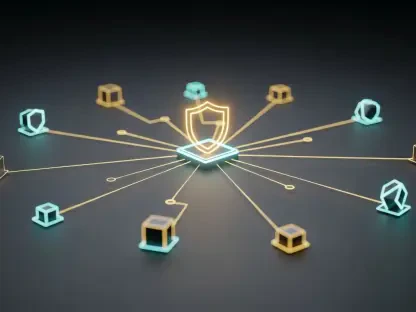
The ultimate promise of a quantum internet is its inherent capacity for unhackable communication. This unprecedented level of security does not rely on complex mathematical algorithms that could eventually be broken by more powerful computers, but rather on the fundamental laws of physics. According to the principles of quantum mechanics, the very act of observing or measuring a quantum particle inevitably alters its state. This “observer effect” means that any attempt by an eavesdropper to intercept a quantum data transmission would leave an unmistakable and irreversible trace. The sender and receiver would be immediately alerted that the security of their channel had been compromised, allowing them to terminate the transmission. This physical property would make it impossible to listen in on a quantum conversation without being detected, creating a perfectly secure channel for transmitting sensitive information, from private financial data and corporate secrets to classified government communications.
Beyond creating an impenetrable shield for data, a fully realized quantum network would unlock a host of other transformative applications. It would enable the synchronization of atomic clocks with perfect precision, a capability that could revolutionize navigation systems, deep-space astronomy, and fundamental physics experiments. Furthermore, it would allow for the networking of multiple quantum computers, linking their immense processing power to create a distributed computational engine far more capable than any single machine. Such a network could tackle problems that are currently intractable for even the world’s most powerful supercomputers, such as designing novel pharmaceuticals by simulating complex molecular interactions, discovering new materials with exotic properties, and developing highly accurate models of global climate change. This interconnected quantum ecosystem would not only secure our digital world but also accelerate scientific discovery and technological innovation across countless fields.
A Foundational First Step
Despite the profound implications of this work, the researchers acknowledged that the technology remained in its nascent stages. The successful teleportation was conducted over a modest distance of approximately 32 feet within a controlled laboratory setting. Moreover, the process achieved a success rate of around 70 percent, a figure that requires significant improvement before it can be considered for practical, real-world applications. Lead researcher Peter Michler framed the achievement as a “crucial step toward bridging greater distances,” emphasizing that this was a foundational milestone on a long and complex road. The experiment successfully demonstrated that the teleportation of information, once confined to the realm of theoretical physics and science fiction, had been made a tangible reality. In doing so, it laid the essential and undeniable groundwork for a future built upon ultra-secure global communication and the vast, untapped potential of networked quantum computing.