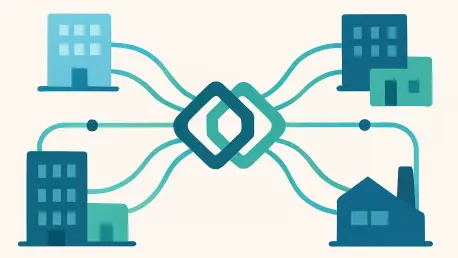

Data privacy is rapidly approaching a fundamental transformation, poised to shift from a specialized, often complex, corporate concern into an unremarkable yet essential component of daily business operations. This evolution signifies privacy’s maturation into a non-negotiable, foundational requirement, much like cybersecurity protocols transitioned from a niche IT function to a universal standard. The current acceleration of this trend is set to redefine competitive advantages, creating a clear divide between organizations that adapt and those that fall behind. The companies that will thrive are those that understand a crucial truth: when a critical function becomes boring, it means it has finally become ubiquitous, reliable, and indispensable for everyone. The shift from treating privacy as a problem to be solved to an asset to be leveraged is not just imminent; it is the next frontier of business strategy.
The Convergence of Market and Technology
The year 2026 marks a pivotal moment where technological capability and market necessity are converging to make robust data privacy a default expectation. This shift is not driven by a single factor but by the confluence of several powerful forces. The maturation of artificial intelligence, which is now deeply embedded in mission-critical business workflows, means that core intellectual property and highly regulated data are being processed by AI systems at an unprecedented scale. Consequently, corporate boards are recognizing that AI governance is no longer an abstract policy issue but a direct fiduciary responsibility, demanding provable assurances that sensitive information remains secure. This internal pressure is amplified by external market dynamics, as major enterprises and public-sector organizations begin to mandate privacy-preserving architectures as a standard procurement requirement, setting a new baseline for the entire ecosystem.
The technological catalyst making this widespread adoption possible is the arrival of practical, scalable Fully Homomorphic Encryption (FHE). This groundbreaking technology allows for complex computations to be performed directly on encrypted data without ever exposing the underlying sensitive information. FHE effectively serves as an “HTTPS for computation,” resolving the long-standing transparency paradox that made technologies like public blockchains unsuitable for applications requiring confidentiality. By enabling secure computation, FHE transforms the concept of private data collaboration from a theoretical ideal into a commercial reality. This development provides the essential technical foundation upon which a new generation of secure, privacy-first applications and platforms can be built, finally aligning the promise of data-driven innovation with the absolute need for confidentiality and trust.
Redefining the Competitive Landscape
As advanced privacy technologies become standardized, their role within an organization will pivot dramatically from a compliance-driven cost center to a powerful engine for business growth. Companies that embed provably private systems into their core architecture will unlock a significant and durable competitive advantage. These forward-thinking organizations will be able to pursue high-value opportunities that remain inaccessible to their rivals, move with greater speed and agility, and close complex deals more efficiently. In this emerging paradigm, implementing robust privacy is no longer about mitigating risk or satisfying regulators; it becomes an aggressive strategy for expanding market share and driving revenue. This strategic re-framing turns privacy from a defensive posture into an offensive tool for creating new business models and outmaneuvering the competition in an increasingly data-sensitive world.
Conversely, a specific category of organization faces a high risk of being left behind, not because they are overtly hostile to privacy but because of a deep-seated complacency. These companies often make one of three critical errors: they mistakenly conflate transparency with confidentiality, believing that open-source models or APIs are a substitute for protecting customer input data; they treat privacy as an architectural layer that can be retrofitted later, failing to recognize it as a foundational design principle; or they misinterpret the current market silence as a lack of demand, not realizing that customers do not ask for what they believe is technologically impossible. As viable solutions like FHE become widely known, customer expectations will reset almost instantaneously, and these unprepared organizations will find themselves suddenly and decisively disqualified from the most valuable market segments.
Winning in the Era of Embedded Privacy
For the organizations that anticipated this shift and engineered privacy into their systems from the outset, the rewards proved to be substantial and difficult for competitors to replicate. By earning customer trust with provably secure architectures, these early adopters gained access to richer, more sensitive, and higher-signal datasets. This superior data gave their artificial intelligence models a decisive performance advantage, creating a virtuous cycle of better insights leading to better products. In stark contrast, their slower-moving competitors found themselves relegated to working with thinner, sanitized, or less effective synthetic data, which fundamentally limited the capabilities and value of their own analytics and AI initiatives. This data-quality gap created a competitive moat that became increasingly difficult for laggards to cross as the market continued to mature.
Furthermore, these pioneering companies benefited from a dramatically accelerated speed to market. With privacy and security as core, built-in features, their products and services navigated the complex legal, security, and compliance reviews that bogged down their competitors. This reduction in friction significantly shortened sales cycles and hastened the time-to-value, creating a powerful differentiator in fast-moving industries. Most importantly, the adoption of privacy-preserving technologies unlocked entirely new ecosystems for collaboration. It enabled organizations to securely share and analyze data with partners, suppliers, and even rivals, fostering innovative business models and operational efficiencies that were previously considered impossible due to risk. This ability to collaborate without compromise did not just improve margins; it expanded the total addressable market for all participants.